
Carers who use English as a second language, and a wrong answer that may be a missed word. Check what they know, fairly.
Many carers use English as a second language, and they are often excellent at the job. When one of them answers a medication question wrongly, you need to know whether it was a missed word or a missed point. With short training built from your own policies, a wrong answer becomes a short lesson, which they can open in their own language.
14 day free trial · Set up in a day · UK data residency
Was it the medicine, or the wording?
A scenario we see in many care settings.
A manager allocates a short medication module to the whole team. Most of the answers come back right. One carer, who joined from abroad two years ago and is trusted on every round, gets a question wrong. It asks what to do if a person refuses a dose, and one phrase in the answer options is idiomatic. The manager wonders whether to worry. She does not want to single anyone out, and she does not want to guess. English is the carer's second language, and the question may have tested vocabulary, not medication safety. Here is how that plays out.
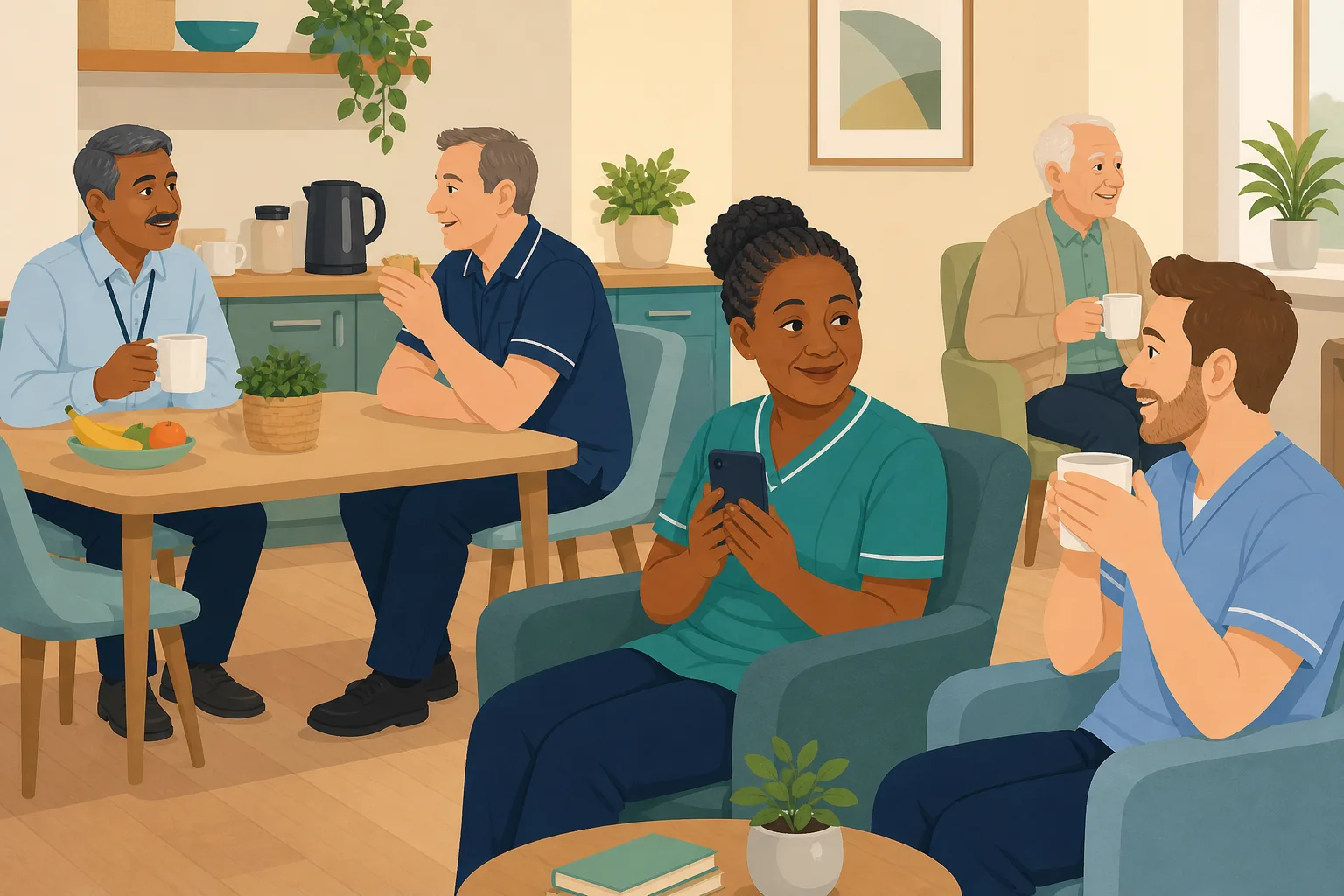
The manager allocates a short medication module to the team.
Most staff finish it on their own phones after shift.
Scores arrive. One carer has a wrong answer on refused doses.
The manager cannot tell if it was the point or one phrase in the question.
She knows the procedure and worries she will look less able.
A quiet word, a guess, and nothing written down.
No record shows the gap was a word, or that it was closed.
“How do you know your staff understand medication training?” The honest answer is a guess.
The carer was never the problem. The gap is between a wrong answer and knowing why it happened. Here is how CareStream helps you check understanding fairly, with your own policies and the carer's own language.
An example scenario, not a named service.
A wrong answer should show a knowledge gap, not a word gap
Fairness matters to your team, and to anyone who asks how you know they are competent.
One missed word can look like a missed point
Language barriers in healthcare are rarely about ability. A question with an idiom or a long sentence can trip up a strong carer who knows the work.
Guessing the reason is unfair to everyone
If you assume a language problem, you may miss a real gap. If you assume a knowledge gap, you may insult a good carer. You need something to check against.
Translating every lesson by hand does not scale
Few managers can rewrite training in several languages each time a topic changes. Without help, the carer simply reads it again in English and hopes.
Same question, same standard, the carer's own language.
This is the Training built from your own policies feature, with the language settings in the multilingual Staff Hub. For turning one event into a topic, see adhoc training.
Allocate a module on the topic, built from your own policies
- Pick the topic module, such as medication, and tick the staff it is for. Everyone gets the same check for understanding
- CareStream builds the lessons and questions from your own policies, and you can edit and preview them first, so you can simplify any wording that is more idiom than medicine
- Staff complete it in the Staff Hub on their own phone, with an optional due date
Illustration based on the Training screen. Example questions.
A wrong answer becomes a short lesson, not a mark against them
- The wrong answer goes into the carer's Follow-up tab in the Staff Hub, and an email tells them so. The email is in English only, so tell the team to expect it
- They choose Learn & retry, a short lesson (why it matters, what to remember, a realistic situation) then a fresh question, or Just retry the same question, as often as they need
- If the lesson clears it, you have learned it was the wording. If it keeps coming back, you have found a real gap to talk through
A few things to revisit. Learn the point, then answer, or just retry. Either way it clears from here.
A person can refuse medicine. You must not hide it or force it, and the right people need to know.
Remember- Do not pressure or disguise it
- Tell the senior on shift
- Record the refusal clearly
A resident pushes the pot away and says she does not want it today.
Illustration based on the Staff Hub Follow-up tab. Example content.
Training in other languages for multilingual staff
- Your admin sets each person's first language, and an optional second. Lessons, questions and policies then come in their first language
- With switching allowed, a carer can flip one lesson or question set into their second language with Read in their language, to check a word
- It is machine translation, helped by your own glossary and approved staff suggestions. It is not professional human translation. Translation is on the paid plans only. The hub menus and buttons stay in English
Always communicate in their first language
All messages CareStream sends are translated into English.
Allow switching a set to their second language
In the hub they can flip any single training, induction or CQC set into Polish, just for that set, if they are struggling in their first language.
Let them suggest better translations
They can propose improvements to translated content. Changes need your approval before going live.
Illustration based on the staff record Language settings. Translation is on the paid plans.
See where the team is thin, and whether gaps close
- The Knowledge gaps view shows the most missed questions and the weakest topics. A question that many people miss, whatever their first language, probably needs rewording
- See how gaps are being closed, and mark a person's record as reviewed once you have talked it through
- A Monday digest email brings the picture to you without you asking for it
Illustration based on the Knowledge gaps view. Example figures.
The questions managers ask, and how CareStream answers them
Read this as a conversation. The questions are the ones we hear most.
A good carer got a question wrong. How do I know if it was the language?
You do not have to guess. The wrong answer goes into their Follow-up tab, and they can open a short lesson on that exact point, in their own language if you have set one. If one lesson and a fresh question put it right, it was probably the wording. If it keeps coming back, it is a knowledge gap and worth a calm conversation.
How do I set up someone's language?
On the staff record, an admin sets the person's first language and, if you like, a second. With language switching turned on, they can flip one lesson or question set into the second language with a tap. Staff cannot change this themselves, so it stays under your control.
How good is the translation?
It is machine translation using our own machine learning, with your own translation glossary to keep terms such as drug names and role titles exactly as you write them. Staff you allow can suggest a better translation and you approve it. There is no professional human translator in the loop, so treat it as a strong aid and not a certified translation.
Is the whole app in their language?
No. The policies, lessons, questions and many messages follow the person's language, but the menus and buttons in the hub stay in English. The wrong answer reminder email is English only, so it helps to tell the team what it will say.
What happens when someone gets a question wrong?
It goes into that carer's Follow-up tab and they get an email, at most once a day. They choose Learn & retry, a short lesson then a fresh question, or Just retry the same question, as often as they need. Nothing alerts you each time. You see the pattern in the Knowledge gaps view and the Monday digest.
Could this single out my overseas staff?
It should do the opposite. Everyone gets the same module and the same standard. The language options only change how the lesson reaches the person. Be careful how you talk about it, though. Never present the language setting as a judgement on someone's ability.
Does it teach English?
No. CareStream is not an English course and does not test anyone's English. It checks what a carer knows about your policies and gives them a way to learn the point in the language they think in.
Can I try it, and is translation included?
You can create a free account and try the paid plans for 14 days. Translation and the adhoc training screen are on the paid plans, not the free plan. See the pricing page for the current plans, or register to start.
A fair check, not an English course or a human translator
The translation is not certified
It is machine translation, improved by your glossary and your approved suggestions. If a point is high stakes, check the wording with someone who speaks the language.
It does not test or teach English
CareStream is not a language course. Hub menus and buttons stay in English, and the wrong answer email is in English only.
Translation and adhoc training are on paid plans
Both come with the paid plans. The free plan is English only. Nothing alerts you on each wrong answer, so use the Knowledge gaps view.
Training built from your own policies
Everything on this page is part of the product. Here is where to read more.
Training built from your own policies
Ad hoc training from your policies, face to face training organised, and wrong answers that become lessons.
See the featureStaff Hub in their own language
Policies, questions and lessons in the language each carer thinks in, on the paid plans.
See the multilingual hubShort training after a session or an incident
Allocate a module on any topic, then watch where understanding is thin.
See adhoc trainingGuides on this subject
Translating Care Policies: What Gets Lost, and How to Check Understanding
Your care policies are written in English. A significant portion of your workforce thinks, dreams, and asks questions in another language....
Read article
Overseas Care Workers and Your Policies: Four Ways to Make Them Understood
Overseas care workers can pass an English test and still misread a policy. Four ways to close that gap, compared on cost, accuracy after updates and...
Read article
Onboarding International Care Staff: A 4-Week Induction Playbook for UK Providers
The uncomfortable truth is this: the Health and Care Worker visa route for care workers has closed. Every international recruit you hire from now on...
Read articleEnglish as a second language and staff training, answered
About fair checking
How do I check for understanding when English is a second language?
Ask the same questions of everyone, keep the wording plain, and give a way to learn the point again. CareStream allocates a short module from your own policies, then a wrong answer opens a short lesson. A fresh question shows whether it landed. It is a check for understanding that does not rest on one tricky phrase.
Do language barriers in healthcare put people at risk?
They can, if a carer misses a key instruction and nobody knows. That is true of any gap in understanding, and the fix is to check and teach, not to assume. A short check after training, with lessons in the carer's language, helps you find it early.
What is the best way to support multilingual staff in training?
Keep the standard the same and change how the learning arrives. Give people the lesson in their first language, let them check a word in a second, and talk it through in person where it matters. Our guide to translating care policies goes into more detail.
Can I offer training in other languages?
Yes, on the paid plans. Your admin sets each person's first and optional second language, and lessons, questions and policies follow. It is machine translation, so it supports your team and does not replace a human translator for anything high stakes.
Is multilingual training only for new overseas staff?
No. Any carer may find one language easier for a hard topic. It also helps at induction, which our international staff induction playbook covers. The setting belongs to the person, not to a group.
Is there English for care workers built into CareStream?
No. CareStream does not teach or test English. If a carer wants English for care workers, that sits with your local learning providers. CareStream makes sure the training they receive still reaches them clearly in the meantime.
How many care workers use English as a second language?
Our blog post on care workers in England who speak English as a second language sets out what the figures show and where they come from.
About inspections
Will an inspector accept this as evidence of competence?
The Care Quality Commission looks for staff who are supported and trained to do their jobs. Regulation 18 says staff must receive appropriate support, training, professional development, supervision and appraisal as is necessary. A record of questions, lessons and results helps show it.
What does CQC say about supervising staff until they are competent?
The CQC guidance on Regulation 18 says that, where appropriate, staff must be supervised until they can demonstrate acceptable levels of competence. A follow up that closes a gap sits alongside that supervision. See also our CQC compliance page.
A fair way to check understanding across a mixed language team
Multilingual staff are a strength in a care service. The aim is to make sure that a wrong answer tells you something true. A few habits make that more likely.
Write the question so it tests the care, not the English
Before you allocate a module, preview the questions. Look for idioms, double negatives and long sentences. A question that asks what to do when a person declines their tablet is clearer than one that asks how you would handle a resident who will not take their meds. Plain wording is fairer for everyone, including tired staff at the end of a shift.
If a question is missed by many people, whatever their first language, the question is probably the problem. The Knowledge gaps view shows which ones those are.
Four habits for a fair check
- Set each carer's first language, and a second if they use one, before you allocate the module.
- Tell the team that the reminder email is in English only, and what it will say.
- When a wrong answer comes in, let the lesson do its work first, then look at whether it came back.
- Treat repeated gaps as a conversation about the topic, and never as a comment on someone's English.
Keep a human in the loop for what matters most
Machine translation is a strong aid but it is not perfect. For a high stakes topic such as medication, ask a colleague who speaks the language to read the key points once, and add any terms that must not change to your translation glossary. Then your carers, and your inspector, can see you took care over it.
For the inspector. Keep the questions, the lessons and the results together, and be ready to say how you made the check fair for everyone on the team.




