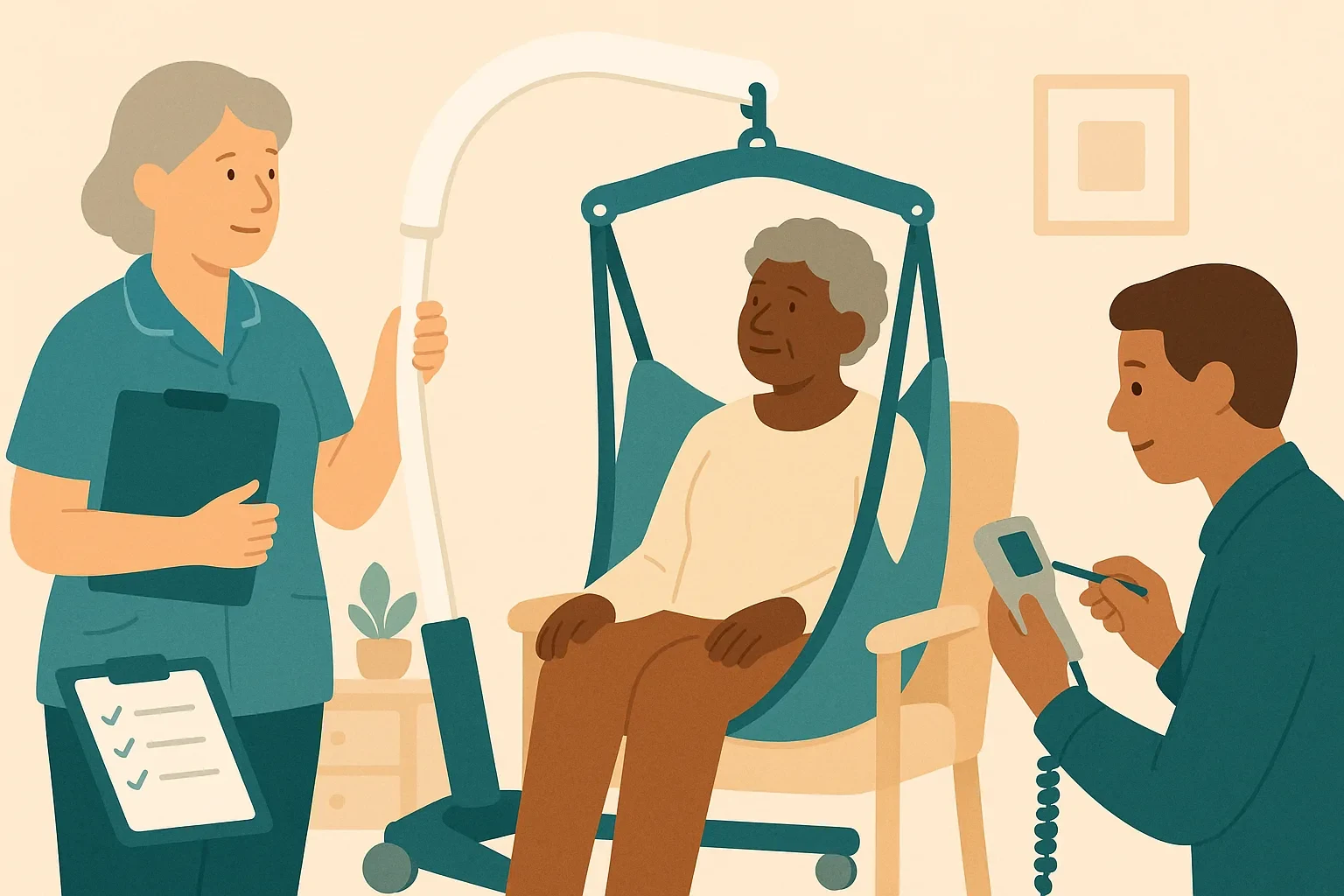
 Equipment and Lifting (LOLER) Policy
A Equipment and Lifting (LOLER) Policy written for your service
- Written for your organisation, not a template with your logo on it
- Read and approved by a person before it carries your name
- Verified against all 36 required elements of the legislation below
- Kept updated when the law changes, so it never quietly goes stale
No subscription needed. First year of updates included, £12 a year after that.
One-off, first year of updates included. Delivered within 2 working days of your details.
Trusted by UK care providers
Let's build your Equipment and Lifting (LOLER) Policy
Answer 8 quick questions, about three minutes, and we'll write this policy for your service, in your name, with your people. You can skip anything and add it later.
Asked once, reused for every policy you buy
That's everything we need
0 of 8 answered. You can add the rest at any point before we write it.
- Registered company name
- Trading name (if different)
- Service address
- CQC provider ID
- CQC location ID
- Registered manager
- Nominated individual
- Equipment service contractor
Your answers are saved on this device and carried into your order.
Built from the law, checked against the law
The legislation, CQC standards and guidance we analyse to write it.
Your Equipment and Lifting (LOLER) Policy is structured from these regulations, then verified against every required element of each one before a person signs it off. If the law changes, your policy is updated and you are told what changed and why.
Lifting Operations and Lifting Equipment Regulations 1998 (LOLER)
- Specifies that all lifting equipment used to move residents (hoists, slings, stand aids) is subject to thorough examination by a competent person every six months, not annually
- Distinguishes between servicing/maintenance and statutory thorough examination under Regulation 10, clarifying that an engineer's service sticker does not constitute a LOLER thorough examination report
- Requires that every sling has a unique identifier, a recorded safe working load, size marking that remains legible, and documented compatibility with the hoist(s) it will be used with
- Prohibits mixing slings and hoists from different manufacturers unless compatibility has been formally assessed and documented
- Requires slings and lifting accessories to be inspected before each use and immediately withdrawn from service if damage (including frayed stitching, illegible labels, or wear) is identified, with a procedure that supports staff who remove equipment rather than pressuring continued use
- Specifies that manual handling risk assessments and care plans identify the specific sling by type and size, the compatible hoist, and the number of carers required, and that staff must not deviate from this (e.g. single carer hoisting alone when two are specified)
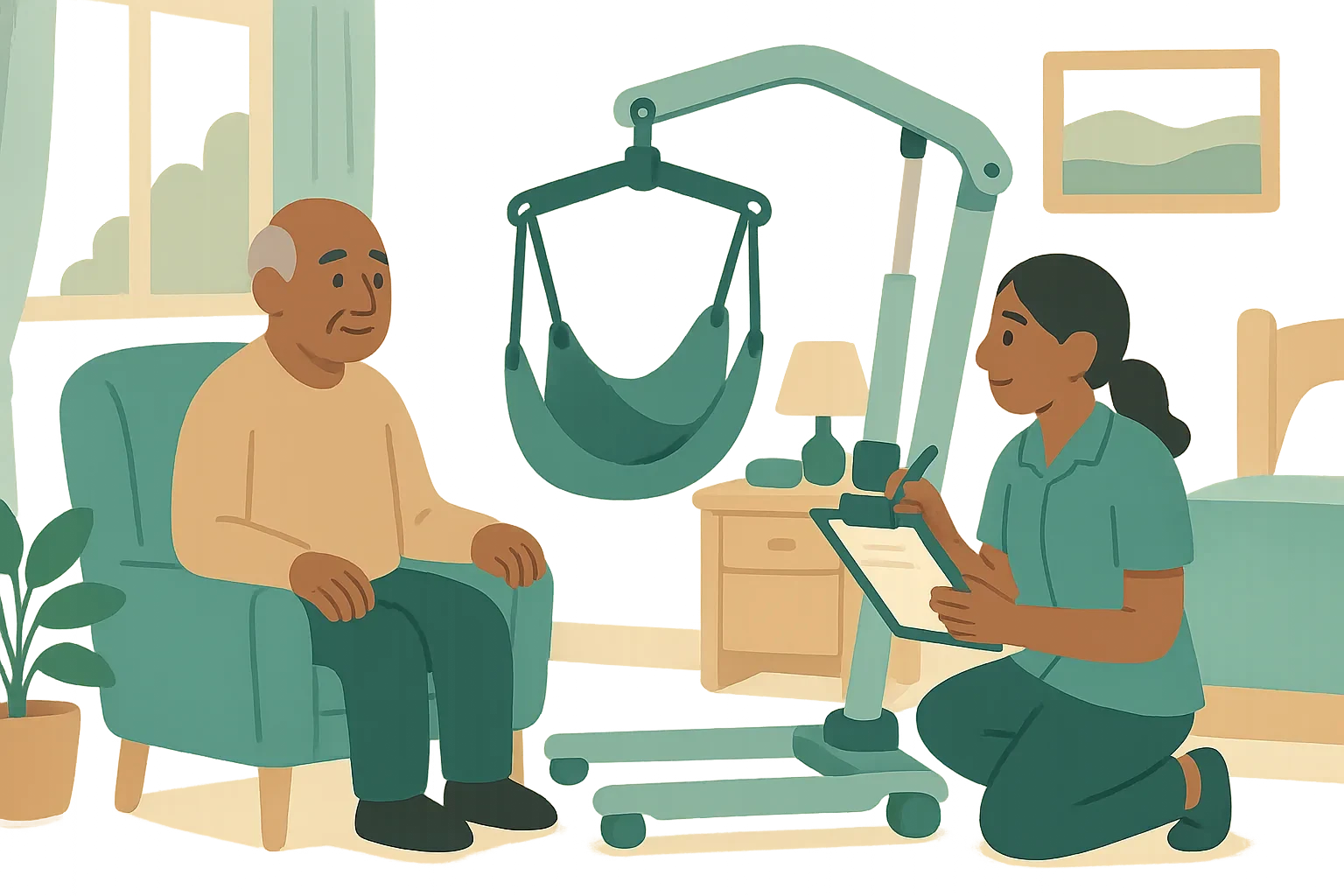
Provision and Use of Work Equipment Regulations 1998 (PUWER)
- States that all work equipment (including profiling beds, pressure mattresses, shower chairs, wheelchairs, hoists, bedrails, kitchen mixers, laundry equipment, ladders, nebulisers, medicines trolleys, nurse call systems, and cleaning tools) must be identified and subject to these requirements
- Requires that equipment suitability assessments are conducted before use, covering whether equipment is suitable for the specific task, location, and person, including consideration of space constraints and resident needs
- Requires that manufacturer's instructions and guidance are obtained, held accessible, and followed for all work equipment
- Establishes a system for regular inspection and maintenance of all work equipment (distinct from service engineer visits), with written records kept in accordance with Regulation 6
- Requires that safety guards, interlocks, and safety devices fitted to equipment must not be removed or disabled, and that doing so will be treated as a disciplinary matter
- Requires that staff receive specific information, instruction and training on each individual piece of equipment they will use, not generic categories of equipment

Regulation 15: Premises and equipment
- Defines the schedule and responsibilities for cleaning all premises and equipment, including cleaning of equipment between residents
- Specifies how medicines, controlled drugs, COSHH chemicals, hot surfaces, laundry rooms, sluices, and residents' possessions and money are secured against harm
- Addresses whether premises are suitable for their purpose, including bathroom space for hoists and two carers, navigability for persons with dementia, lighting and contrast for visual impairment, private visitor space, and dementia-friendly environment features
- Defines when equipment is properly used, including staffing requirements for hoists and correct fitting of bedrails to prevent entrapment gaps
- Establishes a maintenance regime covering: PUWER for general equipment, LOLER six-monthly thorough examinations for hoists, slings and stairlifts by competent persons independent of maintenance arrangements, Gas Safety regulations, Electricity at Work regulations, asbestos management, legionella control with written scheme and temperature monitoring, fire safety, and lift regulations
- Maintains an asset register identifying all equipment and location, a planned preventative maintenance schedule, and a log distinguishing thorough examinations from service visits
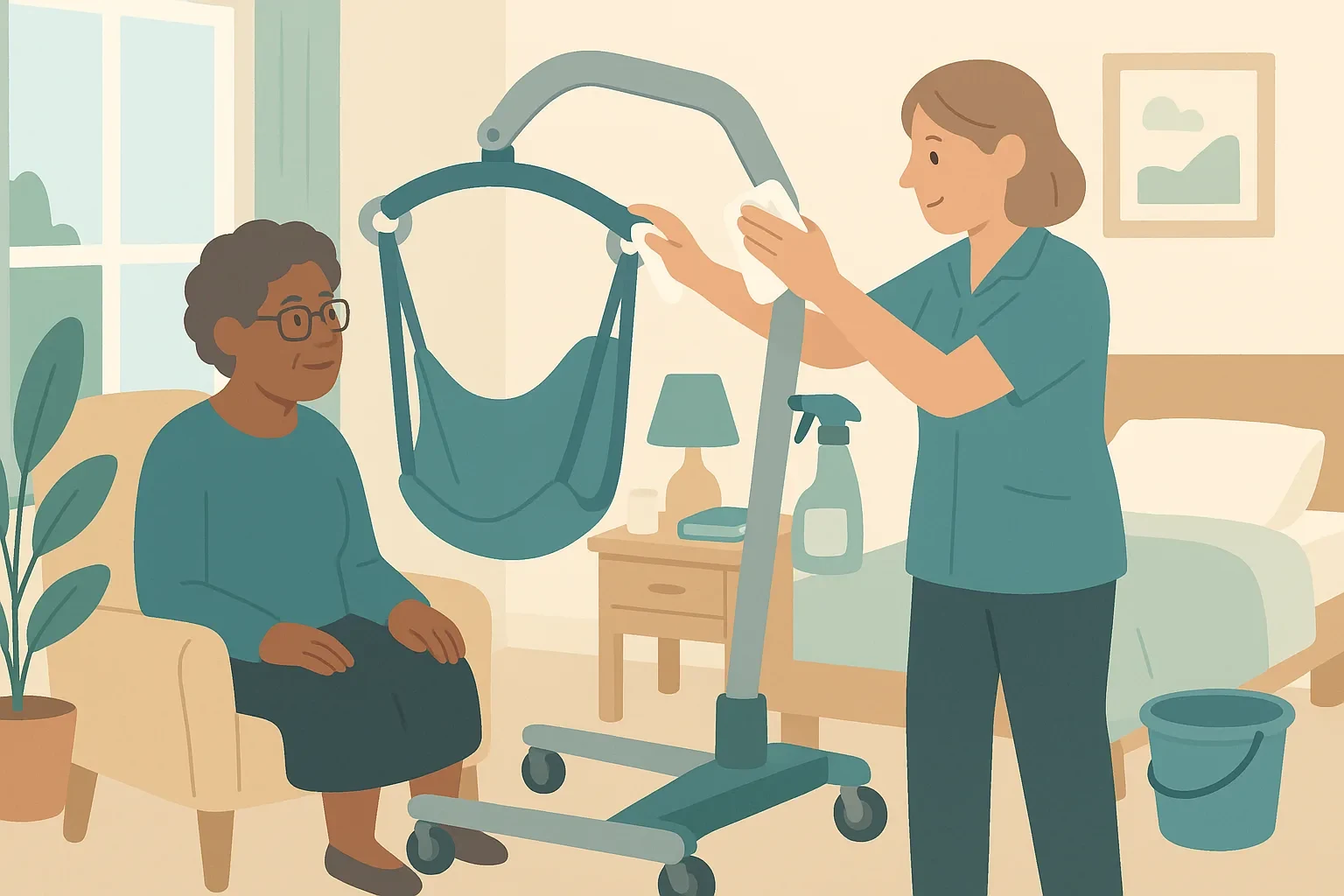
Written for your service
What we ask you, so none of it is assumed.
Most policy packs are one document sold to everyone with a find and replace on the home name. Your Equipment and Lifting (LOLER) Policy is written from the legislation above and from your answers to the questions below. Where you have told us something, it says so. Where you have not, it sets out what must happen rather than claiming you already do it.
Your registered name, address, CQC numbers and who holds the key roles. About three minutes. Nothing else is asked before you buy.
Asked once in your own account and used across every policy you own, so a second policy never asks you the same thing twice.
Why it matters. A policy that claims you assess your premises annually, when you never have, is not a harmless overstatement. It is a signed statement handed to your inspector. We would rather write what you must do than guess what you already do.
How it is made
From your details to a policy you can stand behind.
The short questions above: who you are, your CQC registration, and the people this policy names.
One section per required element of the legislation, in your name, with your people.
Automated checks against every required element, then a person reads it before it ships.
When legislation changes, your policy is updated and you are told what changed and why.
Common questions
What you are actually buying.
What exactly do I receive?
A complete Equipment and Lifting (LOLER) Policy written for your organisation, in your dashboard and as a print-ready PDF on your own letterhead. It names your service, your registration details and your leads, because you gave us them.
Is this a template?
No. Each policy is written for the organisation buying it, structured from the legislation itself, verified against 36 required regulatory elements, and read by a person before it carries your name.
How quickly will I get it?
Within 2 working days of you completing the short questions above. Most arrive sooner.
What happens when the law changes?
We monitor UK care legislation continuously. When something affecting this policy changes, your copy is updated and you are told what changed and why. The first year of updates is included, then £12 a year per policy.
Can I edit the policy myself?
No, and deliberately so: we stand behind every word we approve. If something needs changing, tell us and we amend and re-verify it, so it always remains a document we can both defend to an inspector.
What if I need more than one policy?
Most services do. The Statutory Starter Pack covers the twenty policies every CQC-registered service is expected to hold, and the Complete Policy Library covers all 66.
Why CareStream
Policies written the way an inspector expects to read them.
Before you buy
What the document actually looks like.
Every section it contains, and a page of the real thing. We show the structure and the personalisation rather than the wording, because the wording is what you are paying us to write for your service.
Contents of your Equipment and Lifting (LOLER) Policy
- Purpose and scopewho it covers
- Legal and regulatory frameworkcited in full
- Definitions used in this policy
- Roles and responsibilitiesyour people, named
- Procedure, step by step
- Recording, reporting and escalation
- Training and competency
- Monitoring, audit and review
- Related policies and documents
- Version control and approvalsigned and dated
Section 4 · Roles and responsibilities
Who is accountable, by name
Overall accountability for this policy rests with your registered manager, supported by your nominated individual. Day to day responsibility sits with your named lead, who is the first point of contact for staff at your service address.
The remaining wording is written for the organisation buying it, so it is not shown here.
“The inspector asked for evidence and I had it on screen before she finished the sentence.”
Registered Manager · 48-bed nursing home, West SussexRelated policies
More policies your service may need.
More statutory and operational policies CareStream writes for your service, personalised, human-reviewed and kept updated, exactly like this one.

Health and Safety Policy
Your general statement, organisation and arrangements under the Health and Safety at Work etc. Act 1974.
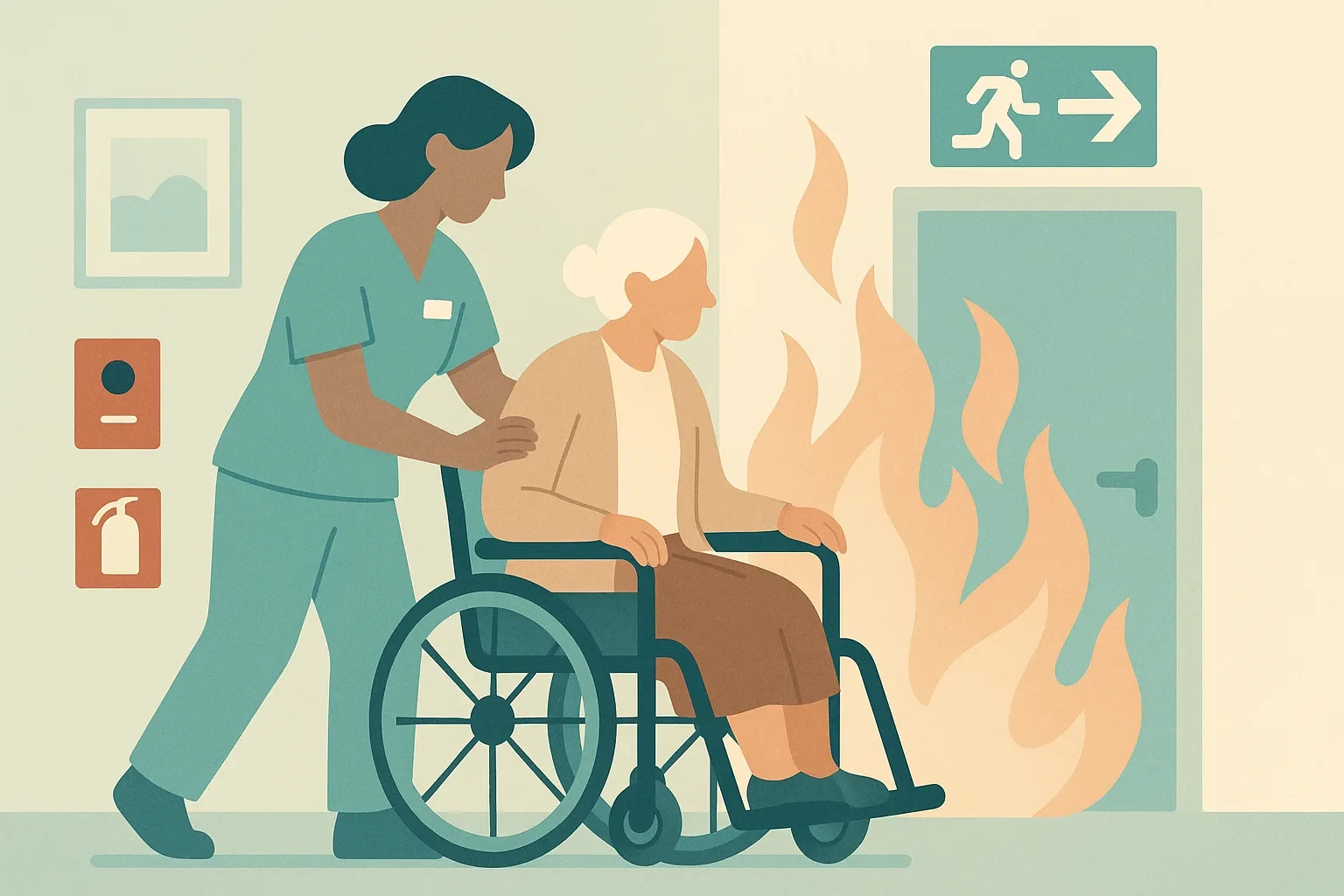
Fire Safety Policy
Prevention, detection, evacuation (including PEEPs) and staff responsibilities under the Fire Safety Order 2005.
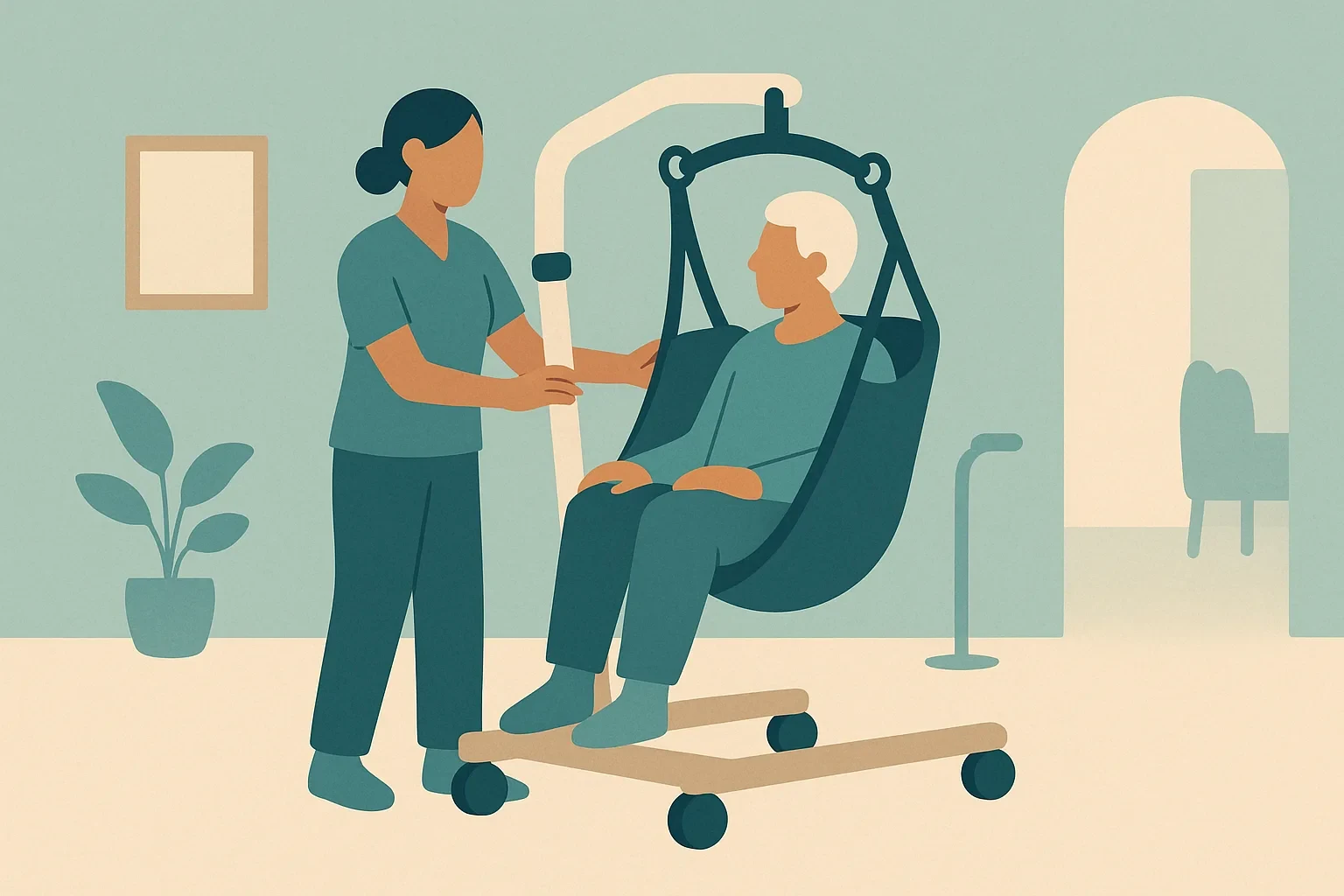
Moving and Handling Policy
Safe moving and handling of people and loads, training and equipment under LOLER and MHOR.
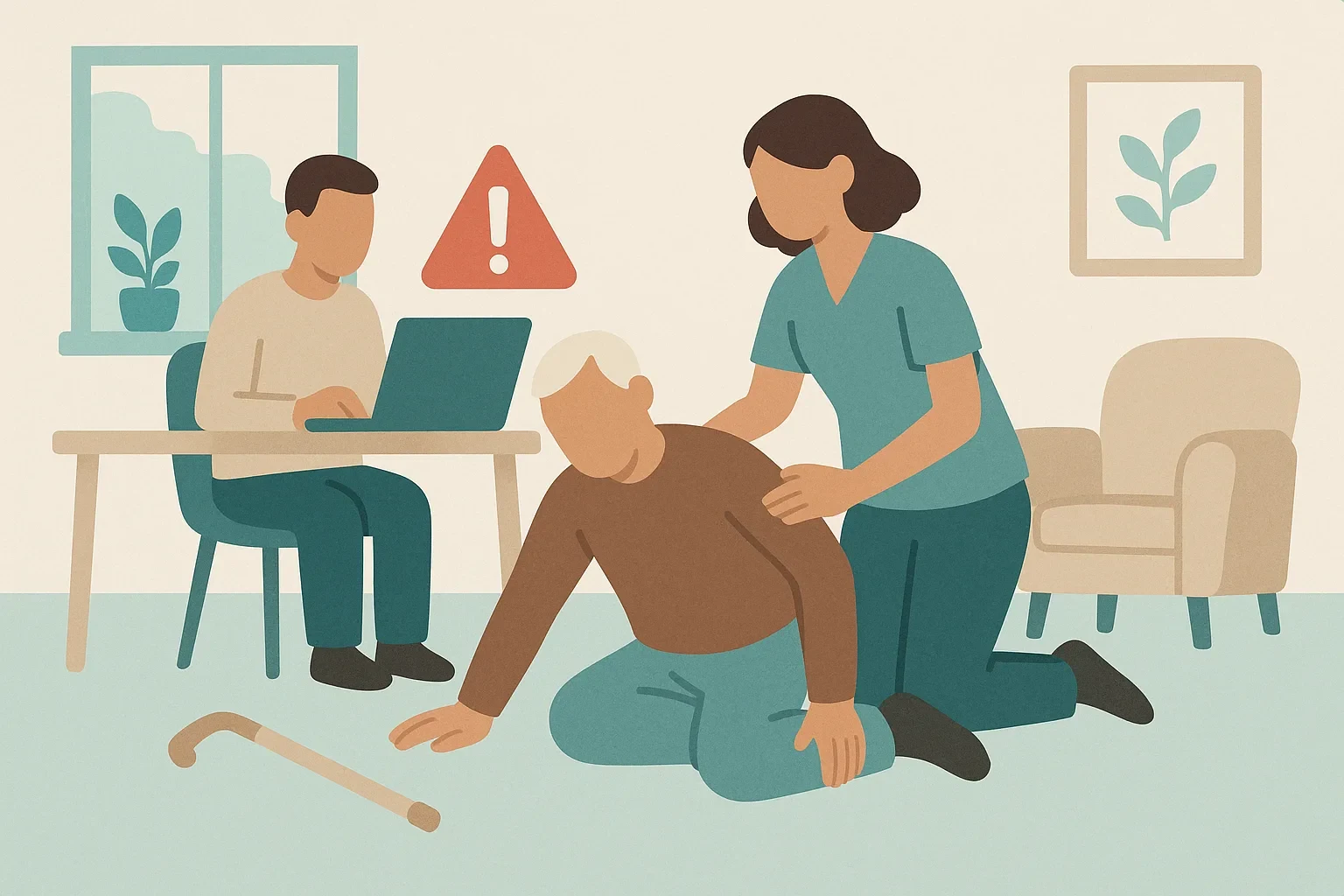
Incident and Accident Reporting Policy
Recording, investigating and learning from incidents, RIDDOR and CQC notifications.
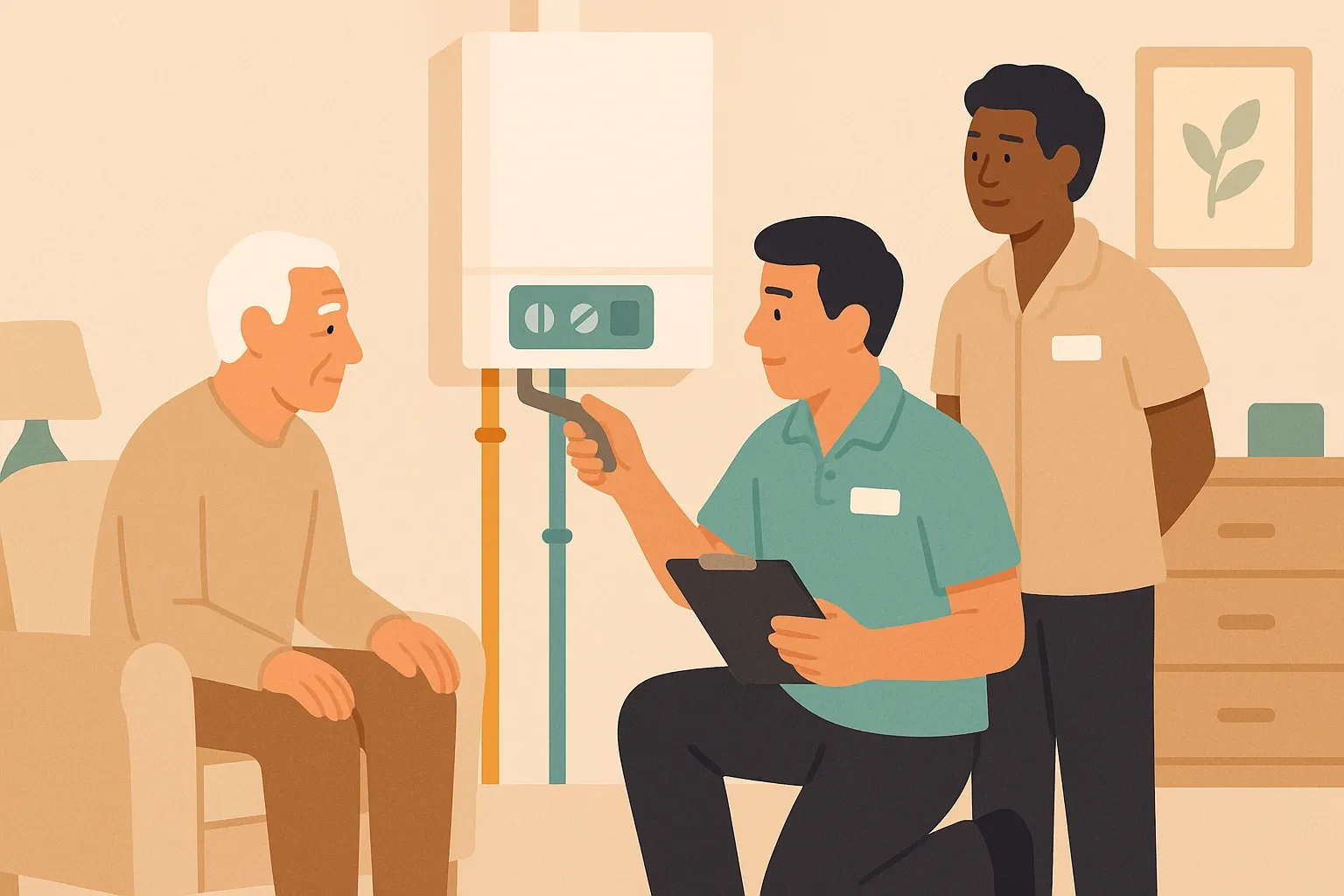
Gas Safety Policy
Annual gas safety checks, maintenance and emergency procedures.
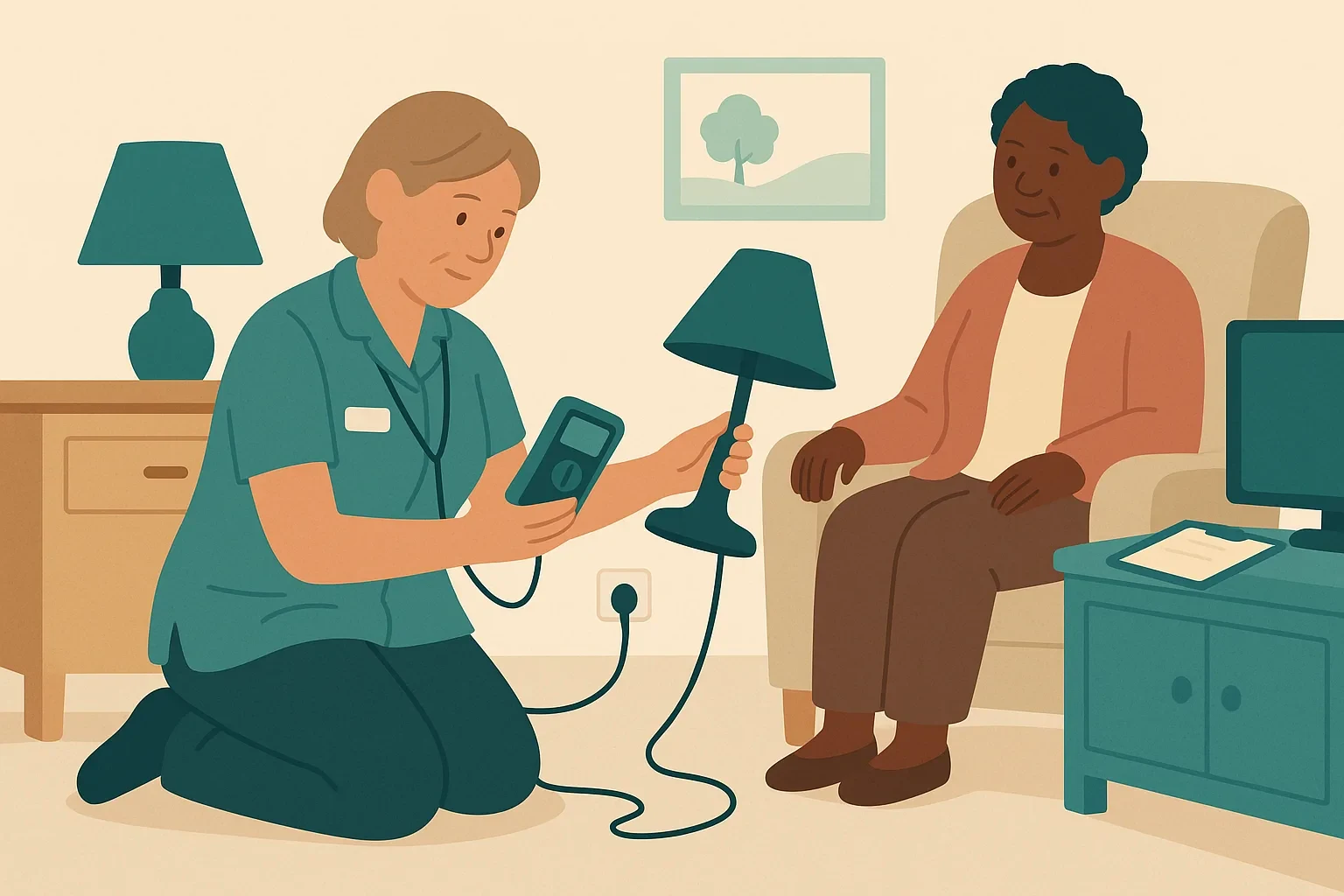
Electrical Safety Policy
Fixed installation testing, PAT and safe use of electrical equipment.
Compared
The four ways care services get a policy.
We have compared what each approach does rather than naming competitors, because products change and the comparison should still be true next year.
| CareStream | A policy pack | A consultant | A free template | |
|---|---|---|---|---|
| Questions asked at the point of purchase, so it is personalised rather than blank | ||||
| Written for your service, naming your manager and your leads | ||||
| Structured from the regulations, every required element checked before it is sent | ||||
| A branded companion document setting out the law it was written against | ||||
| Read and approved by a person before it carries your name | ||||
| Prints on your own letterhead with a sign-off and version block | ||||
| Named role holders update everywhere when the person changes | ||||
| Kept current when the law changes, and you are told what changed | ||||
| Turnaround stated before you buy | ||||
| Your staff can ask it questions in their own language | ||||
| What it costs | £39 to £79 per policy, one-off | £250 to £995 for the pack | A day rate, typically £400 upwards | Nothing |
Prices are the published rates of the common alternatives as at September 2026, for comparison only.
Training
Owning the policy is half of it
An inspector asks whether your staff understood it, not whether you hold it. Ninety eight modules written and kept current by us, to the same regulations, from £25.99 per staff member with no subscription.