Dual Diagnosis Awareness training for your team
Licence this one module for the staff who need it. No CareStream subscription, no minimum order, no annual contract. One licence covers one member of staff for the complete Dual Diagnosis Awareness module, in the language they think in.
- Teach, then assessA full lesson with a real care scenario, followed by an assessment that checks they can apply it.
- Over 60 languagesStaff read the lesson and answer in their first language. Your records stay in English.
- Wrong answers get followed upA short micro-lesson goes back to the staff member on the exact point they missed, then they retry.
- Evidence you can hand overA dated completion record and a certificate per person, ready for your CQC file.
Dual Diagnosis Awareness, start to finish.
This training helps you recognise and respond effectively when someone has both mental health difficulties and substance use problems at the same time. You will learn how to apply the no wrong door principle, manage risk safely, work in partnership with mental health services, and know when to escalate concerns. This is the same module CareStream subscribers get, written for care settings rather than adapted from a generic course. It runs about 35 minutes and ends with a 20 question assessment.
- What Are Co-occurring Conditions and Why Do They Matter
Co-occurring conditions means a person has both a mental health problem and a substance use problem at the same time.
- Recognising Mental Health Difficulties in Daily Practice
You need to recognise the signs of mental ill health from the first contact and throughout your work.
- Understanding the Two-Way Relationship Between Substances and Mental Health
Substance use and mental health affect each other in both directions.
- Assessing and Managing Risk: Suicide, Self-Harm and Overdose
People with co-occurring conditions are at high risk of suicide, self-harm, overdose and early death.
- Working in Partnership and Knowing When to Escalate
Responding well to co-occurring conditions usually means working in partnership with mental health services, GPs, crisis teams and hospitals.
- Using a Trauma-Informed, Non-Judgemental Approach
Many people using substances have experienced trauma, abuse, neglect or loss.
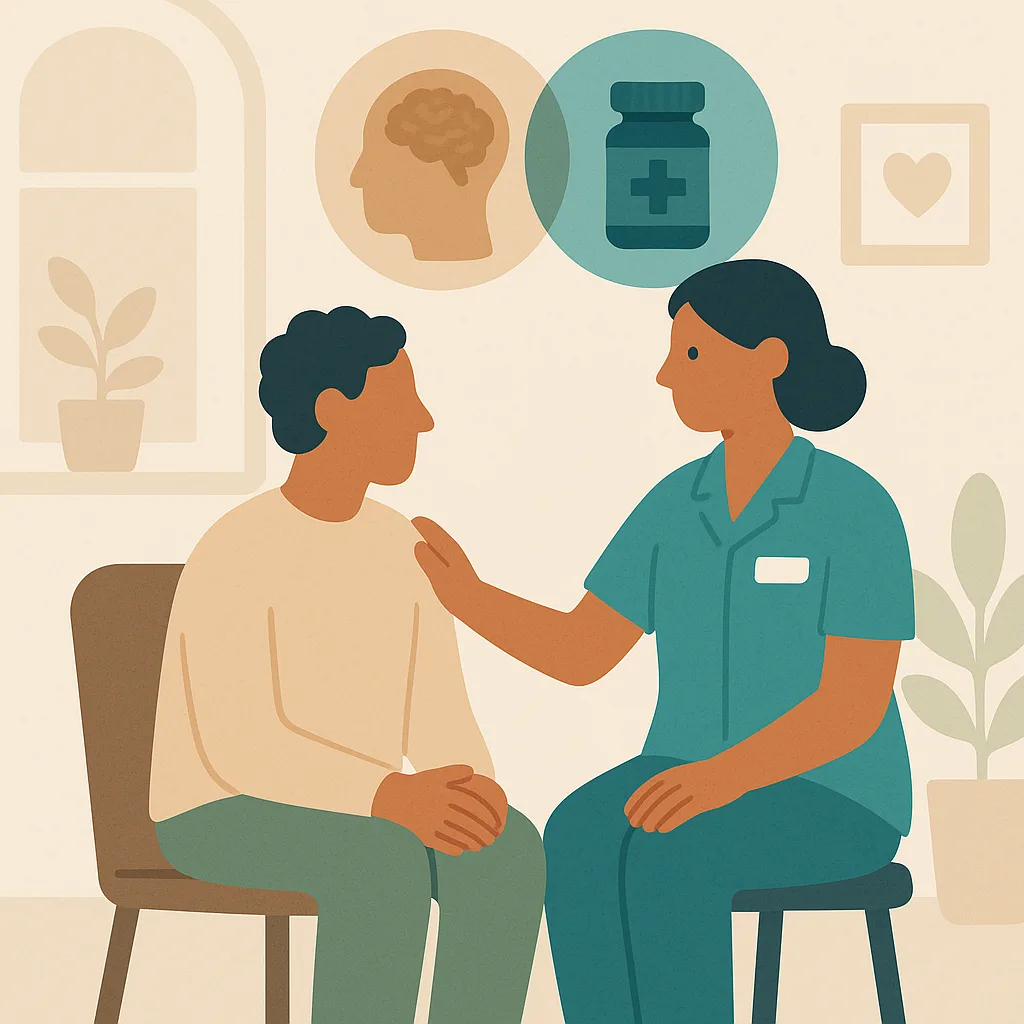
What your team will be able to do.
- Recognise the signs of common mental health difficulties in people who use substances and understand the two-way relationship between mental health and substance use
- Apply the no wrong door principle by engaging people with co-occurring conditions rather than excluding them or requiring one problem to be fixed before addressing the other
- Assess and manage risk including suicide, self-harm, overdose and vulnerability in people with co-occurring conditions
- Identify when to escalate concerns and how to work in partnership with mental health services and other agencies
- Use a trauma-informed, non-judgemental approach that reduces stigma and builds trust with people who may be chaotic or hard to reach
Dual Diagnosis Awareness in facts.
About 35 minutes, 6 lessons
20 questions, pass mark 80%
Every year
None, completed fully online
What staff come away with
Most people using your service have co-occurring mental health and substance use conditions. This is the norm, not the exception.
Apply the no wrong door principle. Never turn someone away or tell them to fix one problem before addressing the other. Work with both needs together.
Recognise the signs of mental ill health including low mood, anxiety, trauma, psychosis and suicidal thoughts. Ask about mental health routinely.
Take risk seriously. If someone is suicidal, experiencing psychosis or severely unwell, escalate immediately. Do not leave them alone if they are in crisis.
Know your limits. You are not expected to treat severe mental illness. Work in partnership with mental health services and escalate when needed.
Use a trauma-informed, non-judgemental approach. Be patient, build trust, reduce stigma, and keep going even when people are chaotic or relapse.
Three steps, and nothing to set up.
Checkout takes a minute. Your licences and a receipt arrive by email straight away.
Enter their names and emails, or paste a list. They get an invite to the hub on any device.
You see who has finished, their score, and their certificate as each one comes in.
Everything a licence includes.
Dated, named, and downloadable as a PDF for your training file.
Over 60 languages, chosen per staff member. Your reporting stays in English.
Buy one module for one person if that is all you need. Nothing recurring.
Licences do not expire the moment you buy. Staff have a year to complete.
Before you buy.
How long does Dual Diagnosis Awareness training take?
About 35 minutes, across 6 short lessons, followed by a 20 question assessment with a pass mark of 80%. Staff can stop and pick up where they left off.
What does the Dual Diagnosis Awareness module cover?
6 lessons: What Are Co-occurring Conditions and Why Do They Matter, Recognising Mental Health Difficulties in Daily Practice, Understanding the Two-Way Relationship Between Substances and Mental Health, Assessing and Managing Risk: Suicide, Self-Harm and Overdose, Working in Partnership and Knowing When to Escalate and Using a Trauma-Informed, Non-Judgemental Approach. Each one pairs the teaching with a care scenario and a quick check.
How often do staff need to refresh Dual Diagnosis Awareness?
CareStream sets this module so it renews every year. Staff and managers are reminded before a certificate lapses, so the refresher is booked before the gap appears.
Is Dual Diagnosis Awareness completed fully online?
Yes. It is knowledge based, so staff complete the lessons and the assessment online and receive their certificate at the end. There is no practical sign-off.
Do I need a CareStream subscription to buy this?
No. This page exists precisely so you do not. You buy the licences you need, your staff complete the module in the CareStream hub, and that is the end of it. There is no trial to start, no card kept on file, and no subscription that begins quietly afterwards.
If you later decide you want the full platform, anything your staff have already completed carries across into your account.
What does one licence actually cover?
One licence covers one named member of staff for this one module, including the lesson, the assessment, any follow-up questions triggered by a wrong answer, and their certificate. Licences are not shared between people, because the completion record has to belong to an individual to be worth anything at inspection.
How quickly can staff start?
Immediately. The licences are on your account as soon as the payment clears, and staff get their invite the moment you add them. There is no onboarding call and no setup period.
Can staff complete it in another language?
Yes. Each staff member has a first language on their profile, and the lesson, the questions and the feedback all arrive in it. They answer in that language too. What you see as a manager stays in English, so the record reads the same whoever completed it.
What if someone fails the assessment?
Nothing is lost. A wrong answer triggers a short follow-up lesson on that specific point, and they retry it. The record shows the improvement from the first attempt to the latest, which is stronger evidence than a single pass mark, because it shows the gap was found and closed.
Can I buy for more than one service?
Yes. Buy the total number of licences you need and allocate them across your services when you add staff. If you are licensing for a group and want an invoice rather than a card payment, get in touch and we will raise one.
Licence any of these the same way.
Same price, same terms, no subscription needed.