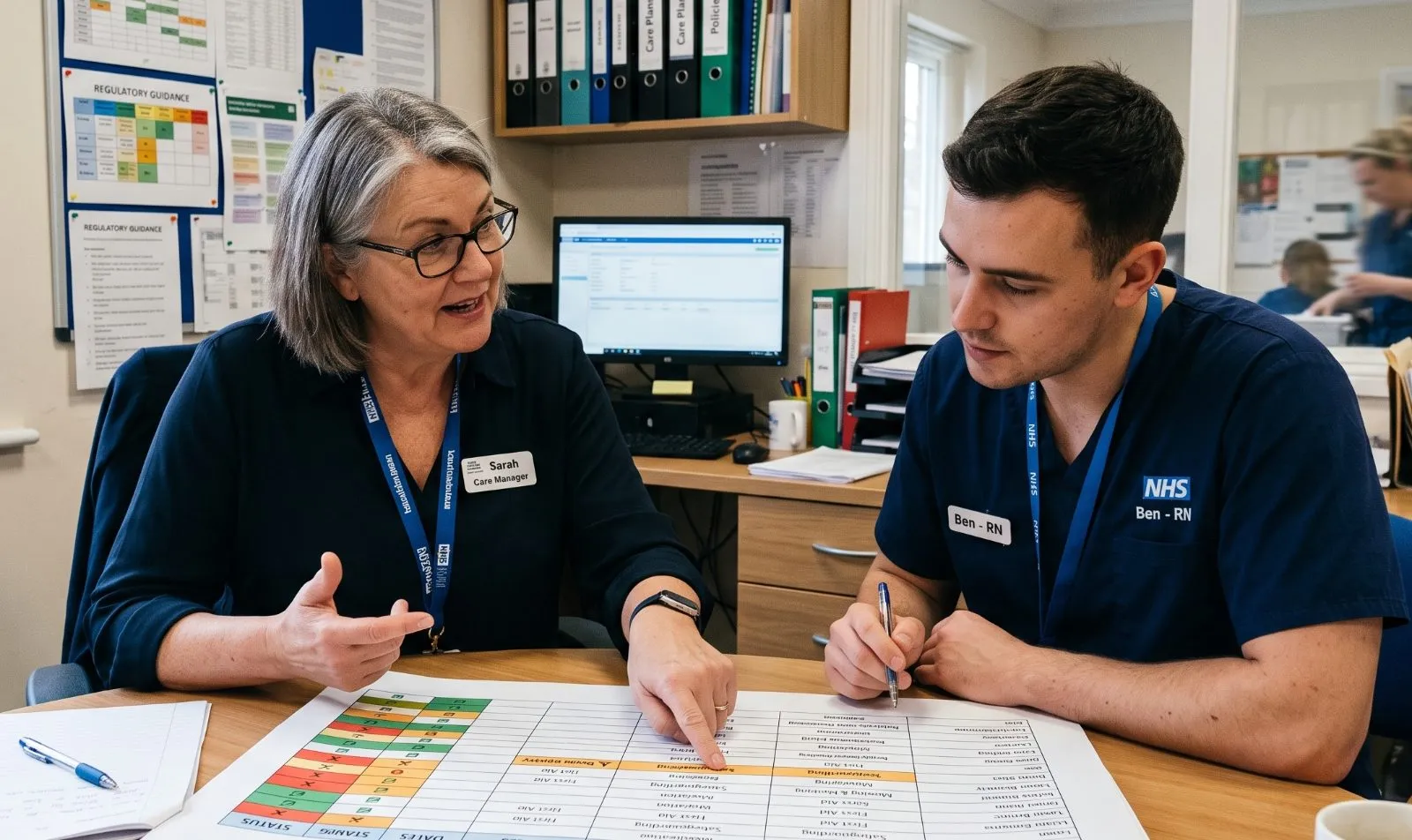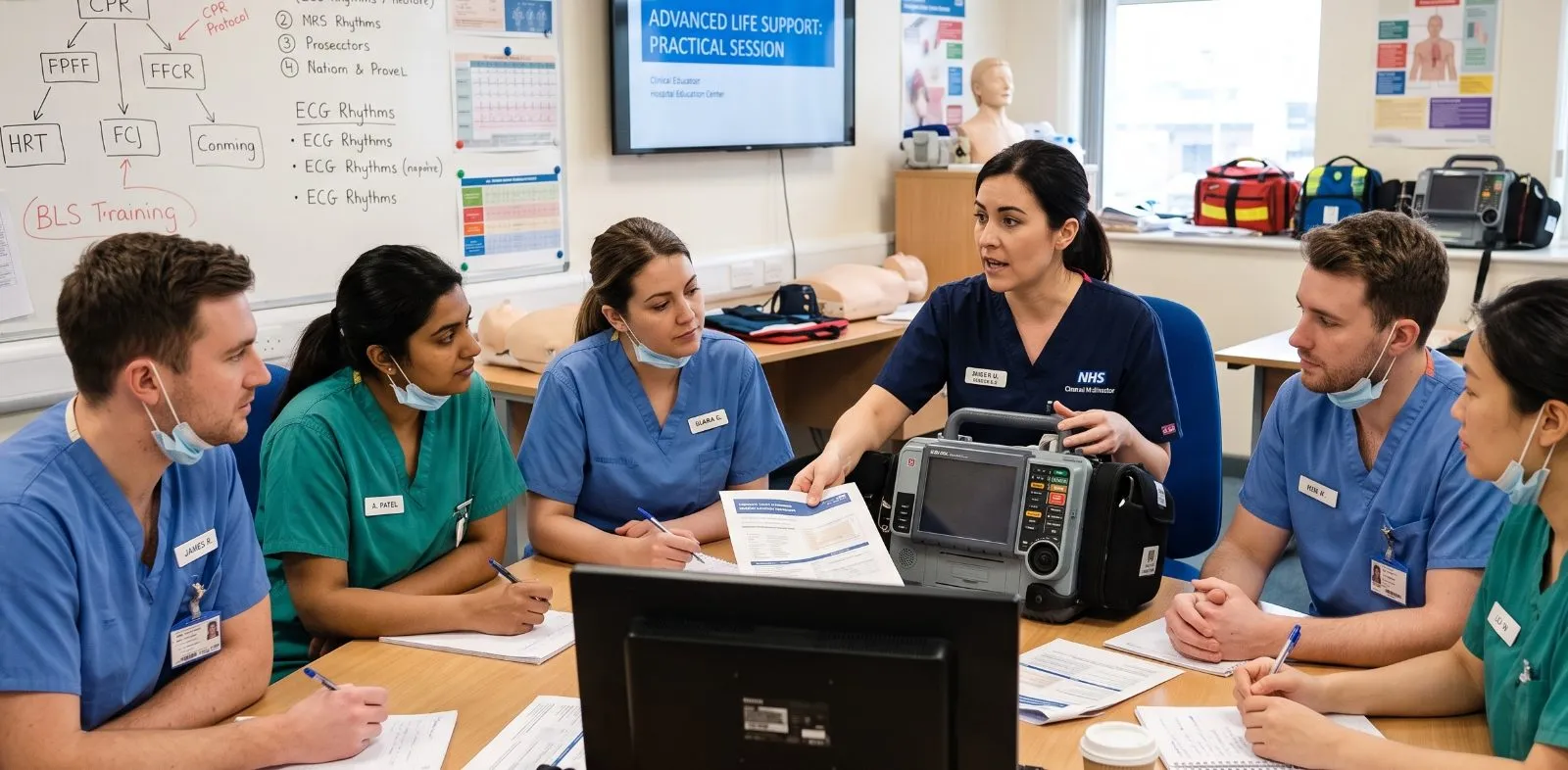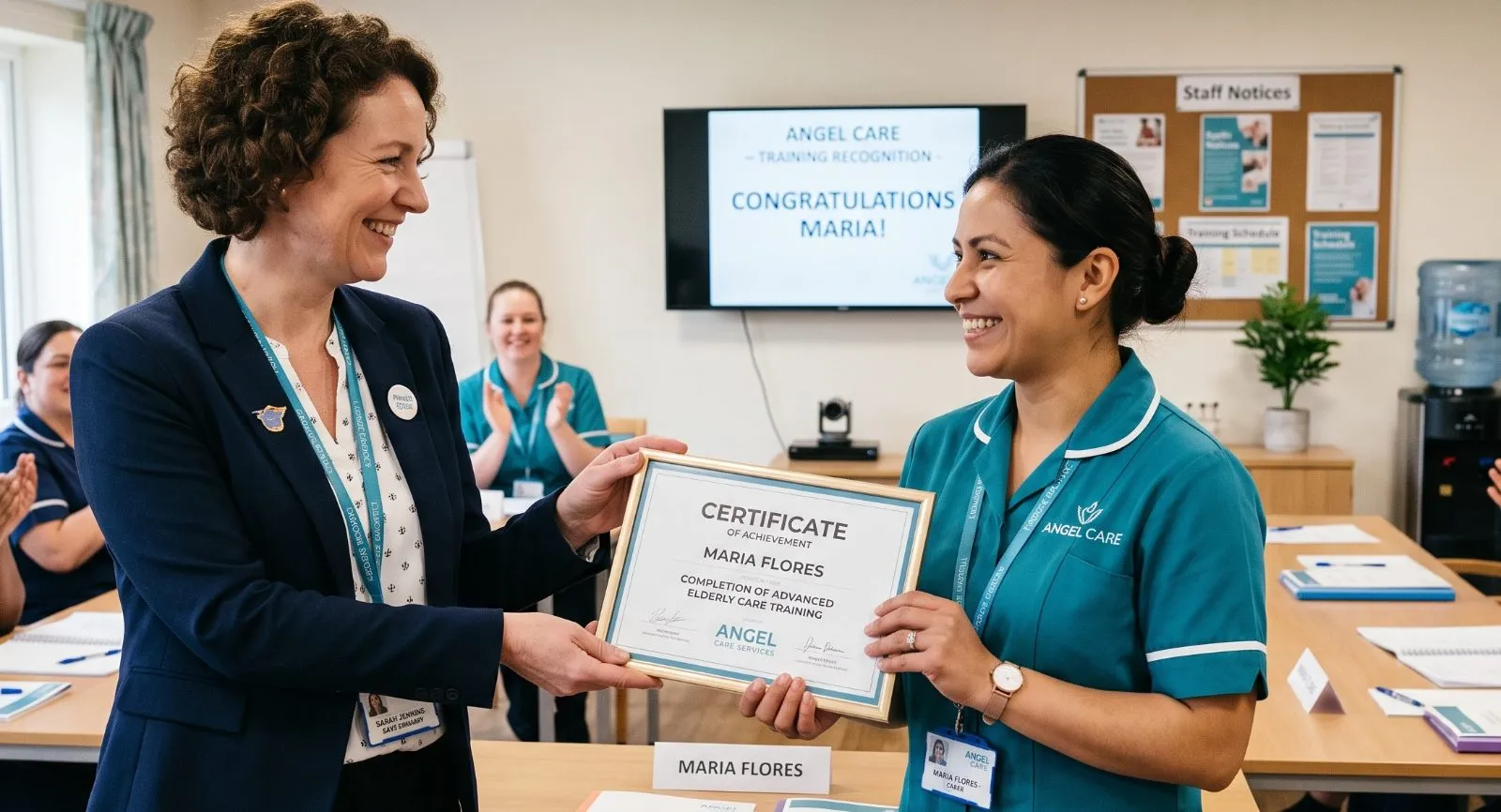
Your training room is empty because your staff are on shift. That is not a scheduling failure. It is the reality of running a 24/7 care service, and it is exactly why microlearning for care staff has moved from a nice idea to an operational necessity. But before you replace your induction day with a library of five-minute videos, it is worth being honest about what short training modules care teams actually complete, retain, and use when it matters.
Some of what gets called bite-sized training in a care home is genuinely useful. Some of it is just a shorter version of the same old problem.
Why Traditional Training Fails the 24/7 Rota
The problem is not the content. It is the container. A classroom session assumes a team can gather at the same time, in the same room, with enough uninterrupted attention to absorb new information. A 24/7 rota makes that assumption collapse before the first slide appears.
Care home staff commonly work 12-hour shifts with little downtime. By the end of a shift, a carer is not ready to learn. They are ready to sit down, eat something, and go home. Asking them to stay for a two-hour training block, or asking them to come in on a day off, is not a training strategy. It is a retention risk to wear a lanyard.
Then there is the cover problem. Every hour a carer spends in a training room is an hour the floor needs backfilling. That means overtime, agency staff, or a senior carer stretching themselves across two roles. The training itself might be free. The cover is not.
The same session often runs three times to catch the day team, the night team, and the part-timers. That multiplies the manager's workload and creates a strange inconsistency: the night team gets the condensed version, the day team gets the full version, and nobody gets the same experience.
Cognitive load matters here too. Research cited across the sector links elevated cognitive load with heightened burnout in healthcare workers. Adding a dense training block to an already demanding shift does not improve retention. It reduces it. The carer who nods through a PowerPoint after a night shift is not learning. They are surviving.
What Microlearning Actually Means in a Care Setting
Microlearning is not a buzzword. It is a specific format with specific parameters, and getting those wrong defeats the purpose.
Sessions run between 3 and 10 minutes, focused on a single concept or procedure. That is the sweet spot. Shorter than three minutes rarely carries enough substance. Longer than ten minutes and you are drifting back into traditional training territory, just delivered on a phone.
The format suits procedural refreshers. PEG feeding steps. Manual handling updates. Infection control checks. The kind of knowledge a carer needs to confirm quickly, not the kind they need to explore deeply.
Mobile delivery matters more than session length. Staff need training on the phone they already carry, not on a desktop computer in the manager's office they will never sit at. If the module does not work on a phone, it does not work.
Pause and resume functionality is essential. A carer will be interrupted. That is the job. A module that forces them to restart from the beginning after every call bell is not flexible. It is frustrating.
The most effective pattern is simple: one lesson, one question. The session ends with a single check that confirms understanding. Not a 20-question quiz. Not a certificate ceremony. Just a clear signal that the point landed.
How Short Should a Module Be?
The research is consistent. Sessions between 3 and 10 minutes work for care teams. Beyond that, you are back in traditional training territory with a different label.
NHS bite-sized videos run around 3 minutes for clinical measurements like blood pressure and oxygen saturation. That is enough time to demonstrate a procedure and check understanding. It is not enough time to teach someone to interpret a deteriorating resident.
Skills for Care offers longer modules, 25 to 30 minutes, for topics like Dementia Tier 1. That is a useful signal. When a sector body stretches a module to half an hour, it is telling you the subject cannot be compressed further without losing something important.
A 5-minute module on hand hygiene is realistic. A 5-minute module on end-of-life care is not. The length should fit the topic, not the other way around. When you force a complex subject into a short format, you do not make it accessible. You make it shallow.
Book a short demo and see how CareStream keeps your policies, training and CQC evidence in one place.
Book a demoWhat Short Form Learning Does Well
Short modules earn their place when the goal is reinforcement, confidence, and quick access to the correct procedure. They are not a replacement for structured training. They are the layer that keeps that training alive between sessions.
Statutory refreshers work well in this format. Safeguarding alerts, fire safety updates, moving and handling prompts. These are topics staff have already covered in depth. What they need is a regular nudge that keeps the key points fresh.
Procedure checks are where short-form learning genuinely shines. The carer who needs to confirm a step mid-shift without waking the manager can check a module on their phone and get the answer in under 30 seconds. That is not training in the traditional sense. It is safer care.
Induction basics fit too. New starters can complete core modules between shadowing shifts, which means they arrive at their first supervised task with some context instead of none.
Confidence building is the quiet benefit. Staff who can check a policy in their own language ask better questions. They do not nod along and hope for the best. They confirm, then act.
Evidence capture runs through all of it. Every completed module logs automatically. That means your audit trail builds while your team learns, not as a separate admin exercise you do the night before an inspection.
What Short Form Learning Is Wrong For
Some subjects cannot be taught in five minutes, and pretending otherwise damages trust in the whole approach. Staff know when a module is too thin. They feel it.
Complex clinical skills need supervised practice. Wound assessment, medication competence, recognising deterioration. These are not knowledge checks. They are judgement calls, and judgement develops through doing, not watching.
Safeguarding investigations require depth. Understanding nuance, escalation pathways, and professional judgement cannot be reduced to a series of quick wins. A carer who has watched a five-minute safeguarding video has not been trained in safeguarding. They have been introduced to a topic.
New staff induction is another area where short-form learning should be a supplement, not the main event. The Care Certificate exists because care work cannot be reduced to a series of quick wins. It requires observed practice, feedback, and time.
Leadership and supervision skills develop through reflection, coaching, and feedback over time. No module, however well designed, replaces that.
The honest position is this: short-form learning complements structured training and face-to-face supervision. It does not replace them. Anyone who tells you otherwise is selling something.
Designing Training That Survives a 12-Hour Shift
The format has to match the reality of the working day. A module that requires 15 uninterrupted minutes will fail before it starts. A module that requires a desktop computer will fail even sooner.
Deliver to the phone, not the desktop. Most care staff will never sit at a work computer. They will, however, check their phone between tasks. That is where training during shifts actually happens.
No app download and no password friction. Shared logins and forgotten passwords kill adoption faster than any content problem. If a carer has to remember a username to access training, they will not access training.
Offer voice and chat options so staff can ask questions hands-free between tasks. A carer preparing medication should not have to type a query. They should be able to ask and get an answer.
Translate into the languages your team actually speaks. Over 30% of UK care workers were born outside the UK. That is an asset. The failure is English-only paperwork, not the workforce. When a carer can check a policy in their own language, they are more likely to check it at all.
Build modules around your own policies, not generic content that contradicts your procedures. A generic moving and handling module might tell staff to do something your service does differently. That creates confusion, not confidence. Your training should reflect your setting. The staff training modules work best when they are built from the documents your team already uses.
The Demo Lesson Pattern That Works
The most effective short module follows a simple rhythm: show, test, confirm.
Open with one lesson, a single procedure or policy point, in under 5 minutes. Keep it specific. One thing, not three.
Follow with one question that checks understanding. Not a 20-question quiz. One question that tells you whether the point landed.
A quick demo shows exactly how CareStream would work for your service. Book a time that suits you.
Book a demoProvide the answer in the staff member's own language, drawn from your uploaded policies. The AI does not make things up. It cannot. It retrieves and translates what you have already written.
Log the completion automatically so the evidence builds itself. No spreadsheet. No chasing signatures. The record exists because the learning happened.
Staff can repeat the module anytime. Confidence comes from reinforcement, not from a one-off pass. The carer who checks the PEG feeding module three times in a month is not failing. They are being careful.
Making Micro Learning Part of Your Compliance Evidence
Training is not just about learning. It is about proving the learning happened when the inspector asks. That is where short-form learning becomes a compliance asset, not just a staff benefit.
Every completed module and every staff question is logged into your audit trail. The log is automatic. You do not reconstruct it the night before an inspection. It is already there.
The CQC evidence pack builds itself from those logs. When an inspector asks how staff access policies at night, you have a live record instead of a hopeful answer. That is the difference between demonstrating compliance and describing it.
Policy gap detection flags unanswered staff questions, which shows you where your documentation is unclear. If staff keep asking the same question about a procedure, the problem is probably the policy, not the staff. That is useful intelligence.
Training payroll reporting connects completion to hours worked, so you can see who has and has not engaged. No more chasing paper certificates. No more guessing whether the night team actually did the module.
The CQC Readiness Report gives you a live view of where you stand, not a guess. It is the difference between preparing for an inspection and hoping for the best.
Getting Started Without Disrupting the Rota
Implementation should not require a training day to set up. The whole point is that it fits around the shift.
Upload your existing policies and handbooks. The AI answers only from those documents. Nothing invented. Nothing generic. Your staff get answers that reflect your service, not a template.
Staff access the hub from any phone. No app store. No IT skills required. If they can send a text, they can use it.
Set up in under an hour, with a 14-day free trial and no charge until day 14. Start with one high-risk procedure and expand once staff see the value. Do not try to roll out everything at once.
Simple pricing from £85 per month with no surprises. Cancel anytime if it does not work. The platform should earn its place, not lock you in.
The training room will still be empty. That is fine. The learning will be happening on the floor, between tasks, in the languages your team actually speaks. And the evidence will be building itself while you get on with the job of managing care.
Conclusion: The Learning Moves to Where the Work Is
The honest version of the microlearning argument is the one this article already makes: short modules are a layer, not a replacement. They keep structured training alive between sessions, they give a carer a way to confirm a procedure mid-shift without waking anyone, and they turn induction from a single overwhelming day into something that accumulates. CareStream is built for that layer specifically. Modules are generated from your own uploaded policies and handbooks, so what a carer reads matches what your service actually does rather than contradicting it.
They open on the phone already in their pocket, with no app and no password, in the language they think in, and they pause and resume because a call bell is not a reason to start again. The completion logs itself against the staff record, and the question a carer asks at 3am logs alongside it, which over months tells you something an attendance register never could: where your documentation is unclear, and which procedures people keep needing to check. None of this substitutes for supervised practice on a hoist, a competence assessment on medication, or the depth that safeguarding genuinely requires. It is the reinforcement that makes those things stick, and the evidence trail that assembles itself while they do.
Start with one high-risk procedure. Let the staff decide whether it earns its place, because they will either use it or they will not, and that is the only adoption metric worth watching.
Sources
- Skills for Care — Learning and development · skillsforcare.org.uk
- CQC — Regulation 18: Staffing · cqc.org.uk
- CQC — Regulation 17: Good governance · cqc.org.uk
- HSE — Moving and handling in health and social care · hse.gov.uk
- Skills for Care — Care Certificate standards · skillsforcare.org.uk
- Skills for Care — Workforce nationality and international recruitment · skillsforcare.org.uk
Frequently asked
How long should a module actually be?
Between roughly three and ten minutes for a single procedure or concept, and the length should follow the topic rather than the other way round. Under three minutes rarely carries enough substance. Over ten and you are running traditional training on a smaller screen. A five-minute module on hand hygiene is realistic. A five-minute module on end-of-life care is not, and staff can tell the difference immediately.
Can microlearning replace our mandatory training?
No. It is a reinforcement layer that keeps structured training alive between sessions, not a substitute for it. Statutory refreshers, procedure checks and induction basics suit the format well. Complex clinical judgement, safeguarding depth, and anything requiring supervised practice do not, and compressing them damages trust in everything else you deliver in that format.
What makes a module actually get completed on shift?
Three things, and none of them is content quality. It has to work on a phone rather than a desktop nobody sits at. It has to open without a password to remember or an app to install. And it has to pause and resume, because a carer will be interrupted and a module that restarts from the beginning after every call bell will be abandoned on the second attempt.
Why build modules from our own policies rather than buying generic ones?
Because a generic moving and handling module may instruct staff to do something your service does differently, and that creates confusion rather than confidence. Content drawn from your own documents reflects your procedures, your equipment and your standards, which also makes it defensible evidence rather than proof that you bought a licence.
Is repeating a module a sign of failure?
The opposite. A carer who checks the PEG feeding module three times in a month is being careful, and the log of that behaviour tells you something useful about which procedures feel uncertain. Confidence comes from reinforcement rather than a one off pass, and treating repetition as a failure signal discourages exactly the checking you want.
Written by
 Len BurgessSenior Care Advisor
Len Burgess has worked in the care sector for over 8 years, with hands-on experience across residential, nursing and community settings. Having supported teams through CQC inspections and the day-to-day reality of keeping a service compliant, he writes about regulation, quality and best practice in a way that's grounded in what actually happens on the floor, not just what the guidance says.