
Language barriers in healthcare teams: one carer should not be the interpreter. Check what everyone understood.
Language barriers in healthcare teams rarely announce themselves. One kind, bilingual carer starts explaining things to colleagues, and everyone assumes it has worked. With short training built from your own policies, every carer is checked on what they understood, in the language they think in.
14 day free trial · Set up in a day · UK data residency
The team has a quiet interpreter. Nobody has asked what that costs.
A scenario we see in many care settings.
A manager runs a short falls briefing before the morning shift. In the team is one carer who speaks the first language of two newer colleagues, so she turns to them afterwards and goes through it again. Everyone nods. It happens again after the next policy update, and the next. She has never been asked and never been thanked, and she loses ten minutes of her own break each time. The manager is grateful and moves on. Nobody has checked what the two colleagues took away, or what got lost in the retelling. Here is how that plays out.
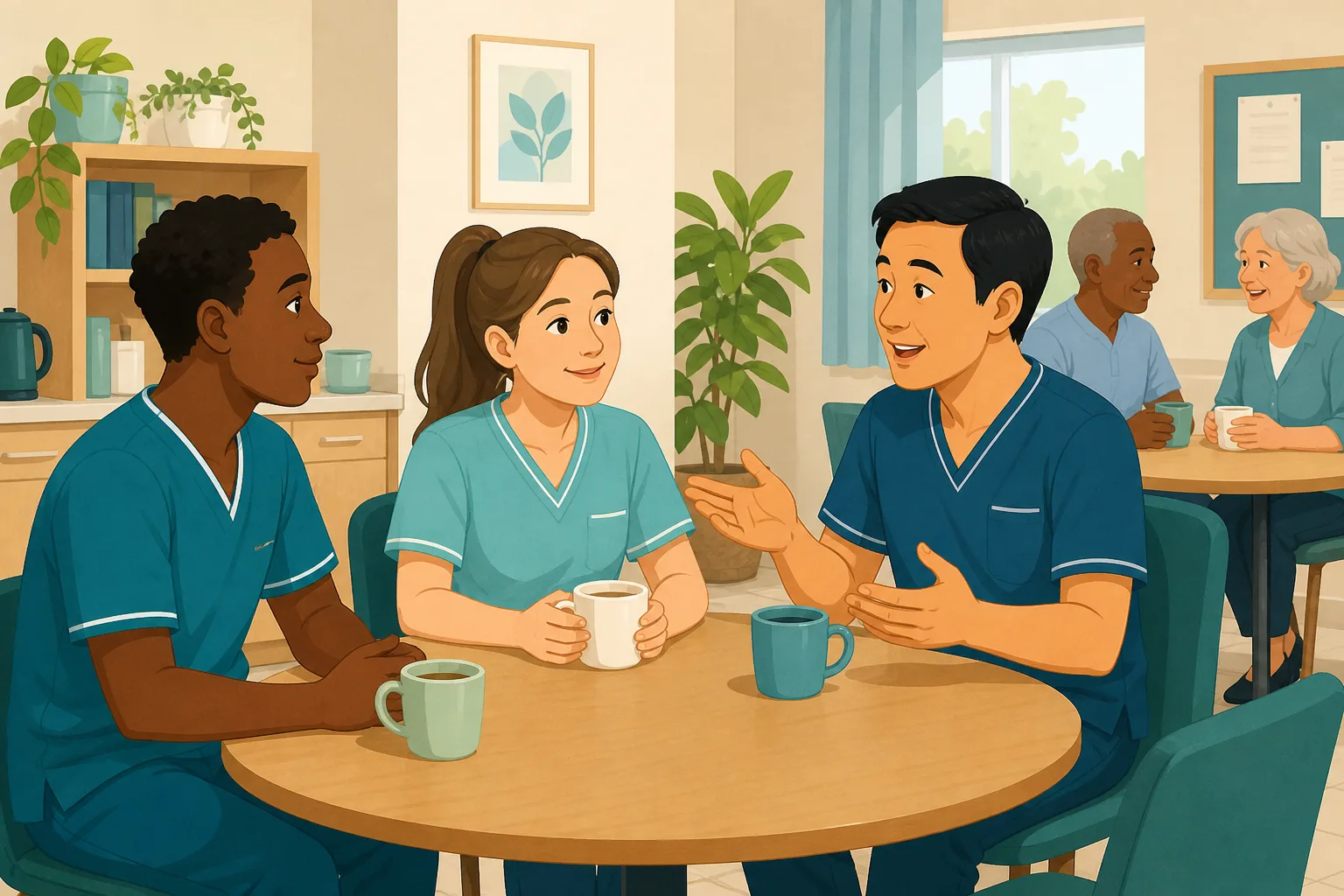
The manager gives a short falls briefing in English to the morning team.
One bilingual carer quietly repeats it to two colleagues over tea.
She does it again for the new medication reminder. The team is grateful.
She is the unofficial interpreter for every briefing and update. Nobody has asked if she minds.
She summarises as she goes. Small details and exact steps do not always survive a retelling.
Nobody has asked them. A nod is polite, and it is not a check.
A briefing delivered and a team that seems fine. No record of what each person understood.
“How did staff learn the falls procedure?” The honest answer is: through one colleague.
The colleague who helps is not the problem. The gap is that a team's understanding rests on one person, with no check behind it. Here is how CareStream gives each carer the content in their own language, and gives you the answers.
An example scenario, not a named service.
A helpful colleague is not a system
Language barriers in healthcare settings are quiet.
It is unfair to the person translating
Ad hoc interpreters carry extra work, extra responsibility and the worry of getting it wrong. It is rarely part of their job, and it is easy to take for granted.
Nobody checks what the others understood
A retelling is a summary, and a nod is not an answer. Without a check, the manager cannot tell a word gap from a knowledge gap.
A multilingual workforce deserves the same standard
Every carer should meet the policy and the training directly, in a language they are comfortable with, and be checked in the same way as everyone else.
Everyone gets the same content, in their own language.
This is the Training built from your own policies feature, with the multilingual Staff Hub, in the order a manager and a carer meet it. You can also read how adhoc training works after an incident.
Allocate the topic to the whole team, not just the person who translates
- Pick a topic module, such as Falls Prevention, and tick the staff it is for, including those who usually rely on a colleague
- CareStream builds the lessons and questions from your own policies where they cover the topic, and you can edit and preview them first
- Staff complete it in the Staff Hub on their own phone, so nobody has to wait for a retelling
Illustration based on the Training screen. Example questions.
A wrong answer becomes a short lesson, not a judgement
- A wrong answer goes into the carer's Follow-up tab in the Staff Hub, and they get an email, in English, at most once a day
- They choose Learn & retry, a short lesson then a fresh question, or Just retry the same question, as often as they need
- The lesson is built from your own policies, so it teaches what your service actually does
A few things to revisit. Learn the point, then answer, or just retry. Either way it clears from here.
Moving someone too soon can make an injury worse, so check how they are and get help before anything else.
Remember- Stay with the person and keep them calm
- Do not move them until they have been checked
- Call for help and follow your falls procedure
You find a resident on the floor beside her bed. She says she is fine and tries to stand.
Illustration based on the Staff Hub Follow-up tab. Example content.
Staff learn in the language they think in
- Your admin sets each person's first language and, if you wish, a second language
- With switching allowed, a carer can open one lesson or question set in their second language with Read in their language
- Translation is machine translation using our own machine learning, with your own glossary and approved staff suggestions. It is on the paid plans only, and it is not professional human translation
Always communicate in their first language
All messages CareStream sends are translated into English.
Allow switching a set to their second language
In the hub they can flip any single training, induction or CQC set into Polish, just for that set, if they are struggling in their first language.
Let them suggest better translations
They can propose improvements to translated content. Changes need your approval before going live.
Illustration based on the staff record Language settings. Translation is on the paid plans.
See the gaps across the team, and whether they closed
- The Knowledge gaps view shows the most missed questions and the weakest topics, so you can see whether a point needs a team conversation
- See how gaps are being closed, and mark a person's record as reviewed
- A Monday digest email brings the picture to you without you asking
Illustration based on the Knowledge gaps view. Example figures.
The questions managers ask, and how CareStream answers them
Read this as a conversation. The questions are the ones we hear most.
One of my carers translates for the others and is happy to. What is the problem?
Often there is none, and her help is valuable. The risk is that the team's understanding depends on one person's summary, and nobody checks what the others took in. It also adds unpaid work to her day. CareStream does not replace her kindness. It gives each carer the content directly, so she can be a colleague again and not the team's interpreter.
How would I know a quieter colleague understood the briefing?
After the briefing you allocate short training on that topic, built from your own policies. Each carer answers the questions on their own phone in the Staff Hub, and you see who got what wrong. A wrong answer then points to a knowledge gap that can be closed, not a missed word that was never noticed.
What happens when someone gets a question wrong?
It goes into their Follow-up tab and they get an email, which is in English only. They choose Learn & retry, a short lesson (why it matters, what to remember, a realistic situation) then a fresh question, or Just retry the same question. They can retry as often as they need. Nothing alerts you each time, so the picture reaches you through Knowledge gaps and the Monday digest.
Can staff read the training in their own language?
On the paid plans, yes. Your admin sets each person's first language, and training questions, lessons and policies open in it. If you allow switching and set a second language, a carer can flip one lesson or question set into it with Read in that language. The hub menus and buttons stay in English.
How good is the translation?
It is machine translation using our own machine learning, with your own translation glossary to keep care terms exact. It is not certified or professional translation. Carers you allow can suggest better wording, and your admin approves it, after which your corrected text is used everywhere that sentence appears. Treat it as a strong aid, and review important content with someone who speaks the language.
Does CareStream interpret live, for staff or residents?
No. It does not provide live interpreting between staff, or between staff and residents. It translates written content such as policies and lessons.
Is this about English levels? I do not want to single anyone out.
It is not about ability. A wrong answer should show whether someone needs the knowledge, not whether they missed a word, and everyone is checked the same way. You choose who gets which language, and nobody is asked to translate for anyone else.
What does it cost, and can I try it?
Adhoc training and translation are on the paid plans. There is a 14 day free trial: create a free account to try it with a small group, or see the plans on the pricing page for current details.
A way to share understanding fairly, not a live interpreter
It does not interpret live
There is no live interpreting between staff, or for residents and families. CareStream translates written content: policies, lessons and questions.
Translation is machine translation
It is not certified or professional translation. Your glossary and approved staff suggestions improve it, and the hub menus and the wrong answer email stay in English.
It does not alert you to every wrong answer
You see the picture in Knowledge gaps and the Monday digest. Adhoc training and translation are on the paid plans, and the free plan is English only.
Training built from your own policies
Everything on this page is part of the product. Here is where to read more.
Training built from your own policies
Ad hoc training from your policies, checked by questions, with wrong answers that become short lessons.
See the featureA Staff Hub in the language each carer thinks in
Policies, training and lessons that open in a carer's first language, with a second language one tap away.
See the Staff HubTraining in dozens of languages
See how translation works, what it covers and where the hub stays in English.
See languagesGuides on this subject
Translating Care Policies: What Gets Lost, and How to Check Understanding
Your care policies are written in English. A significant portion of your workforce thinks, dreams, and asks questions in another language....
Read article
Overseas Care Workers and Your Policies: Four Ways to Make Them Understood
Overseas care workers can pass an English test and still misread a policy. Four ways to close that gap, compared on cost, accuracy after updates and...
Read article
How Many Care Workers in England Speak English as a Second Language? The Data Behind the 3am Question
The adult social care sector has spent years recruiting internationally while never once testing whether policy comprehension survived translation....
Read articleLanguage barriers in a care team, answered
About language and training
What are the language barriers in healthcare teams?
The gaps that appear when staff do not share a first language with the policies or training they are given. In care they show up quietly, when colleagues help informally and nobody checks what was understood.
How do you support a multilingual workforce in a care service?
Give each person policies and training in a language they are comfortable with, and check understanding the same way for everyone. In CareStream, the Staff Hub opens content in a carer's first language, with a second language available if you allow it.
Can multilingual staff read policies in their own language?
On the paid plans, yes. Policies are translated when a carer opens them, in their first language, and kept for next time. See translating care policies for how to approach it.
Should an interpreter at work be a colleague?
Informal help is natural, but it should not be the only route. Ad hoc interpreters carry extra responsibility, and retelling can lose detail. Give everyone direct access to the content, and keep colleague support as a bonus.
Is staff translation certified?
No. It is machine translation using our own machine learning, with your glossary and approved staff suggestions. There is no professional human translation step, so review anything critical with a speaker of the language.
Does CareStream translate the whole Staff Hub?
It translates content such as policies, training questions, lessons and follow ups. Menus and buttons stay in English, and the wrong answer email is English only. See the languages page.
About inspections
What must a manager do to make sure staff are trained?
Regulation 18 says staff must receive the support, training, professional development, supervision and appraisal they need to carry out their duties. A check on understanding helps show training worked for each person.
What does CQC look for on staff training?
The CQC guidance on Regulation 18 describes induction, monitoring of training completion and acting promptly when requirements are not met. It does not set out a language rule. Read how CQC staff questions can be prepared for.
A practical way to stop relying on one interpreter
The goal is not to stop colleagues helping each other. It is to make sure nobody's understanding depends on that help alone, and to give the helper their time back.
Start by asking, kindly
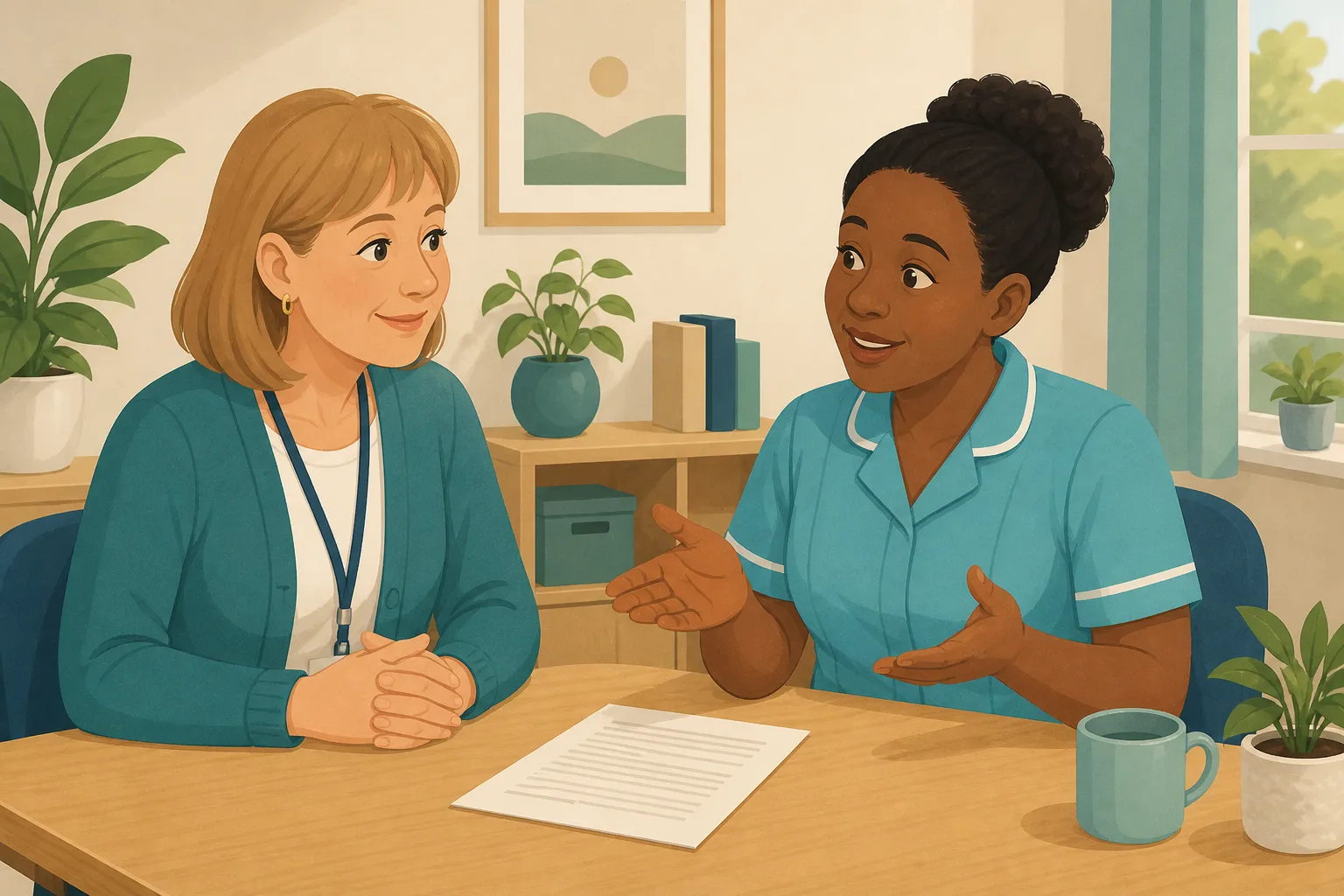
Talk to the colleague who translates. Ask how often it happens, what it takes out of her day, and whether she is comfortable. Thank her properly, and make it clear that she is not the plan.
Then ask the team what they find hard to follow. A carer may follow spoken English well and still prefer to read a policy in their first language, or the other way round.
Give everyone direct access
Set each person's first language, and a second language where it helps, so training, policies and lessons come to them directly. Our guide on onboarding international care staff covers the first weeks in more detail.
- Ask each carer which language they would like to read policies and training in
- Set their first and second language in your staff settings, and allow switching where it helps
- Add your own care terms to the translation glossary so they stay exact
- Allocate the same short training to the whole team, then review Knowledge gaps after a week
Check understanding the same way for everyone
Use the same questions for every carer, and treat a wrong answer as information. If the same point is missed by several people, the briefing needs a change. If one person misses several, they may need a conversation. Either way, you are no longer guessing.
Translation here is machine translation and not a substitute for a qualified interpreter where one is needed. Example questions are illustration only, so follow your own falls policy.




