Sterile Services and Instrument Decontamination training that gets your team CQC-ready
- CQC-aligned, mapped to the Care Certificate framework
- Completed in the hub in over 60 languages
- A certificate for every staff member, for your CQC evidence
- A wrong answer triggers a follow-up lesson, so gaps are closed
No subscription needed. Bulk discounts from 10+ licences.
From £25.99 per staff member, one-off. No subscription needed.
Trusted by UK care providers
Specialists in the technology behind it all
The same technology behind the world's best products powers CareStream, so your team's sterile services and instrument decontamination training stays accurate, always up to date with the latest guidance, and is delivered in over 60 languages.
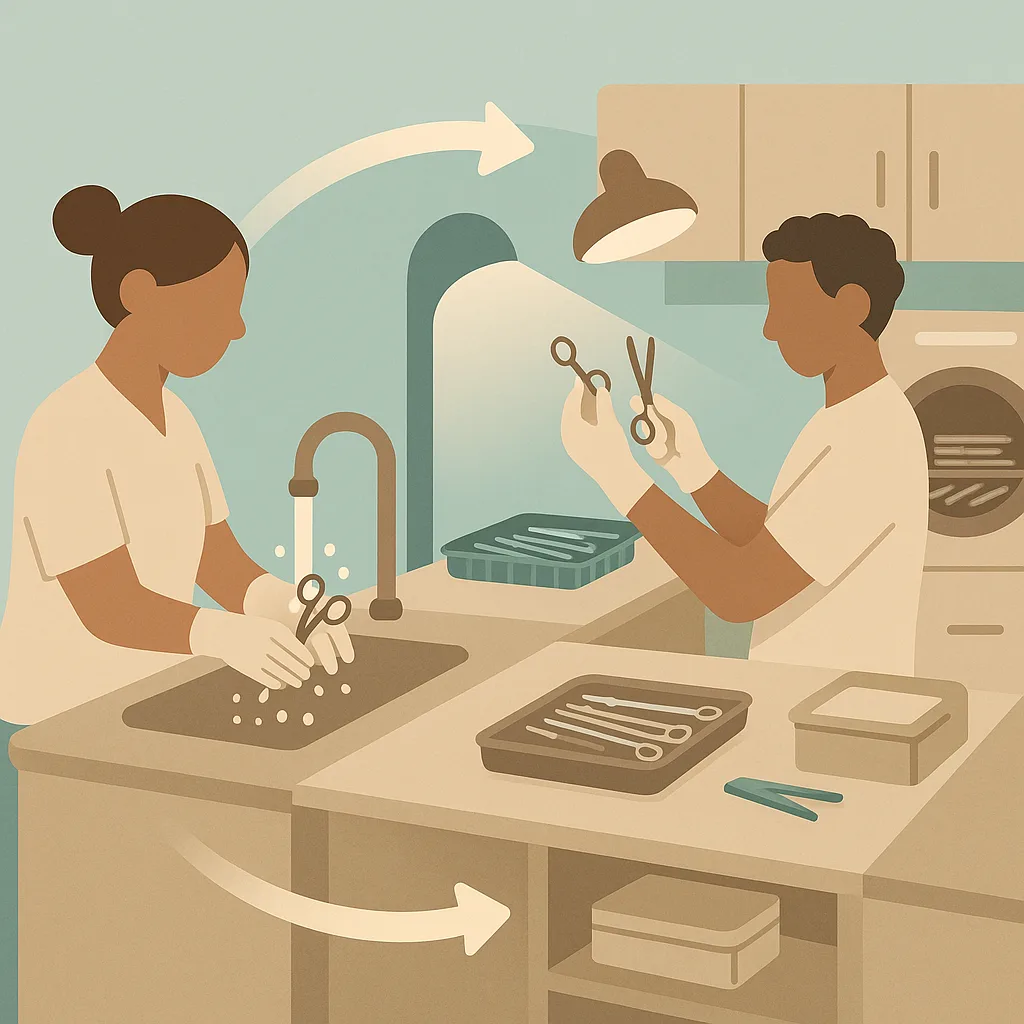
The Decontamination Cycle and Workflow
Every reusable surgical instrument follows a strict cycle from use through cleaning, disinfection, inspection, packaging, sterilisation and storage back to theatre. Our sterile services department is laid out with a dirty to clean flow so contaminated instruments enter one area and move through stages without ever going backwards.
This physical separation and one way movement stops clean instruments being recontaminated. Staff must never carry items from the dirty area into the clean area or move against the flow.
What is the primary purpose of the decontamination cycle for surgical instruments?
In the hub, a wrong answer sends the staff member a short follow-up lesson and a fresh question on the same point. They close the gap before they can finish the module, and every attempt is recorded for your CQC evidence.
That is how the training works. Give your whole team the full Sterile Services and Instrument Decontamination module.
Avg. Duration
About 35 minutes
Certificate
For every staff member
Available Languages (60+)
Course Published by
A clear, practical grounding in sterile services and instrument decontamination.
This training ensures you understand how surgical instruments are safely cleaned, disinfected and sterilised so they cannot transmit infection between patients. You will learn the decontamination cycle, the dirty to clean workflow, equipment operation, tracking requirements and the critical safety checks that protect every surgical patient in our hospital.
By the end, your staff will be able to:
- Describe the complete decontamination cycle from contaminated instrument receipt through to sterile storage and dispatch
- Explain the dirty to clean workflow and why strict separation prevents recontamination
- Identify the validation and monitoring checks that prove sterilisation has been achieved
- Recognise when instruments cannot be released and what actions to take when failures occur
- Apply tracking and traceability requirements including special precautions for prion disease risk
A closer look at the sterile services and instrument decontamination module.
The module is built in short, practical sections. Each one teaches a part of the topic, then applies it to a real care scenario and checks understanding before moving on.
The Decontamination Cycle and Workflow
Every reusable surgical instrument follows a strict cycle from use through cleaning, disinfection, inspection, packaging, sterilisation and storage back to theatre. Our sterile services department is laid out with a dirty to clean flow so contaminated instruments enter one area and move through stages without ever going backwards. This physical separation and one way movement stops clean instruments being recontaminated. Staff must never carry items from the dirty area into the clean area or move against the flow.
Cleaning and Disinfection Equipment
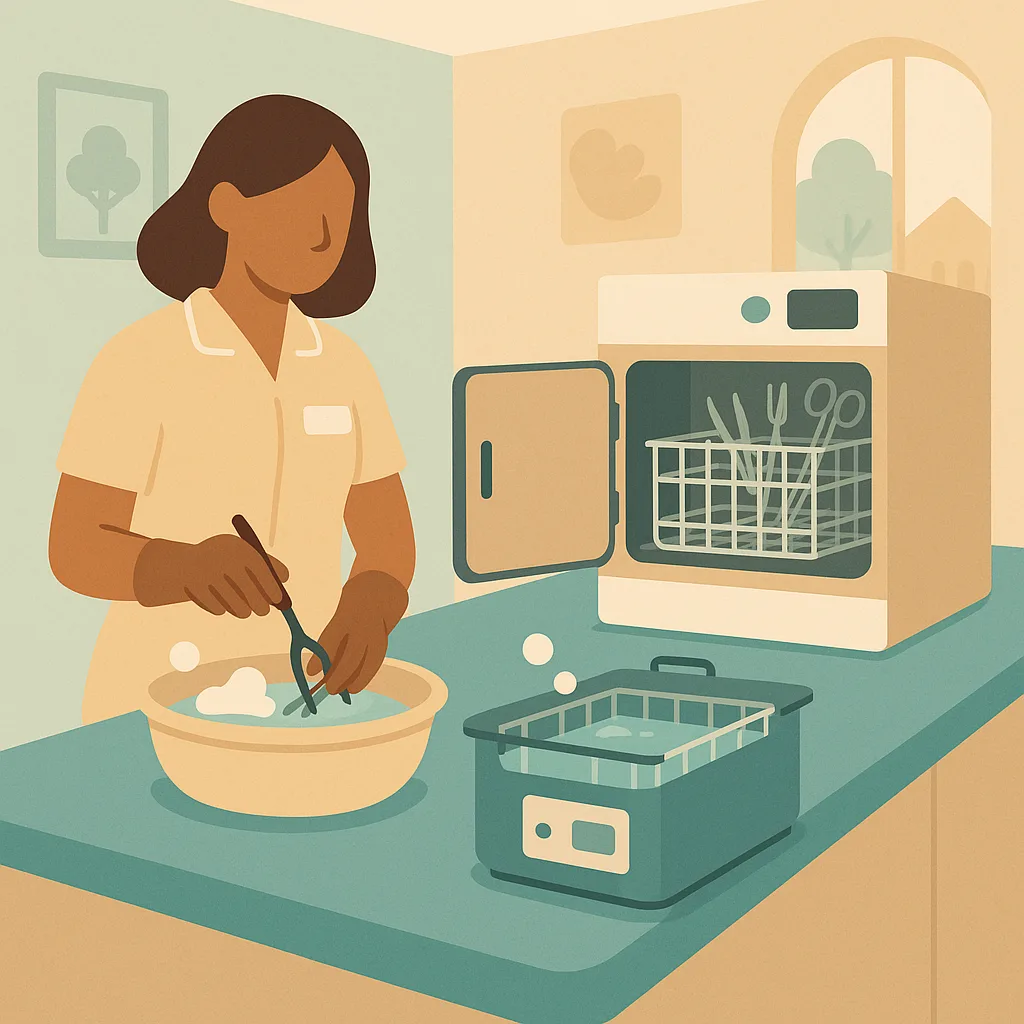
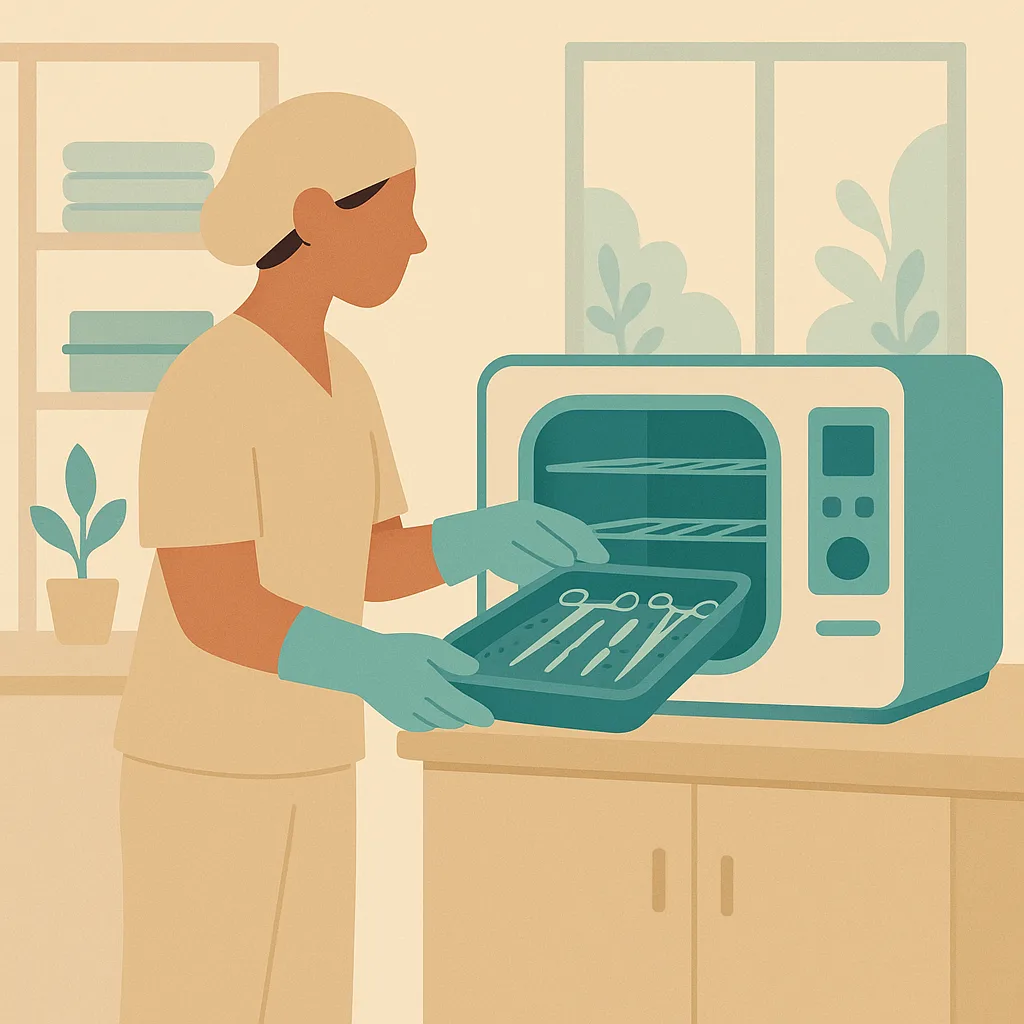
Instruments go through manual pre cleaning to remove visible contamination, then ultrasonic cleaning and washer disinfectors that use validated cycles with controlled temperature and time. Each machine must be loaded correctly following the manufacturer instructions so water and detergent reach all surfaces. We run daily tests like the Bowie Dick test on sterilisers and monitor water quality because the equipment only protects patients if it is proven to be working. Never skip equipment checks or run a cycle that has not been validated.
Inspection, Packaging and Sterilisation
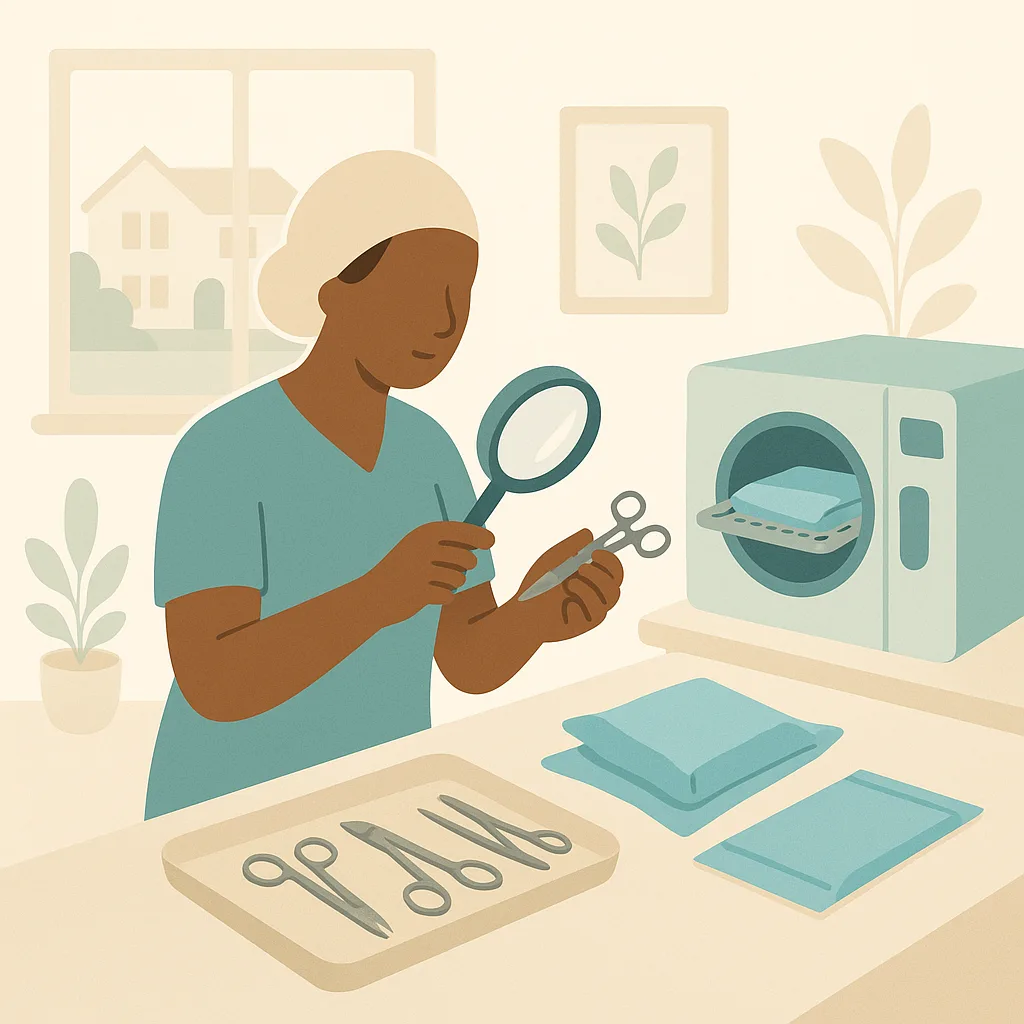
After cleaning, every instrument must be carefully inspected under good light and magnification to confirm it is genuinely clean, undamaged and functions correctly. Instruments are then assembled into sets, packaged in materials that allow steam penetration but maintain sterility, and sterilised in steam sterilisers using validated cycles. We place chemical and biological indicators in loads to monitor that sterilisation conditions were achieved. A load is only released by a competent person once all checks confirm success. A failed cycle is never released to theatre.
Tracking, Traceability and Documentation
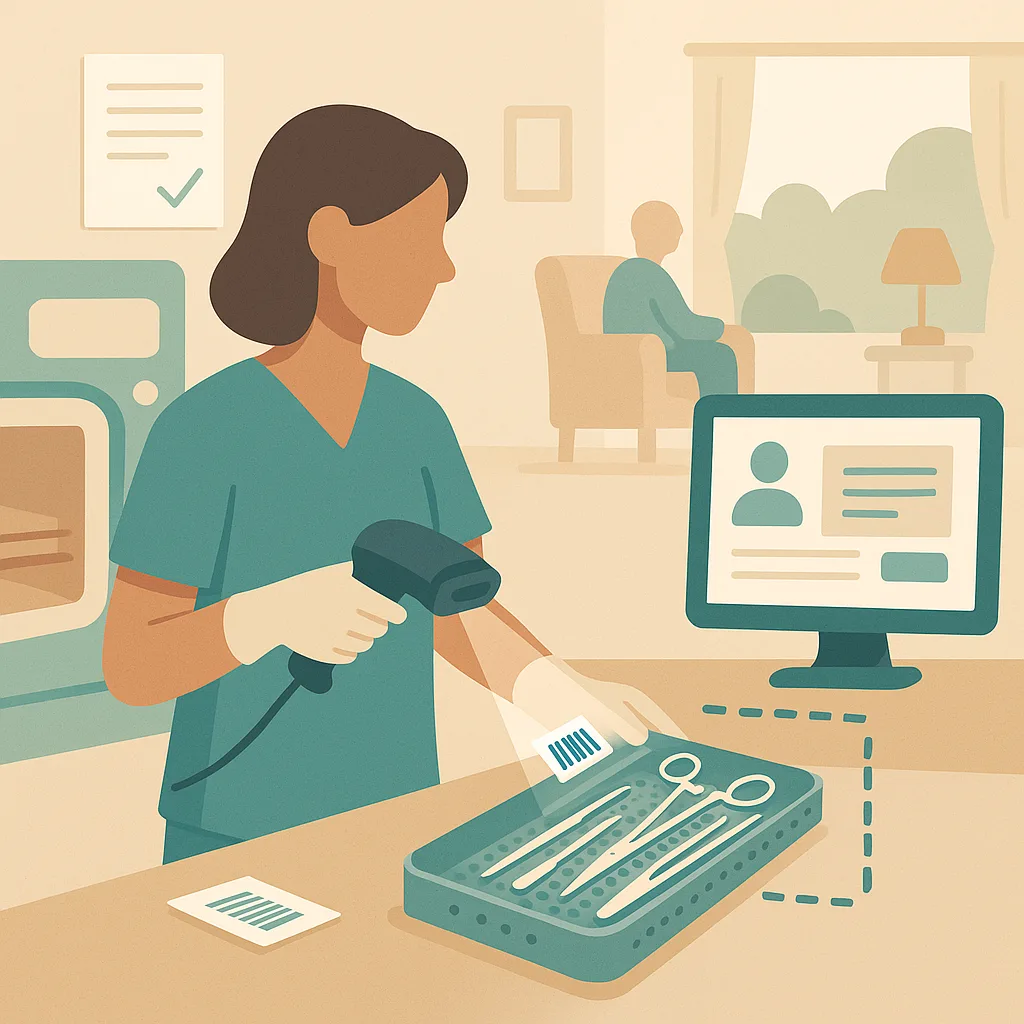
We record and scan every instrument set through each stage of the decontamination cycle and link it to the patient and operation where it will be used. This tracking allows us to trace any set backwards if a sterilisation failure or infection risk is discovered later, so we can identify which patients were exposed and take action. All cycle records, test results, equipment maintenance and calibration must be documented and kept. This traceability is especially critical for prion diseases like Creutzfeldt Jakob disease which ordinary sterilisation does not reliably destroy.
Prion Disease Precautions and Single Use Devices
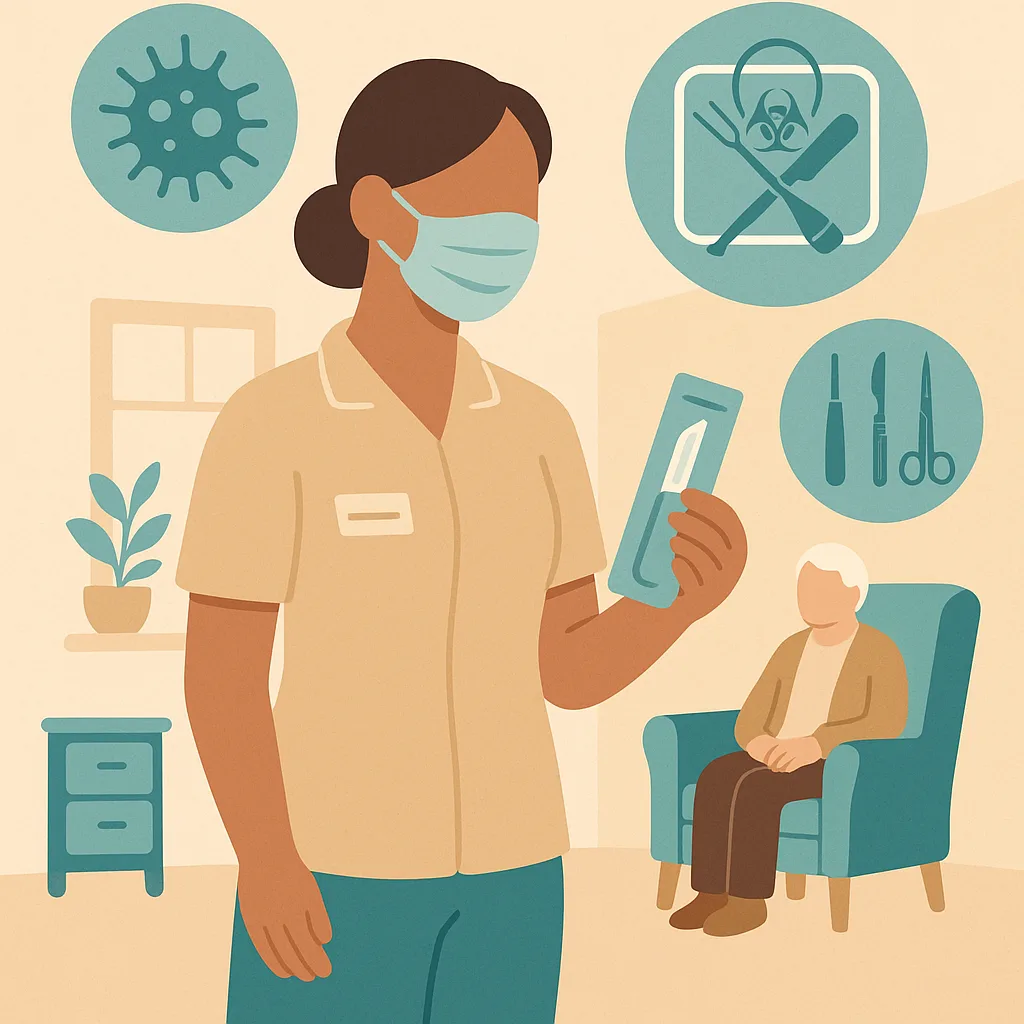
Prion diseases like Creutzfeldt Jakob disease are a grave concern because ordinary sterilisation does not reliably destroy prions. We identify higher risk patients or tissue types and follow special precautions including quarantine of instruments, enhanced decontamination or using single use instruments. Single use devices marked with the crossed out 2 symbol must never be reprocessed or reused under any circumstances. Reprocessing single use items is illegal, unsafe and can cause serious harm. If you are unsure whether an item is reusable, check with the decontamination lead before processing it.
Recognising and Responding to Failures
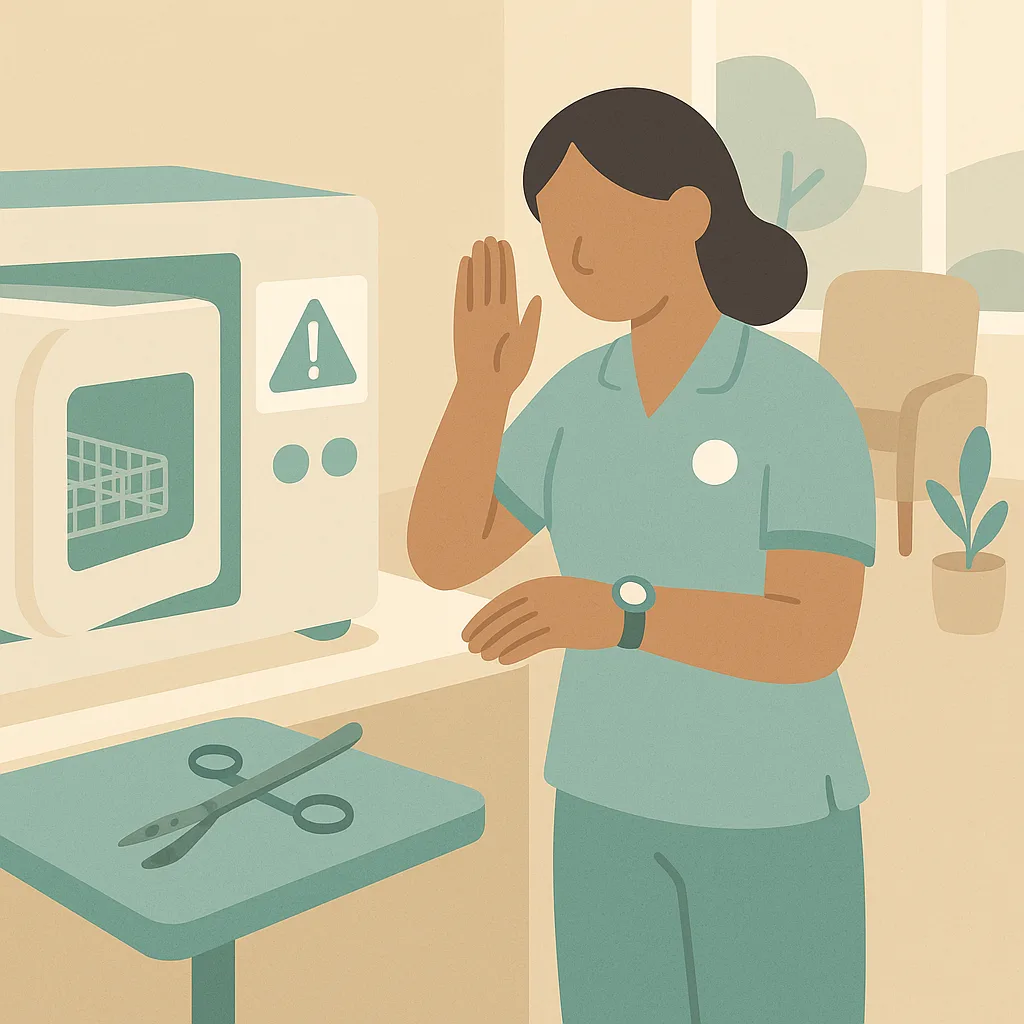
You must recognise and act immediately on any failure in the decontamination process. This includes failed steriliser cycles, contaminated or damaged instruments, missing items from sets, equipment alarms or test failures, or any doubt about whether a process completed correctly. Never release anything you are unsure about. Report the failure, quarantine the affected items, and follow the incident reporting procedure. The Care Quality Commission and the Medicines and Healthcare products Regulatory Agency take decontamination extremely seriously. A covered up failure can cause an outbreak and catastrophic harm.
The things your team must remember.
- The decontamination cycle moves instruments from dirty through cleaning, disinfection, inspection, packaging, sterilisation to sterile storage with strict dirty to clean workflow preventing recontamination
- Equipment like washer disinfectors and sterilisers must be loaded correctly, operated following validated cycles and tested daily to prove they are working
- Every instrument must be inspected to confirm it is completely clean and undamaged before packaging and sterilisation
- Tracking and traceability links each instrument set to patients and operations so we can trace back if a failure or infection risk is discovered
- Single use devices marked with the crossed out 2 symbol must never be reprocessed, and prion disease risk requires special precautions
- Failed cycles or contaminated instruments must never be released, must be quarantined and reported immediately regardless of urgency
Not a slideshow once a year. Training that sticks.
CareStream delivers sterile services and instrument decontamination training in the hub your team already uses, grounded in best practice and your own policies, so it fits your care setting and not a generic template.
Short teaching sections and a real care scenario, then an assessment that checks understanding.
Staff complete it in over 60 languages, while your records stay in English.
A wrong answer triggers a short follow-up lesson and a fresh question, so the gap is closed.
Automatic reminders at 90, 30 and 7 days, with a live compliance dashboard.
From your dashboard to your team, in the CareStream hub.
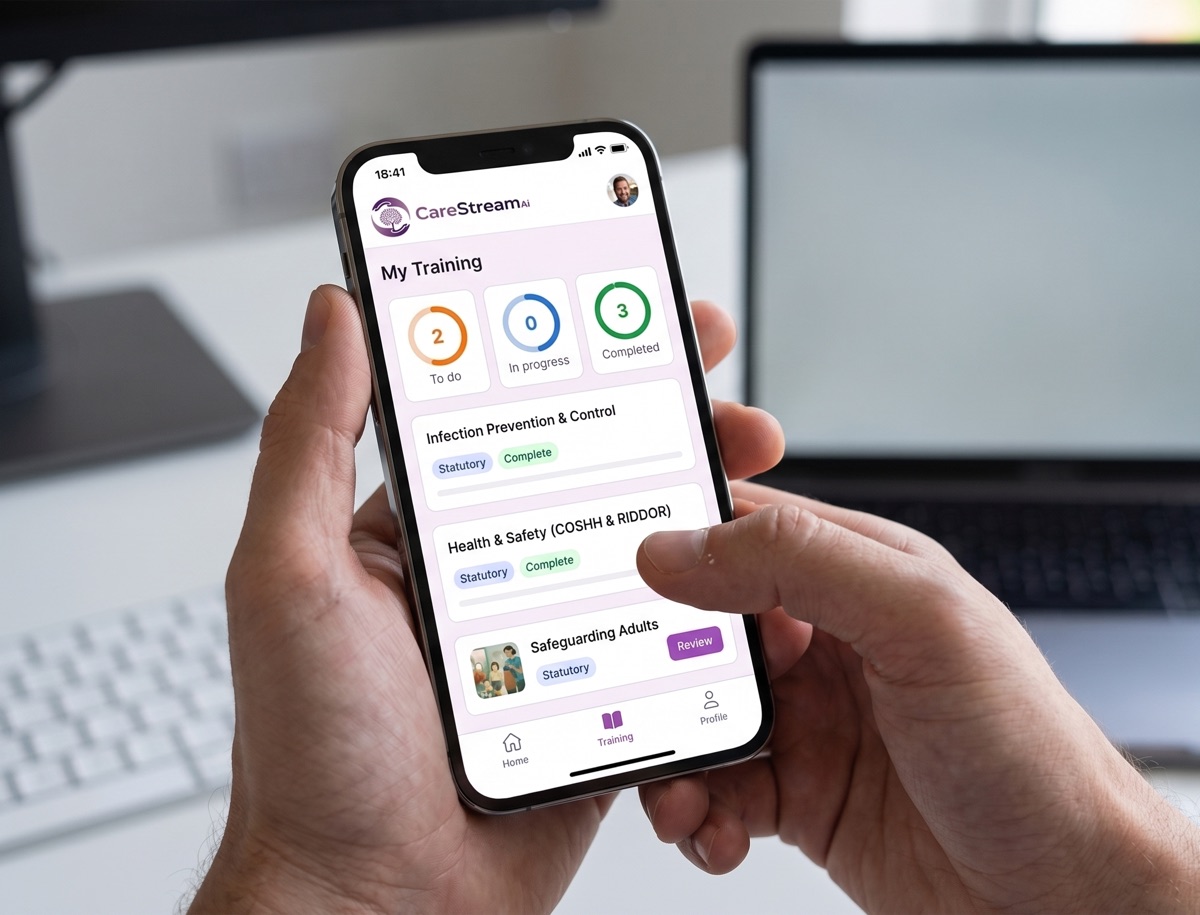
Training is delivered in the hub each staff member logs into. You allocate the modules, they complete them in their own language, and you get the completion records and certificates for your CQC evidence, with any gaps closed by automatic follow up training.
Assign Sterile Services and Instrument Decontamination to each staff member in seconds. No course builder and no setup for each person.
Staff work through the module on any device, in over 60 languages, teaching then checking understanding. A wrong answer sends a short follow up lesson.
See live completion status and a certificate for every person, ready as evidence for CQC.
Any step, in their language, in one tap.
Care teams are diverse and training should not leave anyone behind. On any lesson or question, a staff member taps the language button and the whole step flips into the language they think in. They understand it properly, and your records stay in English.
- One tap flips any lesson or question into their language, instantly.
- Over 60 languages, with no setup and no separate versions to manage.
- Completions and certificates stay in English for your CQC evidence.
Try the language buttons in the preview above.
Built for real learning, not box ticking
Every CareStream course goes further than a lesson and a quiz. These features come as standard on every course, giving your staff a richer way to learn and giving you the evidence to prove it.
Every course is built on recognised UK guidance and cites its sources, from NICE and Skills for Care to the NHS and the legislation itself.
A plain English glossary of the technical terms in each course. A simple way to support every learner, including staff with English as a second language.
A quick knowledge check before the lesson is compared with the final assessment, so every certificate comes with evidence of how much the course actually taught.
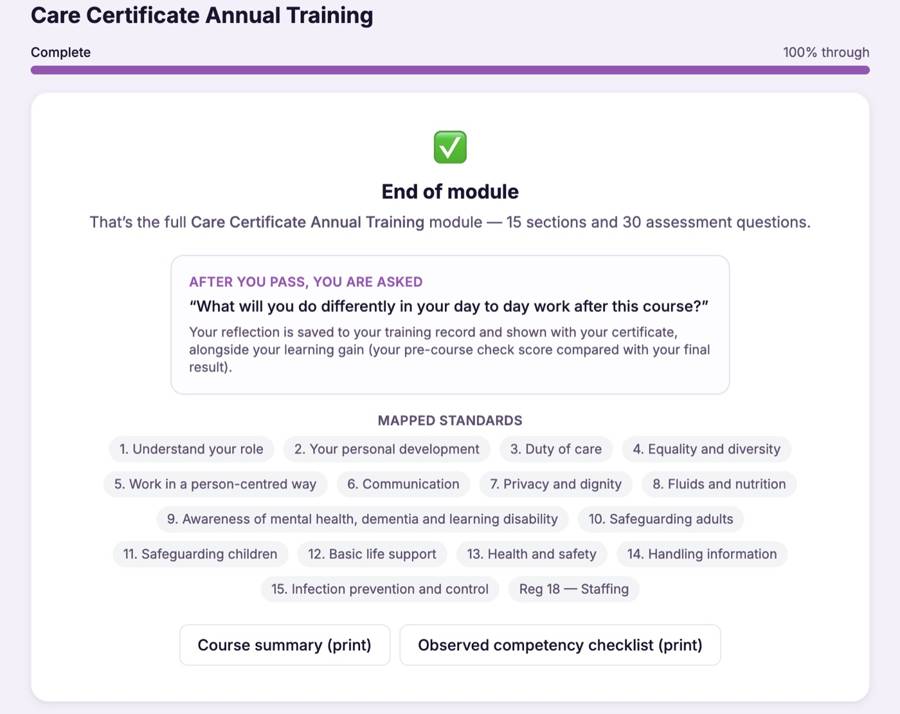
After passing, staff record what they will do differently in their day to day work. Their reflection is saved to their training record and shown with their certificate.
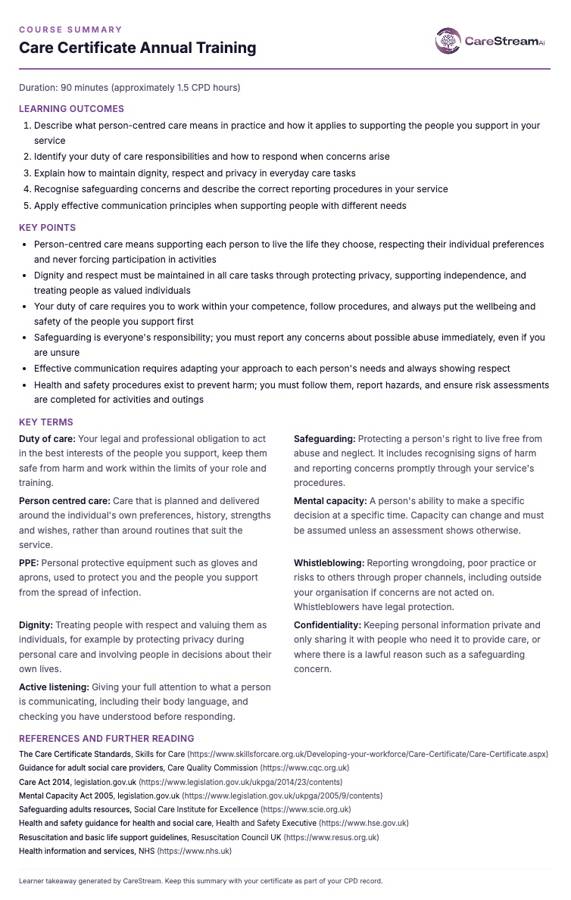
A printable one page takeaway of the outcomes, key points and key terms. Perfect for staff files, supervision conversations and the staff room wall.
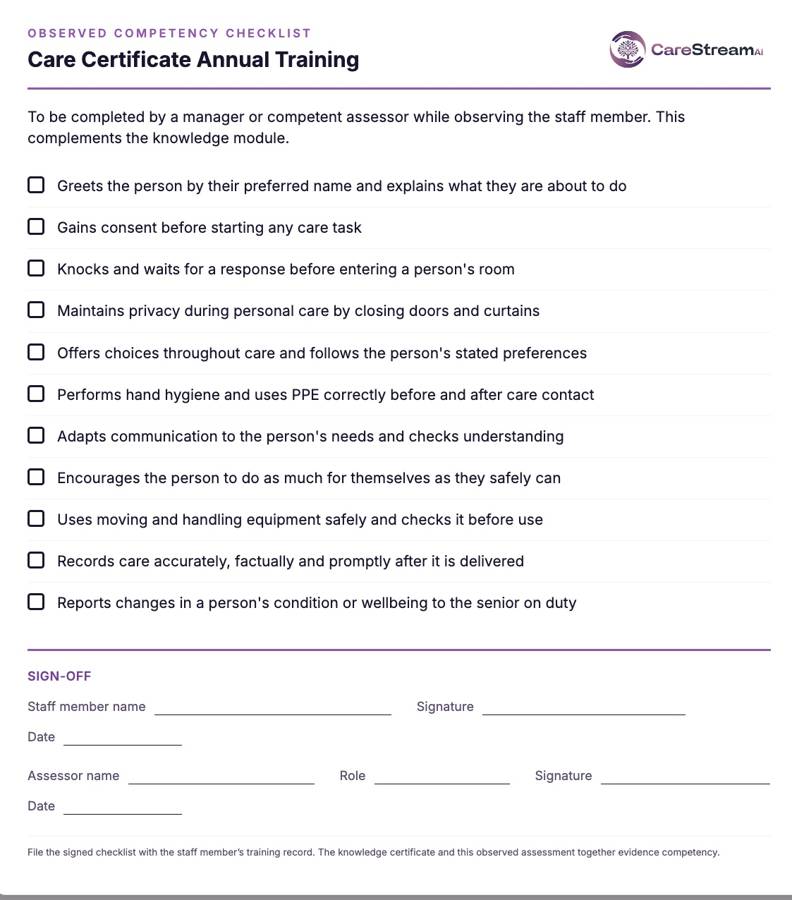
A printable checklist for managers to confirm skills in practice, with a sign off section. It completes the picture beyond the knowledge assessment.
Wrong answers become lessons, not failures
Most e learning marks an answer wrong and moves on. CareStream does not. Every wrong answer triggers an automatic follow up loop that teaches the point again and rechecks it, so no knowledge gap is left behind.
A wrong answer immediately opens a short lesson explaining the point, so the gap is closed there and then.
A fresh question on the same point checks the lesson has landed. The loop repeats until it has.
Staff move on to the next module and their certificate once they genuinely know the answer, not just after one lucky guess.
Why choose CareStream?
Training built for the care sector, delivered the way busy teams actually learn.
- 90+ care-specific training courses
- Bitesize, engaging lessons your staff actually finish
- Mapped to the Care Certificate & CQC standards
- Available in 60+ languages
- Instant certificate on completion
- Flexible learning, anytime, on any device
- Content kept up to date with UK care regulations
- Time to complete: ~35 min
Frequently asked questions.
Is Sterile Services and Instrument Decontamination training mandatory in care settings?
How often should staff complete Sterile Services and Instrument Decontamination training?
Can CareStream deliver Sterile Services and Instrument Decontamination training in other languages?
Does the training include an assessment?
More training your team may need
More mandatory and role-specific training CareStream delivers to your team, in the hub, in any language. Add any of these to your basket.
 Annual Certificate
Cultural Diversity in Care
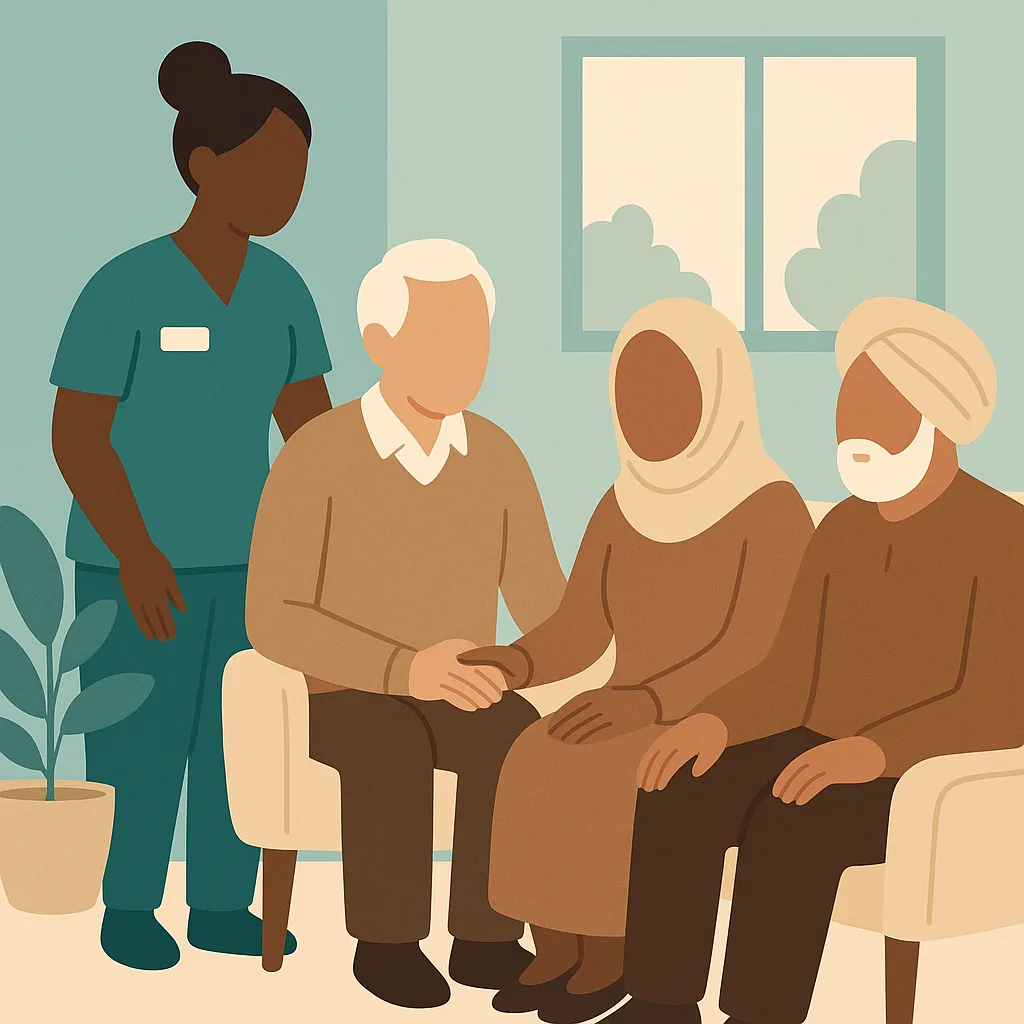
This training helps you understand and respect the diverse cultural, religious and personal backgrounds of the people we support. You will learn how to provide person-centred care that honours each individual's identity, beliefs and preferences. This is essential to meeting CQC fundamental standards and ensuring everyone feels valued and respected in our service.
Bulk discounts from 10+ licences
 Annual Certificate
Dementia Awareness
This training helps you understand dementia and how to provide person centred care to residents living with dementia at our home. You will learn to recognise signs of dementia, support residents with dignity and respect, and follow our policies to meet their individual needs.
Bulk discounts from 10+ licences
 Annual Certificate
Mental Health Awareness
This module helps you recognise signs of mental health difficulties in residents and respond with compassion and respect. You will learn how mental health affects wellbeing, how to support residents experiencing distress, and when to seek additional help. Understanding mental health is essential to providing person centred care that maintains dignity.
Bulk discounts from 10+ licences
 Annual Certificate
Clinical Governance
This module explains the framework through which our hospital continuously improves the quality of care and maintains high standards. You will learn how the systems you use every day, from incident reporting to clinical audit, fit together to keep patients safe. Clinical governance is everyone's responsibility, from the board to the bedside, and this training shows you how your role contributes to safe, effective care.
Bulk discounts from 10+ licences
 Annual Certificate
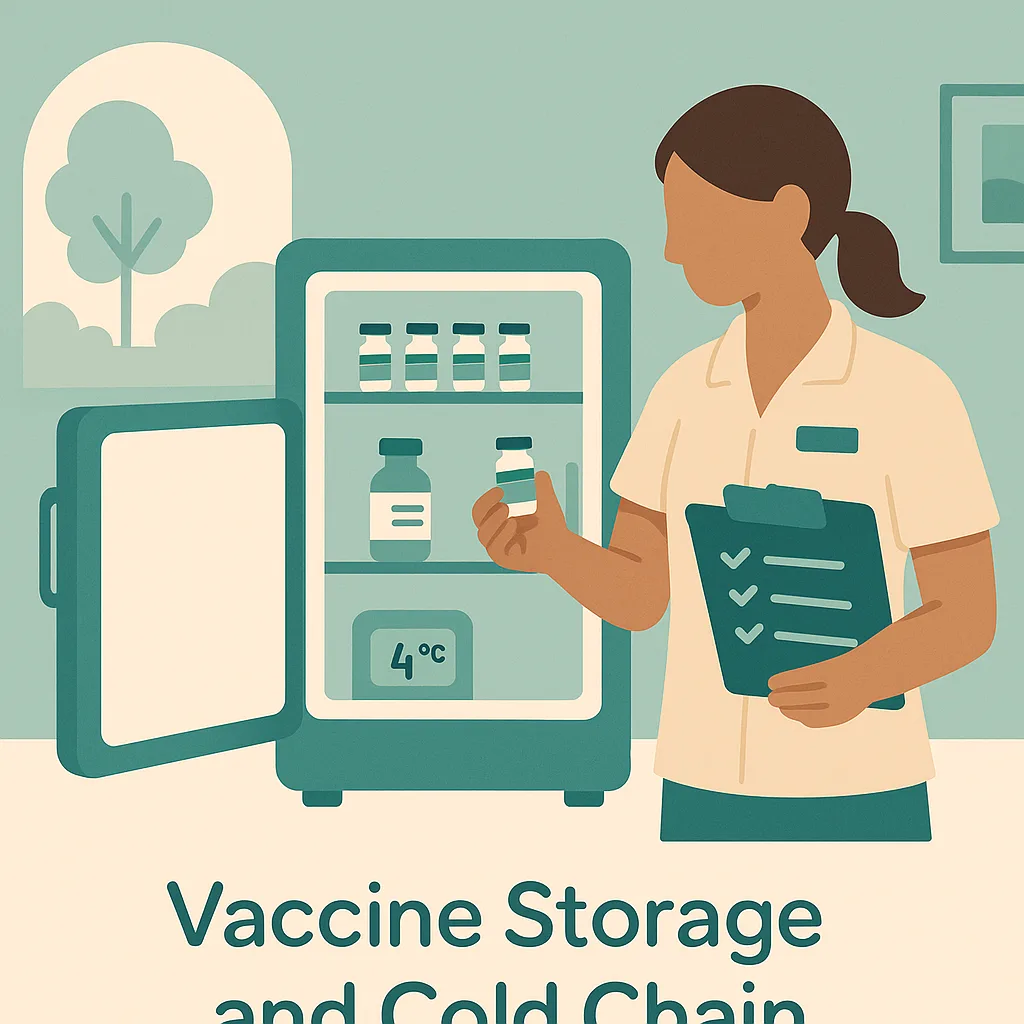
Vaccine Storage and Cold Chain
This module ensures you understand how to store and handle vaccines correctly to keep them safe and effective. You will learn the daily checks, correct fridge handling, stock management and what to do if something goes wrong. Maintaining the cold chain protects every patient who receives a vaccine in our practice.
Bulk discounts from 10+ licences
 Annual Certificate
Chaperoning
This training ensures all practice staff understand when and how to offer a chaperone during intimate examinations, how to act as a trained chaperone, and why this protects both patients and clinicians. It covers our practice chaperone policy, consent, documentation, and what to do when concerns arise.
Bulk discounts from 10+ licences
Give your team sterile services and instrument decontamination training that actually sticks.
Add it to your basket, allocate it in seconds, and let the evidence build itself.
Compared
Three ways to train a care team.
These modules are written and kept current by us, so your managers do not have to write or maintain them. We have compared what each approach does rather than naming providers, because products change and this should still be true next year.
| CareStream | A generic e-learning library | A trainer you book | |
|---|---|---|---|
| Try a real lesson and a real question before you buy | |||
| Learning outcomes and time to complete stated up front | |||
| Written lesson sections, each with its own illustration | |||
| Interactive exercises after the lesson that teaches them, in every module | |||
| Assessment in every module, with the key points to revisit | |||
| Taken in any of sixty plus languages | |||
| A wrong answer triggers a follow-up lesson, not just a re-sit | |||
| Practical sign-off by a manager where the subject needs it | |||
| Completion files itself into your training matrix and evidence pack | |||
| Bought one module at a time, with no annual contract |
Generic libraries are often cheaper per learner. They teach a national standard rather than being built, updated and evidenced around the way a CQC-registered service is actually inspected.
Care policies
Every module is written from a policy
If the policy behind it is out of date, the training inherits that. Sixty six policies written for your service, checked against current law and read by a person before they carry your name, from £39.