Overdose Response and Naloxone training that gets your team CQC-ready
- CQC-aligned, mapped to the Care Certificate framework
- Completed in the hub in over 60 languages
- A certificate for every staff member, for your CQC evidence
- A wrong answer triggers a follow-up lesson, so gaps are closed
No subscription needed. Bulk discounts from 10+ licences.
From £25.99 per staff member, one-off. No subscription needed.
Trusted by UK care providers
Specialists in the technology behind it all
The same technology behind the world's best products powers CareStream, so your team's overdose response and naloxone training stays accurate, always up to date with the latest guidance, and is delivered in over 60 languages.
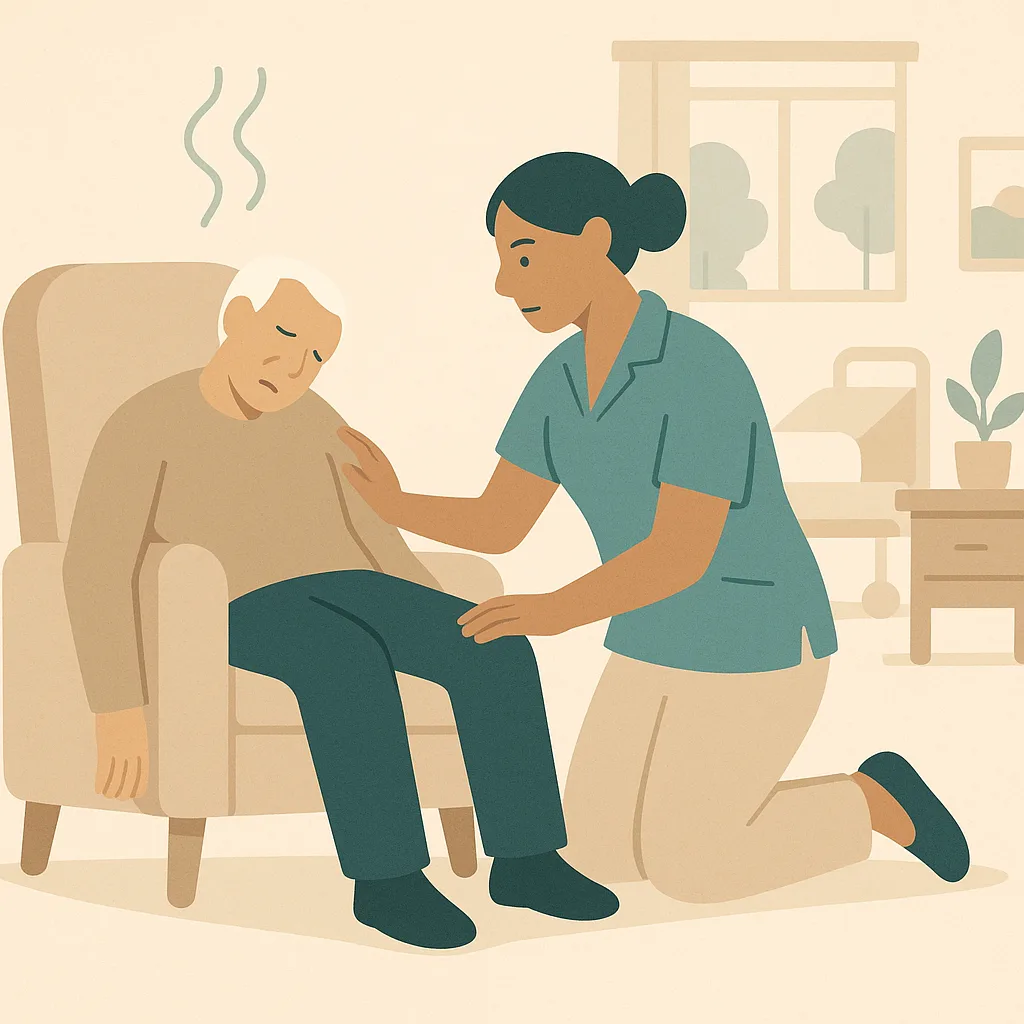
What is an opioid overdose and when is risk highest
An opioid overdose happens when someone takes too much of an opioid drug like heroin, methadone or fentanyl and their breathing slows down or stops. Risk is highest when tolerance has dropped after detox, prison release, hospital stay or any period of abstinence.
Risk also increases when opioids are mixed with alcohol or benzodiazepines, when someone uses alone, or when the supply is unusually strong or contaminated including with synthetic opioids like nitazenes.
A person who completed residential rehabilitation two weeks ago and has stayed abstinent decides to use heroin again. Why are they at very high risk of fatal overdose?
In the hub, a wrong answer sends the staff member a short follow-up lesson and a fresh question on the same point. They close the gap before they can finish the module, and every attempt is recorded for your CQC evidence.
That is how the training works. Give your whole team the full Overdose Response and Naloxone module.
Avg. Duration
About 35 minutes
Certificate
For every staff member
Available Languages (60+)
Course Published by
A clear, practical grounding in overdose response and naloxone.
This training teaches you how to recognise an opioid overdose, respond correctly and administer naloxone to reverse it and save a life. You will learn when overdose risk is highest, how to use naloxone safely, and how to support the person until emergency help arrives. This is essential knowledge for anyone working in substance misuse services where overdoses can and do happen.
By the end, your staff will be able to:
- Recognise the signs and symptoms of an opioid overdose
- Describe the correct step by step response to an overdose including when and how to administer naloxone
- Identify situations and times when overdose risk is highest
- Explain the aftercare needed when someone has been revived with naloxone
- Apply overdose prevention messaging in everyday harm reduction conversations
A closer look at the overdose response and naloxone module.
The module is built in short, practical sections. Each one teaches a part of the topic, then applies it to a real care scenario and checks understanding before moving on.
What is an opioid overdose and when is risk highest
An opioid overdose happens when someone takes too much of an opioid drug like heroin, methadone or fentanyl and their breathing slows down or stops. Risk is highest when tolerance has dropped after detox, prison release, hospital stay or any period of abstinence. Risk also increases when opioids are mixed with alcohol or benzodiazepines, when someone uses alone, or when the supply is unusually strong or contaminated including with synthetic opioids like nitazenes.
Recognising the signs of opioid overdose
You can recognise an opioid overdose by specific signs. The person will be unresponsive when you try to rouse them. Their breathing will be very slow, shallow or stopped completely. Their lips and fingertips may look blue or grey. Their pupils will be pinpoint small. You may hear snoring or gurgling sounds from their airway. These signs together tell you this is an opioid overdose and naloxone is needed.
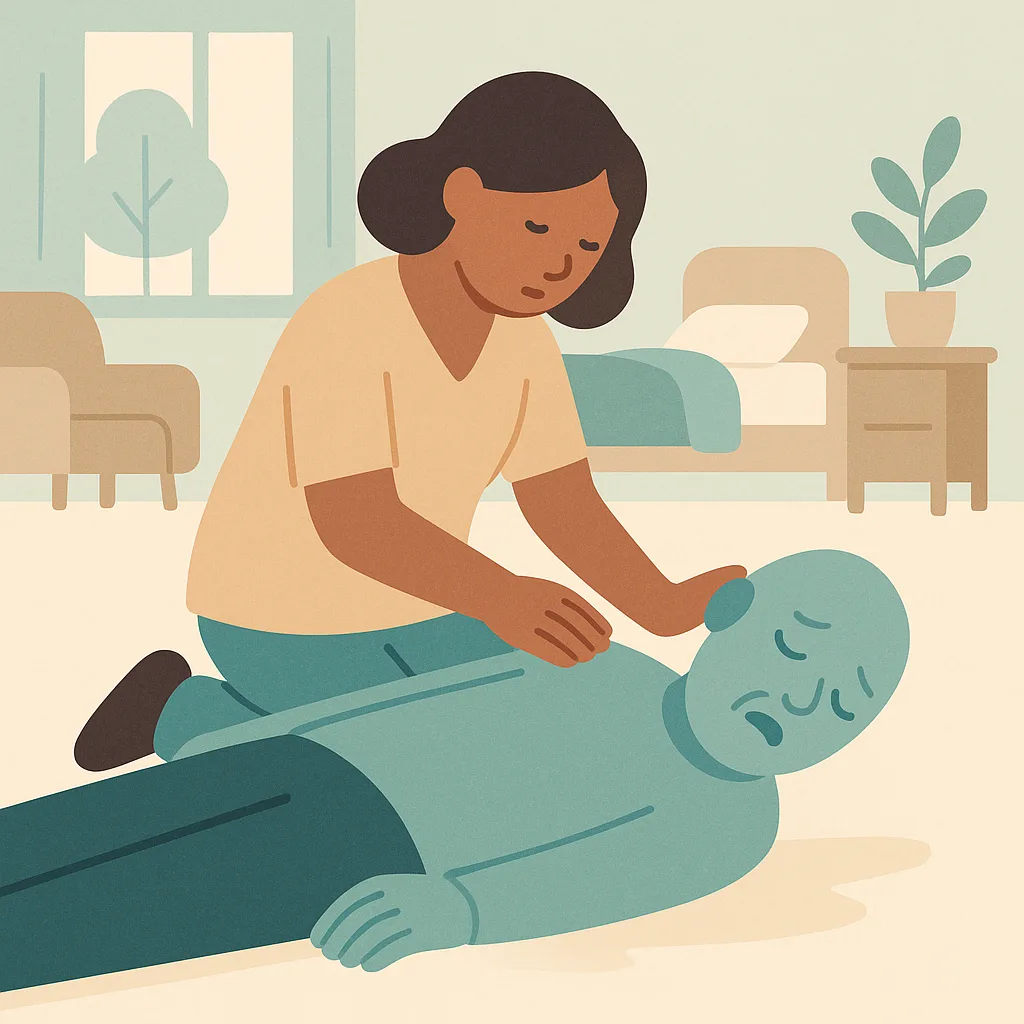
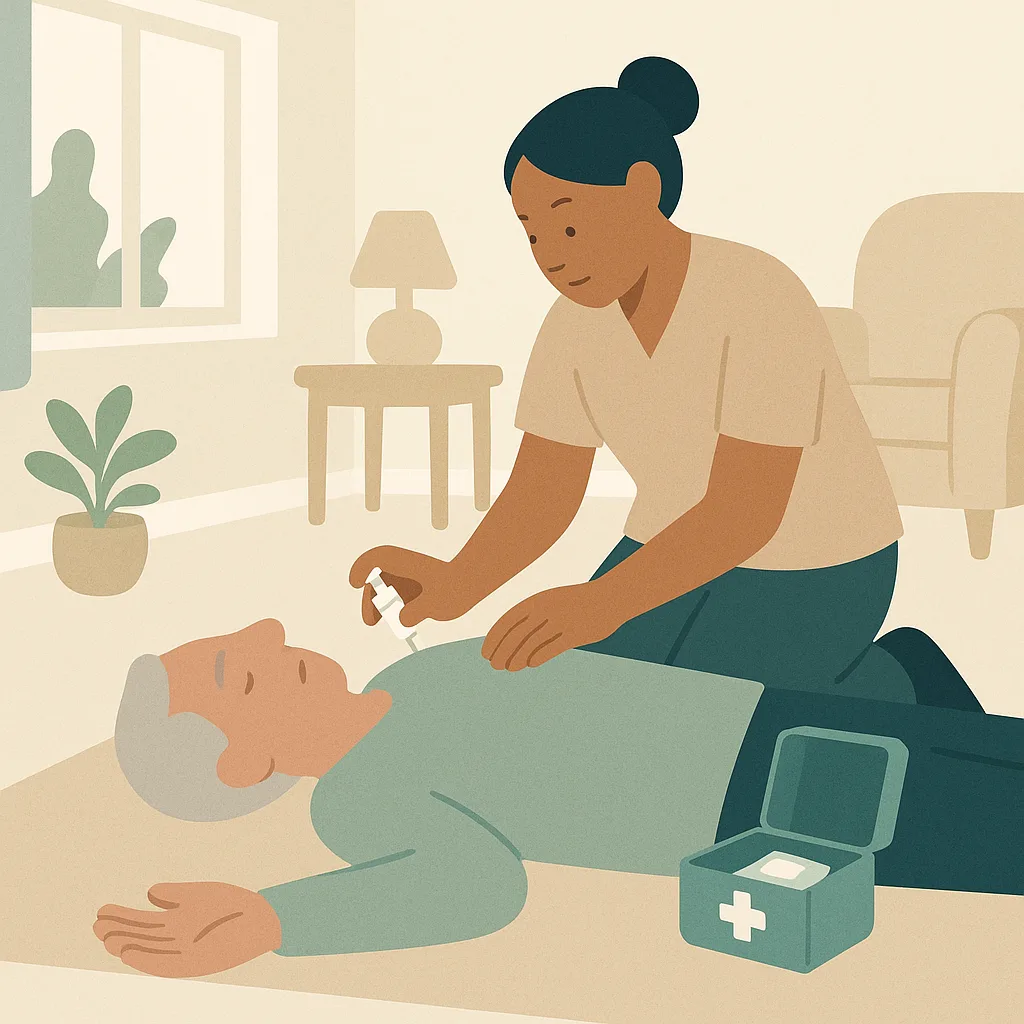
The step by step overdose response
When you find someone who may have overdosed, follow these steps in order. First try to rouse them by calling their name and shaking their shoulders. Check their airway is clear and check if they are breathing. Call 999 immediately and say you suspect opioid overdose. Give naloxone by intramuscular injection or nasal spray as you have been trained. Place them in the recovery position on their side. If they are not breathing, give rescue breaths or start CPR. Stay with them. If the overdose returns as naloxone wears off, give another dose. Never leave them alone.
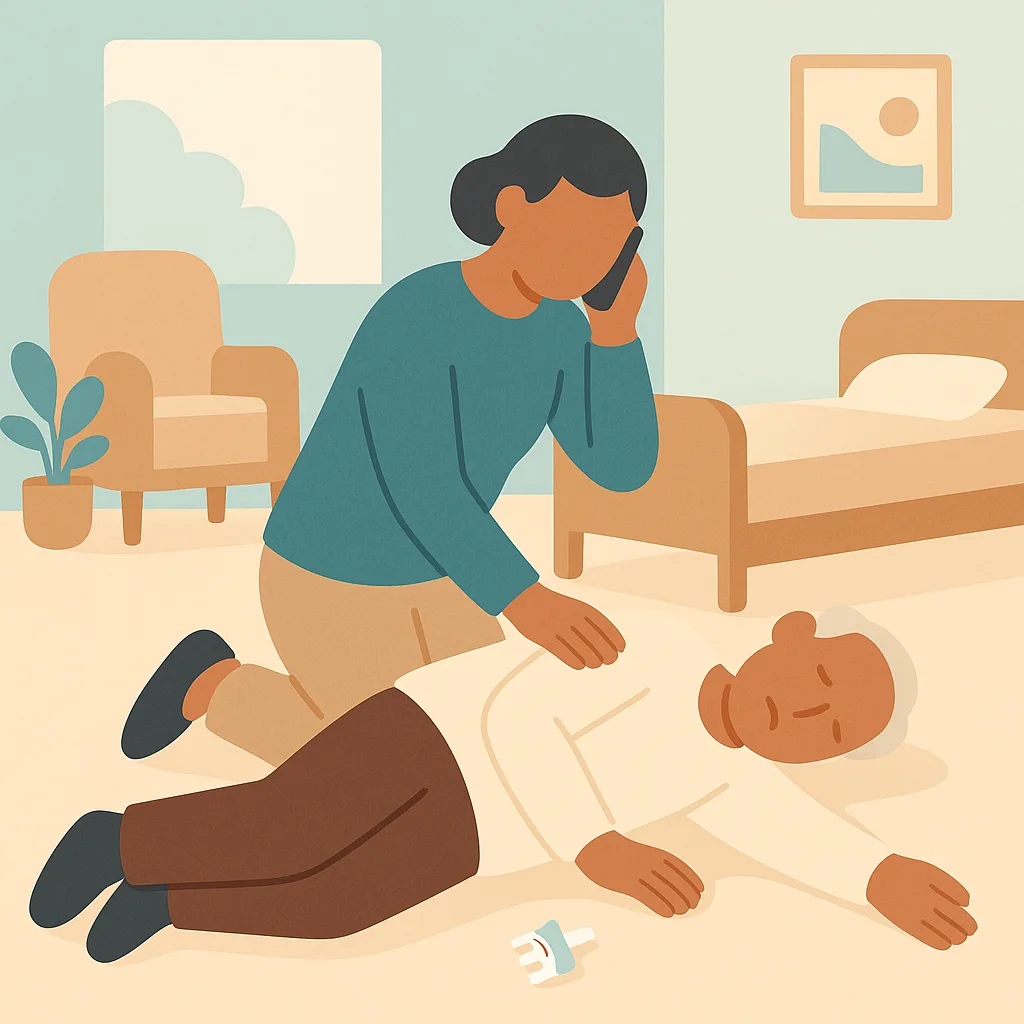
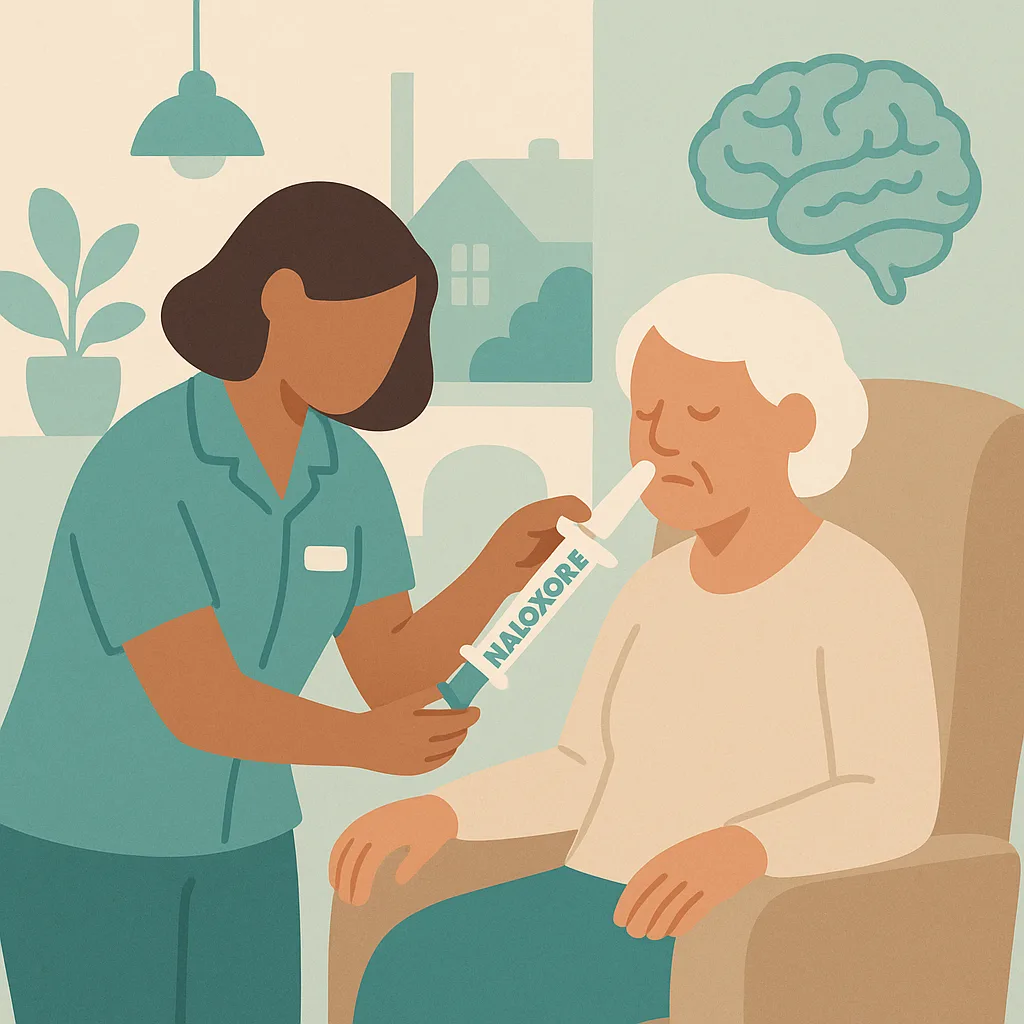
How naloxone works and its limitations
Naloxone is an opioid antagonist that temporarily reverses the effects of opioids like heroin, methadone and fentanyl by blocking opioid receptors in the brain and restoring breathing. It only works on opioids and does nothing for overdoses of stimulants, benzodiazepines or alcohol on their own, although we still give it in mixed overdoses where opioids may be involved. Naloxone is short acting, usually lasting 30 to 90 minutes, so the overdose can return as it wears off. This is why the person must wait for the ambulance even if they feel better.
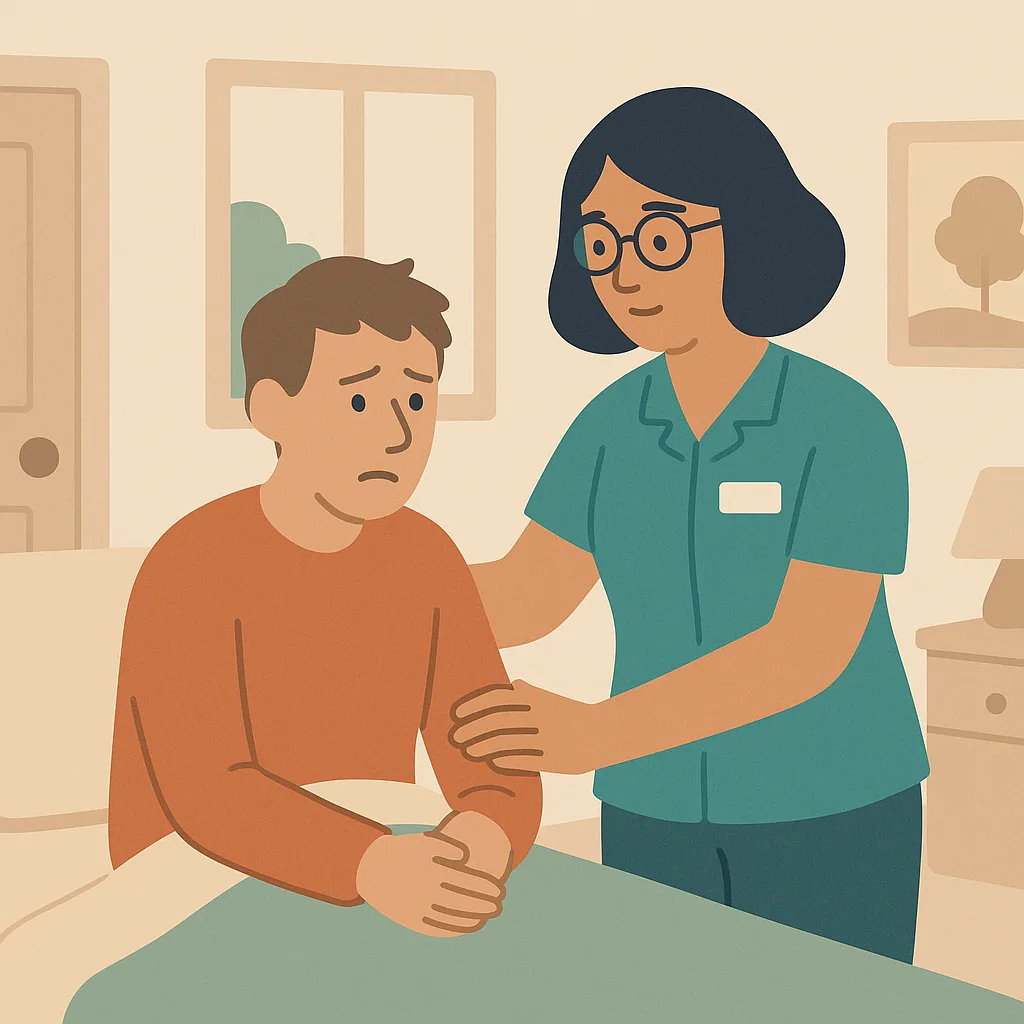
Aftercare and managing the person when they wake
A person revived with naloxone may wake confused, frightened or in sudden withdrawal which feels very unpleasant. They may be angry, distressed or determined to use again to stop the withdrawal. Your role is to manage this moment with calm compassion. Reassure them they are safe. Explain what happened and why the ambulance is needed. Encourage them to wait rather than leaving. Do not judge or lecture. Treat saving their life as the first and overriding priority. After the incident, offer them fresh naloxone and harm reduction advice for next time.
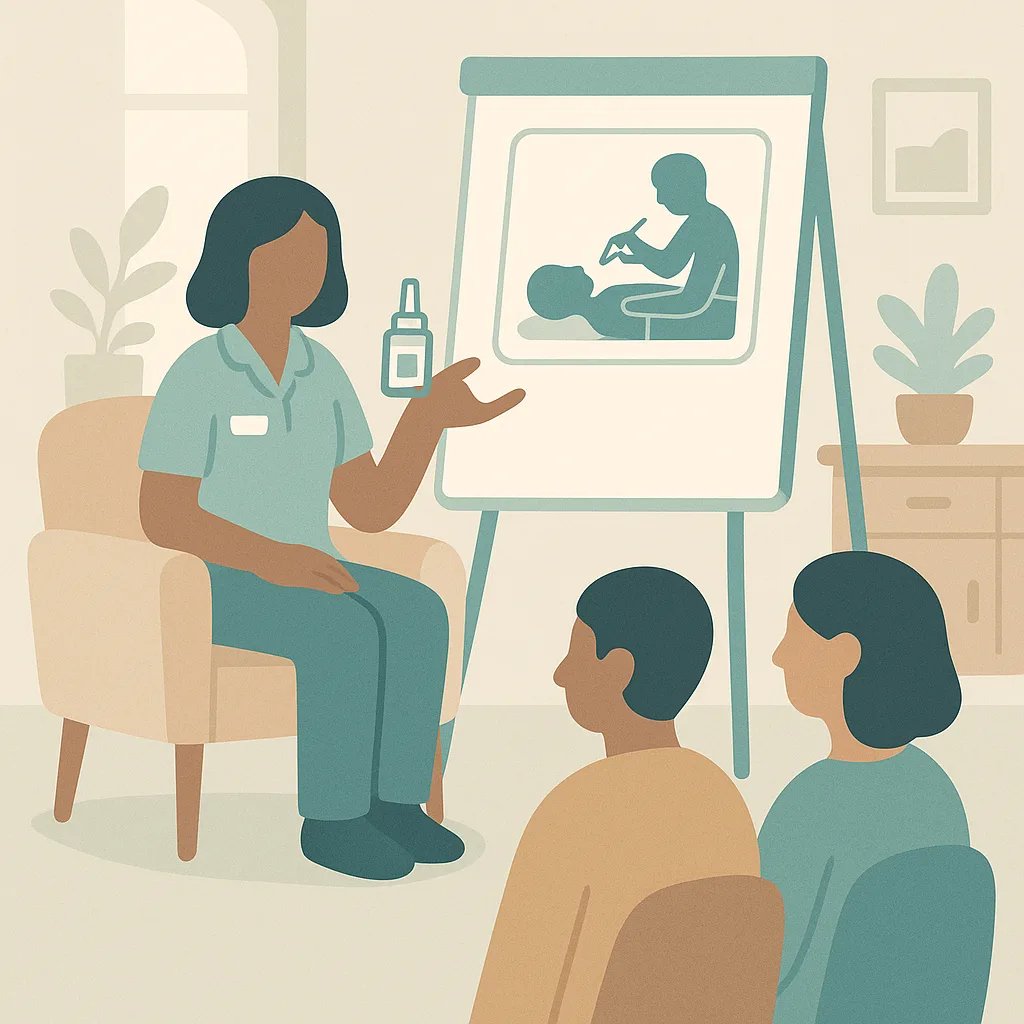
Supplying take home naloxone and training others
Supplying take home naloxone is a routine, normalised part of keywork and engagement in your service. We offer it to everyone who uses opioids and to their families, partners and friends because they are the people most likely to witness an overdose. We train them on the spot to recognise and respond to an overdose. We restock kits that have been used or expired. At discharge from residential rehabilitation we proactively give naloxone because tolerance falls during abstinence and the risk is very high. We record all naloxone supplied through the National Drug Treatment Monitoring System.
The things your team must remember.
- Overdose risk is highest when tolerance has dropped after detox, prison, hospital or abstinence, and when opioids are mixed with alcohol or benzodiazepines
- Recognise opioid overdose by unresponsiveness, very slow or stopped breathing, blue lips, pinpoint pupils and snoring or gurgling
- Follow the response steps in order: try to rouse, check airway and breathing, call 999, give naloxone, recovery position, rescue breaths or CPR if needed, stay with them
- Naloxone only works on opioids, is short acting, and the overdose can return as it wears off so the person must wait for the ambulance
- Manage the person waking up with calm compassion, expect confusion, fear or withdrawal, and treat saving their life as the first priority
- Offer take home naloxone to everyone who uses opioids and their families and friends, train them to use it, and give it proactively at high risk times like discharge
Not a slideshow once a year. Training that sticks.
CareStream delivers overdose response and naloxone training in the hub your team already uses, grounded in best practice and your own policies, so it fits your care setting and not a generic template.
Short teaching sections and a real care scenario, then an assessment that checks understanding.
Staff complete it in over 60 languages, while your records stay in English.
A wrong answer triggers a short follow-up lesson and a fresh question, so the gap is closed.
Automatic reminders at 90, 30 and 7 days, with a live compliance dashboard.
From your dashboard to your team, in the CareStream hub.
Training is delivered in the hub each staff member logs into. You allocate the modules, they complete them in their own language, and you get the completion records and certificates for your CQC evidence, with any gaps closed by automatic follow up training.
Assign Overdose Response and Naloxone to each staff member in seconds. No course builder and no setup for each person.
Staff work through the module on any device, in over 60 languages, teaching then checking understanding. A wrong answer sends a short follow up lesson.
See live completion status and a certificate for every person, ready as evidence for CQC.
Any step, in their language, in one tap.
Care teams are diverse and training should not leave anyone behind. On any lesson or question, a staff member taps the language button and the whole step flips into the language they think in. They understand it properly, and your records stay in English.
- One tap flips any lesson or question into their language, instantly.
- Over 60 languages, with no setup and no separate versions to manage.
- Completions and certificates stay in English for your CQC evidence.
Try the language buttons in the preview above.
Built for real learning, not box ticking
Every CareStream course goes further than a lesson and a quiz. These features come as standard on every course, giving your staff a richer way to learn and giving you the evidence to prove it.
Every course is built on recognised UK guidance and cites its sources, from NICE and Skills for Care to the NHS and the legislation itself.
A plain English glossary of the technical terms in each course. A simple way to support every learner, including staff with English as a second language.
A quick knowledge check before the lesson is compared with the final assessment, so every certificate comes with evidence of how much the course actually taught.
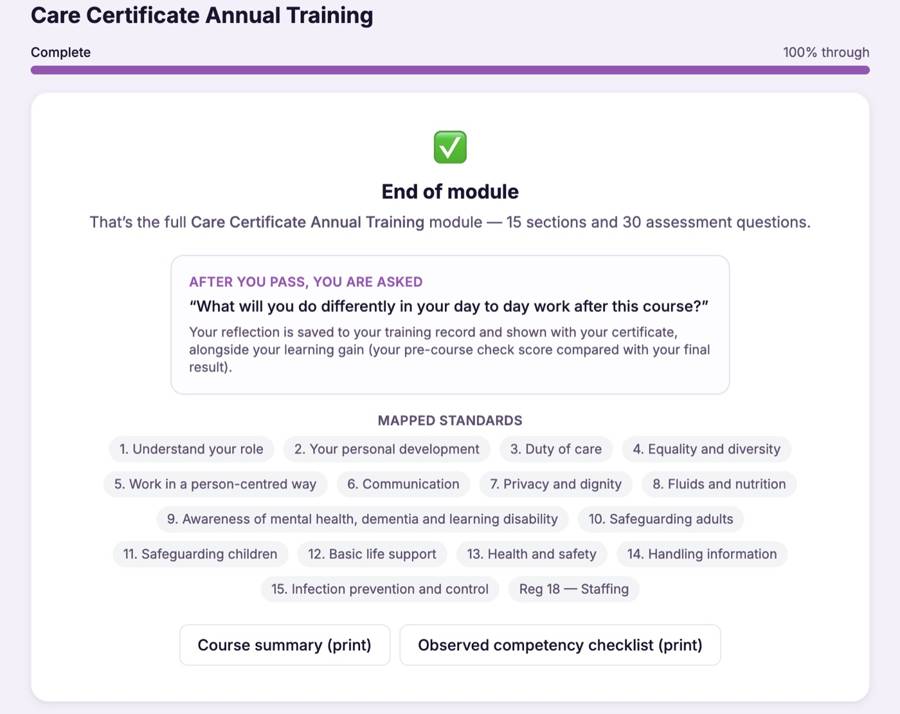
After passing, staff record what they will do differently in their day to day work. Their reflection is saved to their training record and shown with their certificate.
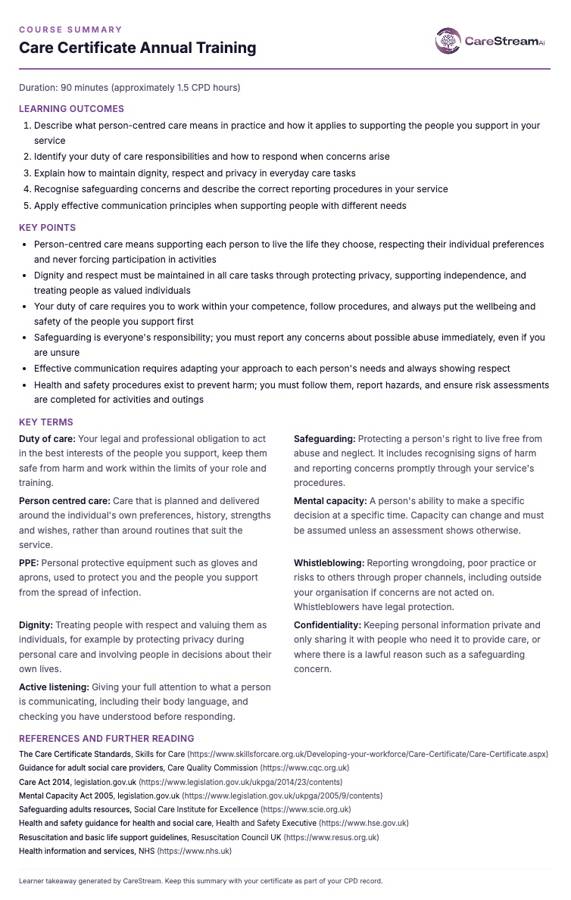
A printable one page takeaway of the outcomes, key points and key terms. Perfect for staff files, supervision conversations and the staff room wall.
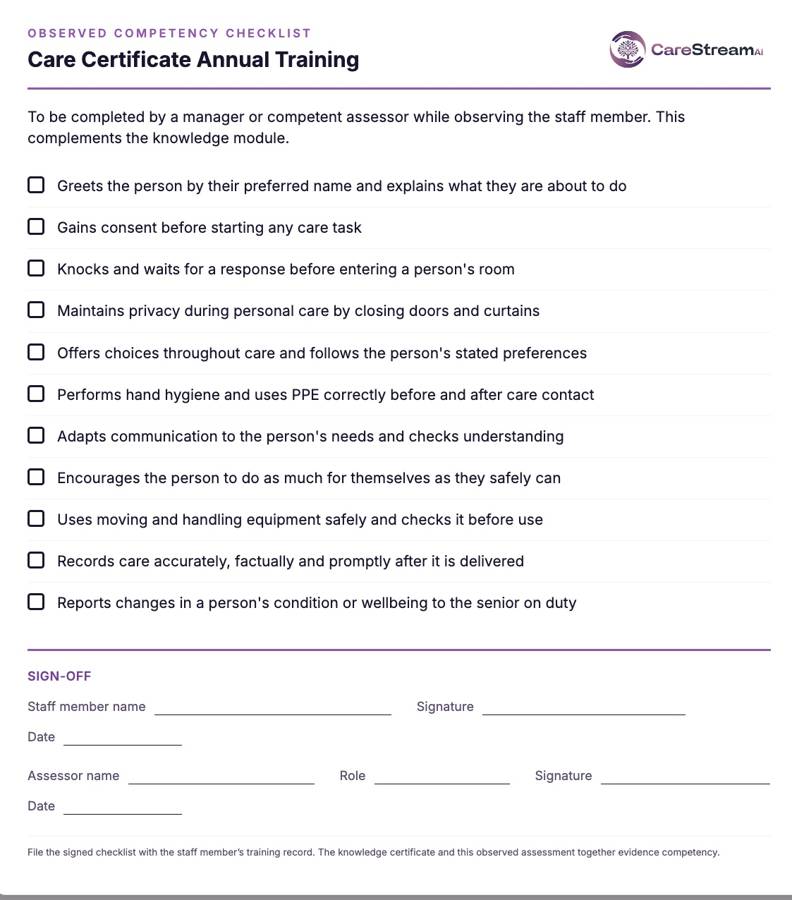
A printable checklist for managers to confirm skills in practice, with a sign off section. It completes the picture beyond the knowledge assessment.
Wrong answers become lessons, not failures
Most e learning marks an answer wrong and moves on. CareStream does not. Every wrong answer triggers an automatic follow up loop that teaches the point again and rechecks it, so no knowledge gap is left behind.
A wrong answer immediately opens a short lesson explaining the point, so the gap is closed there and then.
A fresh question on the same point checks the lesson has landed. The loop repeats until it has.
Staff move on to the next module and their certificate once they genuinely know the answer, not just after one lucky guess.
Why choose CareStream?
Training built for the care sector, delivered the way busy teams actually learn.
- 90+ care-specific training courses
- Bitesize, engaging lessons your staff actually finish
- Mapped to the Care Certificate & CQC standards
- Available in 60+ languages
- Instant certificate on completion
- Flexible learning, anytime, on any device
- Content kept up to date with UK care regulations
- Time to complete: ~35 min
Frequently asked questions.
Is Overdose Response and Naloxone training mandatory in care settings?
How often should staff complete Overdose Response and Naloxone training?
Can CareStream deliver Overdose Response and Naloxone training in other languages?
Does the training include an assessment?
More training your team may need
More mandatory and role-specific training CareStream delivers to your team, in the hub, in any language. Add any of these to your basket.
 Annual Certificate
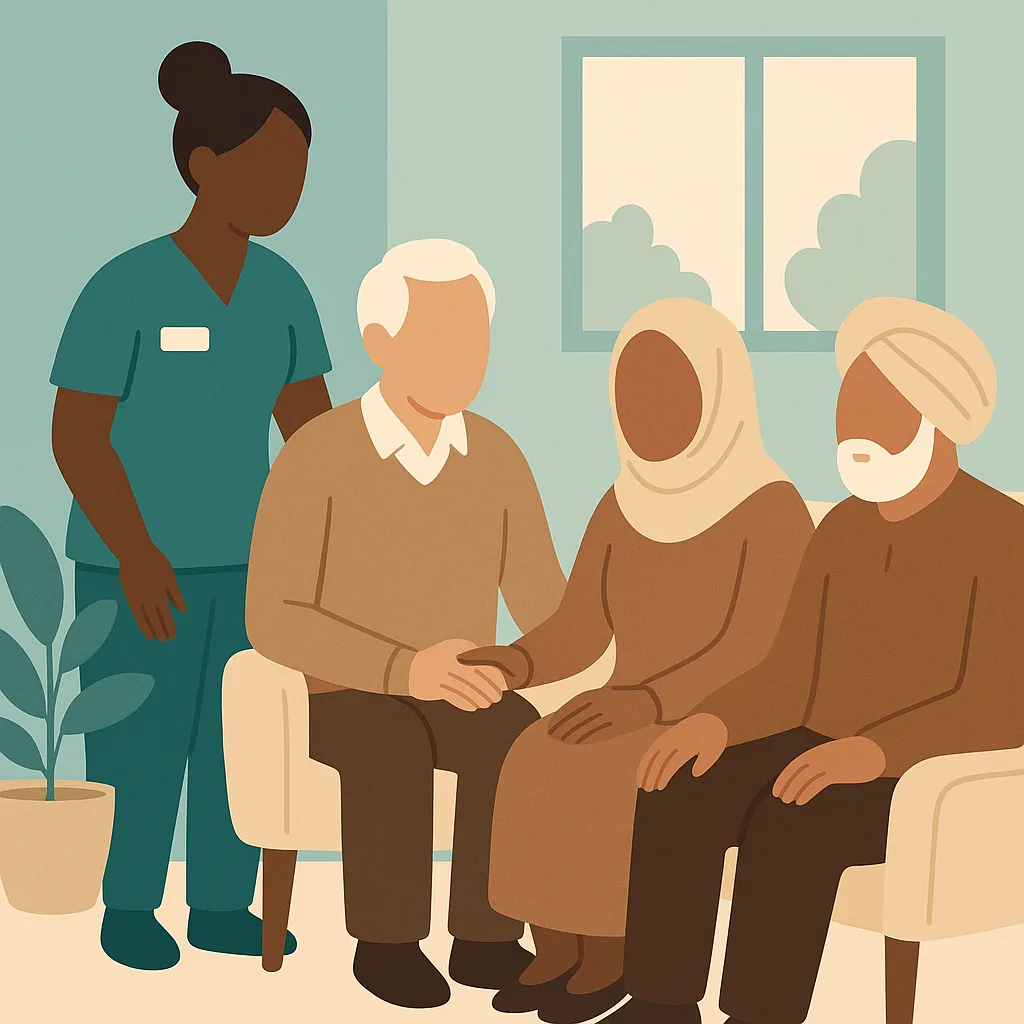
Cultural Diversity in Care
This training helps you understand and respect the diverse cultural, religious and personal backgrounds of the people we support. You will learn how to provide person-centred care that honours each individual's identity, beliefs and preferences. This is essential to meeting CQC fundamental standards and ensuring everyone feels valued and respected in our service.
Bulk discounts from 10+ licences
 Annual Certificate
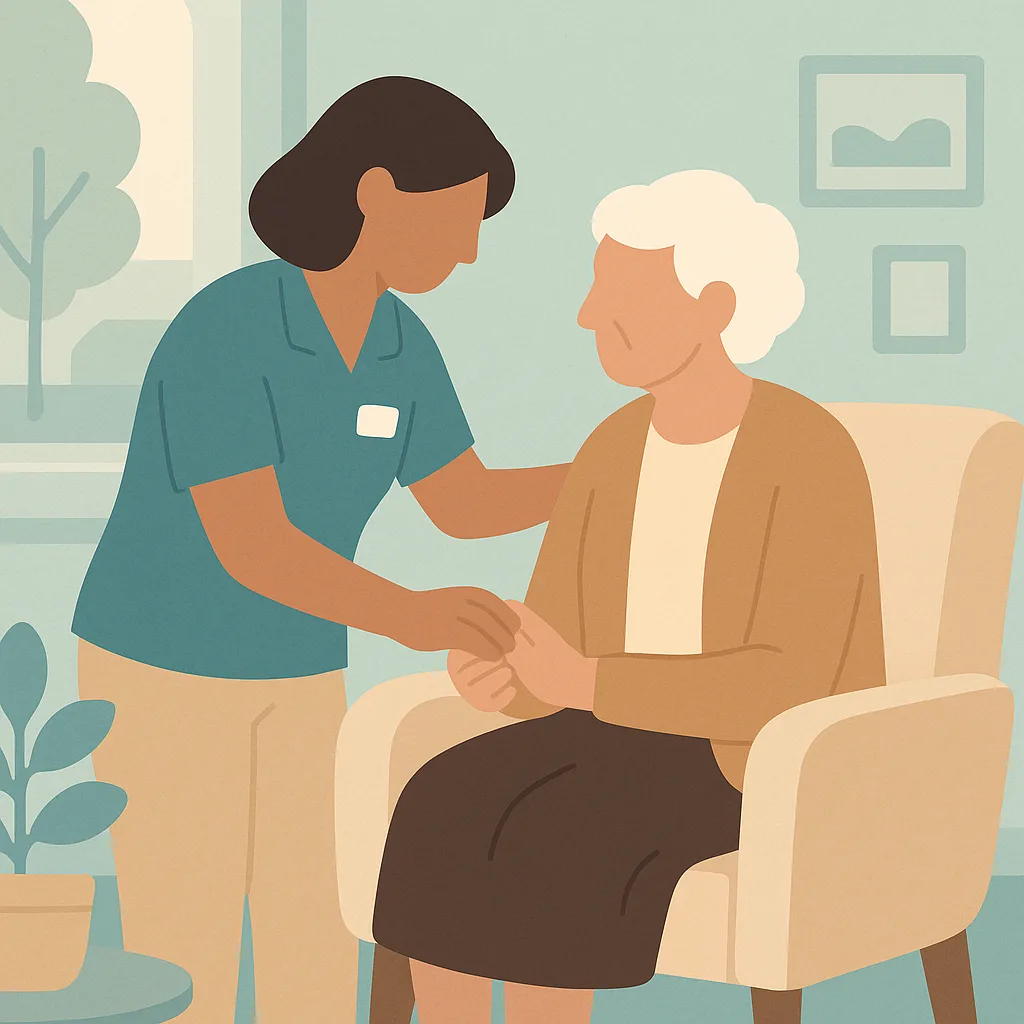
Dementia Awareness
This training helps you understand dementia and how to provide person centred care to residents living with dementia at our home. You will learn to recognise signs of dementia, support residents with dignity and respect, and follow our policies to meet their individual needs.
Bulk discounts from 10+ licences
 Annual Certificate
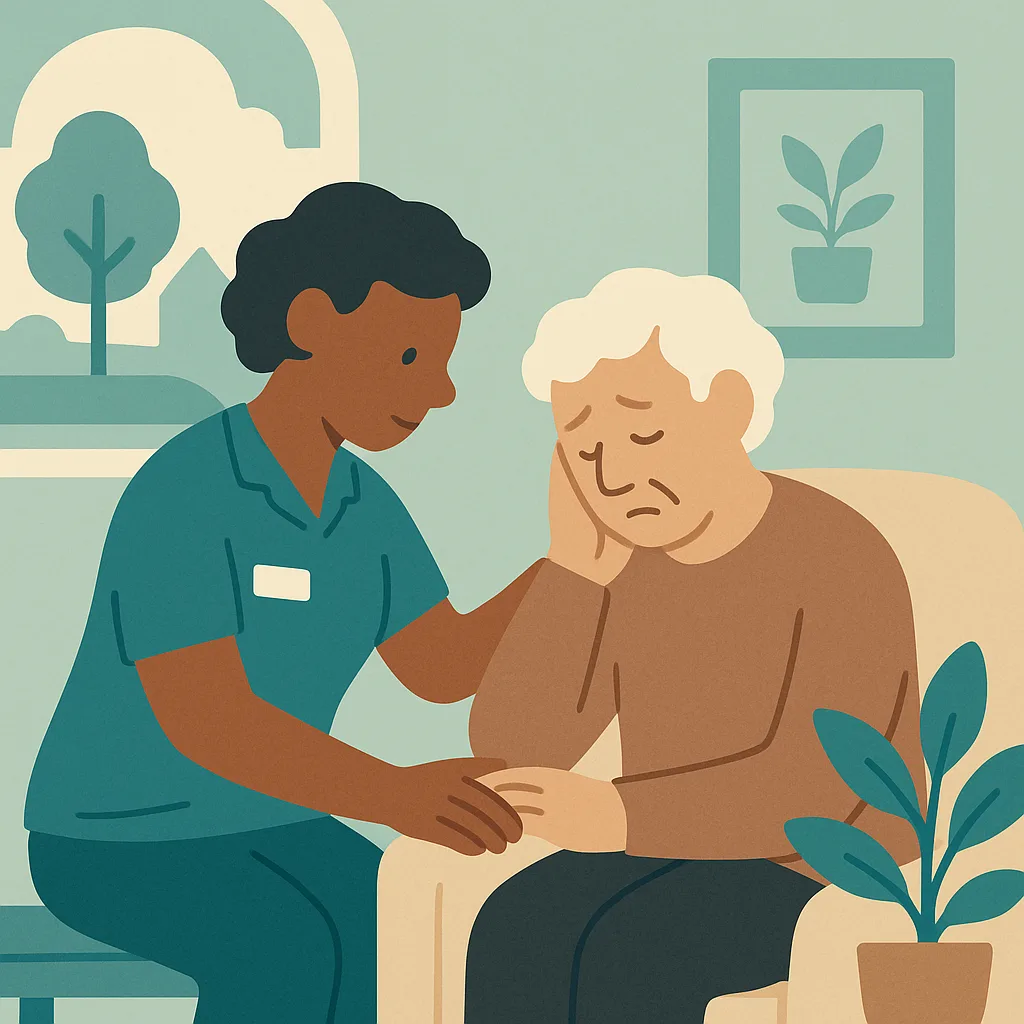
Mental Health Awareness
This module helps you recognise signs of mental health difficulties in residents and respond with compassion and respect. You will learn how mental health affects wellbeing, how to support residents experiencing distress, and when to seek additional help. Understanding mental health is essential to providing person centred care that maintains dignity.
Bulk discounts from 10+ licences
 Annual Certificate
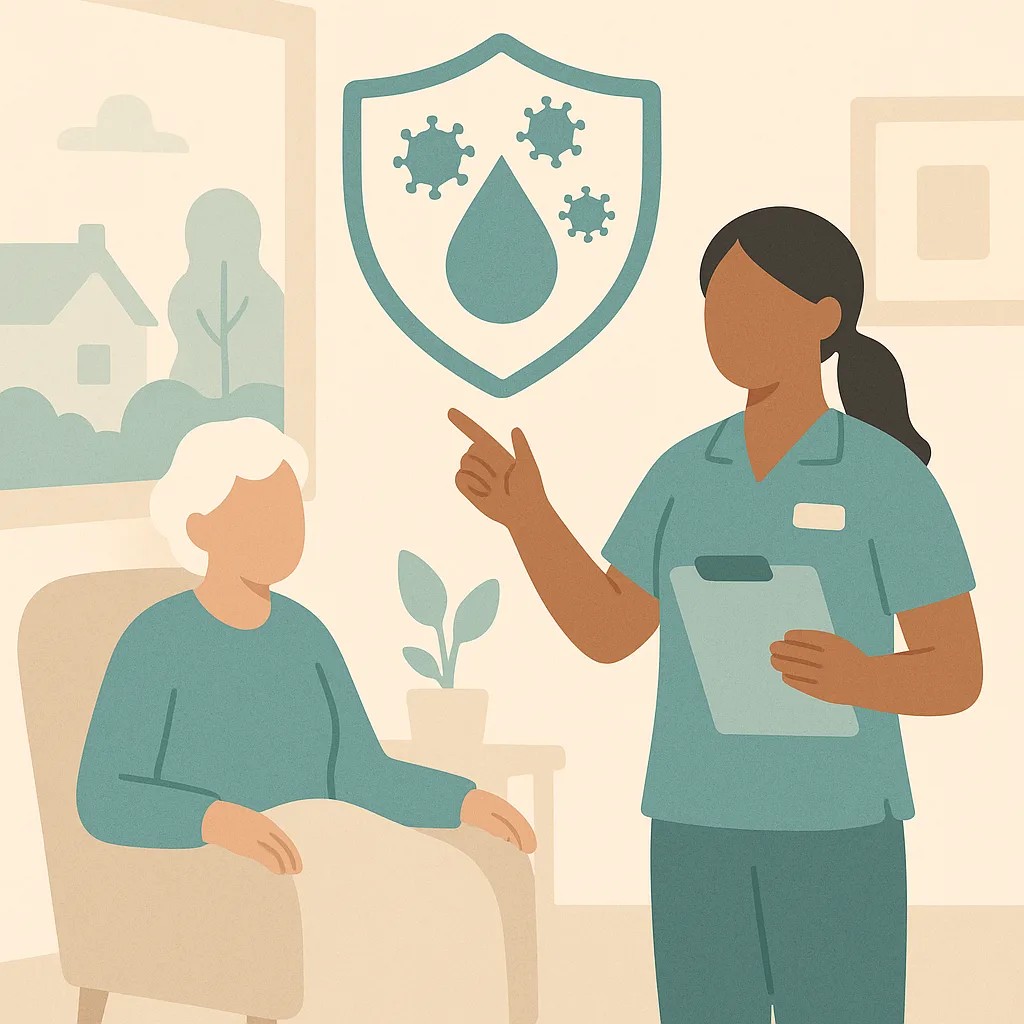
Blood-Borne Viruses Awareness
This training gives you the knowledge and confidence to protect yourself from blood-borne viruses and to support the health of people using our service. You will learn how HIV, Hepatitis B and Hepatitis C are transmitted, how to work safely using standard precautions, and how our service prevents, tests for and treats these infections as part of our harm reduction work.
Bulk discounts from 10+ licences
 Annual Certificate
Harm Reduction
This module teaches practical harm reduction approaches for supporting clients in substance misuse and rehabilitation settings. You will learn how to reduce the negative consequences of substance use while respecting client autonomy and building trust. The training covers evidence-based strategies that keep clients safer and support their recovery journey.
Bulk discounts from 10+ licences
 Annual Certificate
Dual Diagnosis Awareness
This training helps you recognise and respond effectively when someone has both mental health difficulties and substance use problems at the same time. You will learn how to apply the no wrong door principle, manage risk safely, work in partnership with mental health services, and know when to escalate concerns. This matters because most people using our service live with co-occurring conditions, and your response can be lifesaving.
Bulk discounts from 10+ licences
Give your team overdose response and naloxone training that actually sticks.
Add it to your basket, allocate it in seconds, and let the evidence build itself.
Compared
Three ways to train a care team.
These modules are written and kept current by us, so your managers do not have to write or maintain them. We have compared what each approach does rather than naming providers, because products change and this should still be true next year.
| CareStream | A generic e-learning library | A trainer you book | |
|---|---|---|---|
| Try a real lesson and a real question before you buy | |||
| Learning outcomes and time to complete stated up front | |||
| Written lesson sections, each with its own illustration | |||
| Interactive exercises after the lesson that teaches them, in every module | |||
| Assessment in every module, with the key points to revisit | |||
| Taken in any of sixty plus languages | |||
| A wrong answer triggers a follow-up lesson, not just a re-sit | |||
| Practical sign-off by a manager where the subject needs it | |||
| Completion files itself into your training matrix and evidence pack | |||
| Bought one module at a time, with no annual contract |
Generic libraries are often cheaper per learner. They teach a national standard rather than being built, updated and evidenced around the way a CQC-registered service is actually inspected.
Care policies
Every module is written from a policy
If the policy behind it is out of date, the training inherits that. Sixty six policies written for your service, checked against current law and read by a person before they carry your name, from £39.