For anyone running a care home, a nursing home, or a home care agency in England, one question never really goes away: if a Care Quality Commission (CQC) inspector walked in tomorrow, would we be ready? A CQC readiness report is the document that answers that question honestly, before the inspector ever arrives.
This guide explains what a readiness report is, what it means for your service, how it works, and how it applies to you, all in plain language.
What is a CQC readiness report?
A CQC readiness report is an internal assessment of how prepared your service is for a CQC inspection. It looks at your policies, your training, your audits, your records and the way your team actually works, then measures all of that against the standards the CQC uses.
The result is a clear picture of where you are strong, where you have gaps, and what you need to fix.
It helps to be precise about wording here because two similar terms get mixed up.
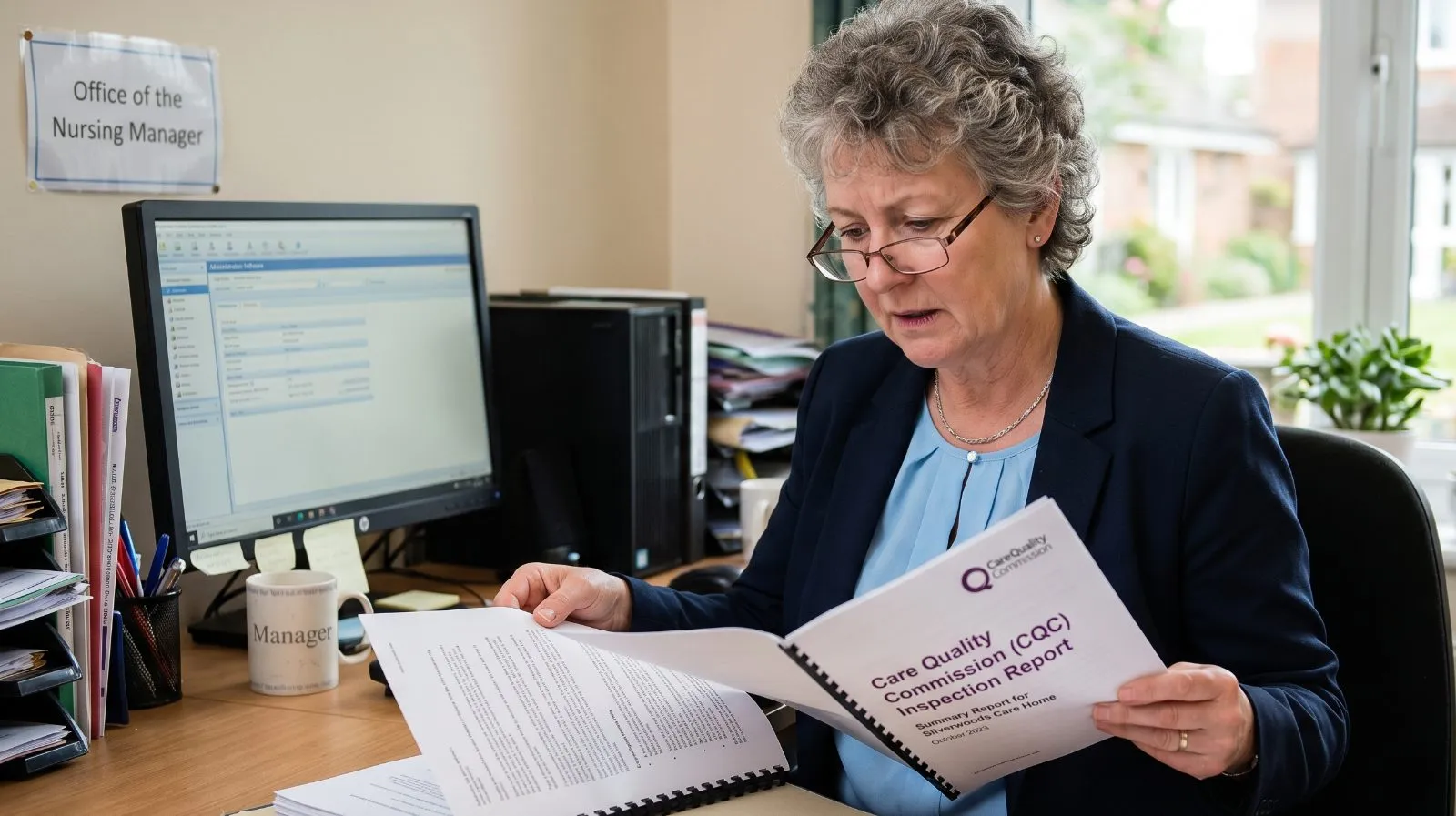
A CQC report is the official document that the CQC writes and publishes after it assesses your service. It contains your rating and the inspector's findings, and it is public.
A CQC readiness report is something you produce for yourself, in advance. It is not published, it does not come from the regulator, and it carries no legal rating. Its whole purpose is preparation. Think of it as a dress rehearsal on paper: an honest internal scorecard that shows how you would likely perform if the real assessment happened today.
A readiness report is closely related to a mock inspection. A mock inspection is a trial run of the assessment process, carried out by your own manager or an external consultant, to find gaps before the real visit. The readiness report is the written output of that exercise, turning what you found into a structured, evidence-backed summary with a plan of action.
What a readiness report means for your service
The value of a readiness report has grown sharply because CQC inspection has become harder to predict. The regulator has a large backlog and has been completing far fewer assessments than it wants to, running at roughly 500 a month against a target of 9,000 by September 2026. Many services across England are carrying ratings that are several years out of date. The practical effect is simple: your next inspection could come at almost any time, and it may well be unannounced or at very short notice, particularly for home care.
That reality has ended the old pattern of a frantic tidy-up in the days before a visit. The expectation now is continuous readiness, where quality is demonstrable every day rather than staged for one morning. A readiness report supports that in three ways.
First, it removes guesswork. Instead of hoping you are ready, you have evidence of exactly where you stand.
Second, it turns vague worry into a to-do list. A good readiness report does not just flag problems; it prioritises them, so you tackle the highest risk areas first.
Third, it protects your rating. The areas that most often pull services down, such as governance, medicines, safeguarding and weak audit trails, are exactly the things a readiness report is designed to surface early, while you still have time to act.
There is also a timing point worth knowing in 2026. The CQC is reshaping how it assesses care, moving from one universal framework toward separate frameworks for each sector and replacing the old quality statements with a tidier set of structured questions.
Importantly, most of the underlying evidence requirements carry across. A readiness exercise you do now still strengthens you for both the current approach and the one coming later in the year. The five core questions at the heart of assessment are not changing.
How a CQC readiness report works
A readiness report is built around the same five key questions the CQC uses to judge every service:
- Safe. Are people protected from abuse and avoidable harm?
- Effective. Does care achieve good outcomes based on the best available evidence?
- Caring. Do staff treat people with compassion, kindness and respect?
- Responsive. Is care organised around each person's individual needs and wishes?
- Well led. Do leadership, culture and governance support high-quality care?
Within those questions, a thorough readiness report typically works through several layers.
1. Coverage of the regulations and standards
The starting point is whether your policies and procedures actually cover what they need to. The report checks your documents against the CQC framework and the fundamental standards, and highlights any area where you have no policy, an out-of-date one, or a gap that an inspector would notice.
2. The evidence behind each standard
A modern assessment is not satisfied by a folder of policies. It asks for evidence that those policies are real in daily practice. The CQC draws this from several sources, including people's own experience of the service, feedback from staff and leaders, feedback from partners such as GPs and local authorities, direct observation of care, your processes, and the outcomes your care achieves. A readiness report maps your evidence across these sources for each standard, then flags where the proof is thin.
3. Training and staff confidence
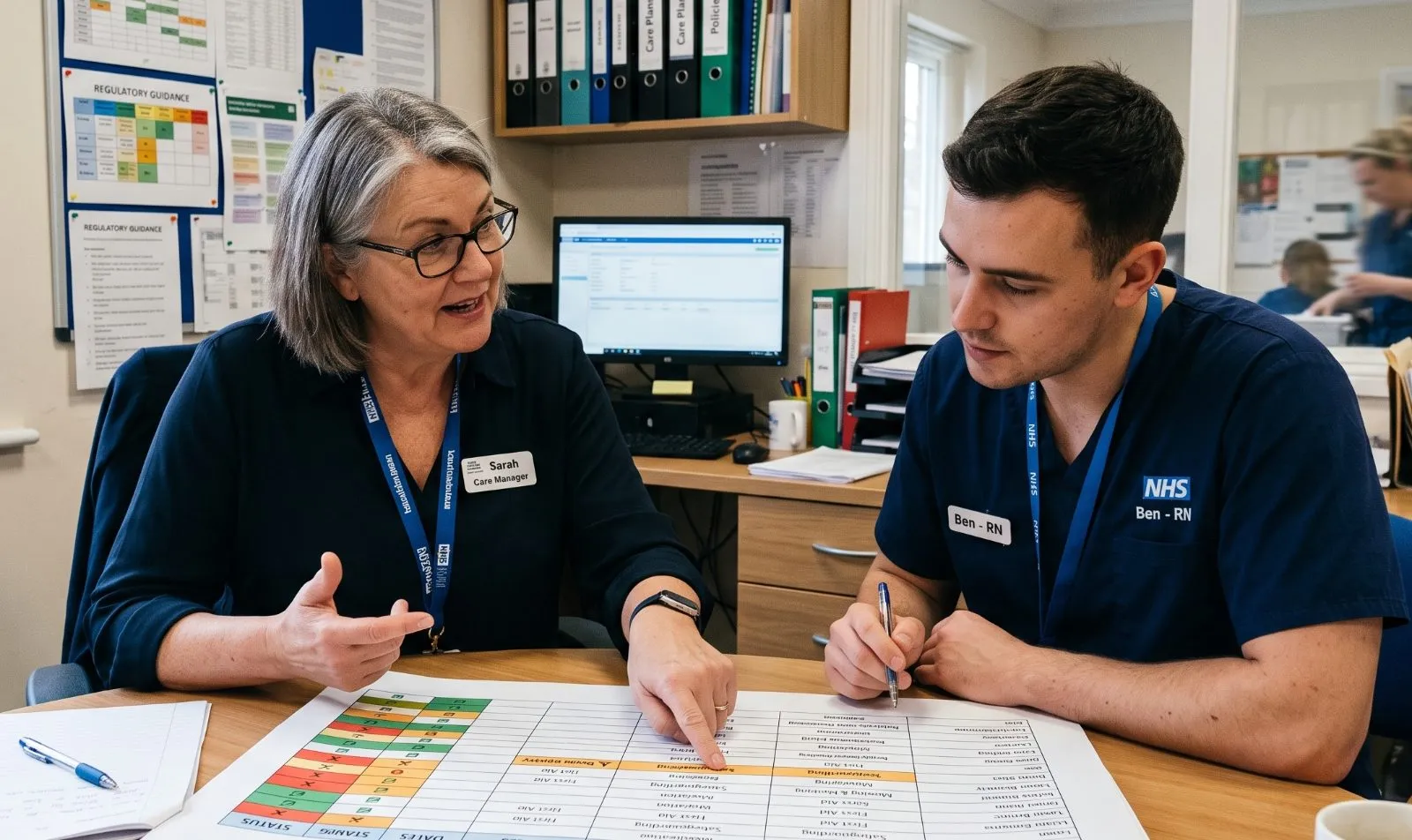
A policy is only useful if the person on shift understands and follows it. So a readiness report looks at training completion and whether staff can actually explain their practice. This is where many services discover that their paperwork looks fine, but their team would struggle to answer an inspector's questions with confidence.
4. Audit results and governance
Well-led carries enormous weight. Missed audits, weak action tracking and limited management oversight are some of the most damaging findings a service can receive. A readiness report pulls audit outcomes and governance actions together so leaders can see, at a glance, whether issues are being spotted and closed.
5. A coverage score and an action plan
The best readiness reports turn all of this into something usable: a coverage or readiness score that shows your overall position, and a prioritised action plan that says what to fix, in what order, and who owns it. That is the difference between a report that worries you and one that genuinely moves you forward.
How a readiness report applies to you
The principles are shared, but what the report focuses on shifts depending on the kind of service you run.
For care homes, expect close attention to Safe and Effective, since these areas attract the most enforcement. A readiness report should scrutinise safeguarding, medicines management, falls and pressure care, staffing levels and skill mix, and how clearly your governance turns risks into completed actions. Because care home inspections are frequently unannounced, the report should reflect business as usual rather than a polished one-off.
For nursing homes, all of the above applies, with extra weight on clinical effectiveness. A readiness report should test whether nursing care is delivered in line with current evidence, whether clinical records are accurate and timely, and whether outcomes such as wound healing, nutrition and hydration are monitored and acted upon.
For home care and domiciliary agencies, much of the evidence sits away from any single building. Your readiness report leans more heavily on care records, call monitoring, care planning, incident reporting and the feedback you collect from clients and families. Home care services also tend to get very short notice of inspection, sometimes only a day or two, which makes a standing readiness picture even more valuable.
A practical starting point for any service is to map the evidence you already hold against each standard. Most providers already collect the majority of what the CQC wants. The work is usually about organising it clearly and finding the gaps, not generating mountains of new paperwork. For each standard, ask your team a single question: how would we prove this to an inspector? Then check that the proof exists across the evidence sources above.
The five questions everyone asks
These are among the most searched questions linked to CQC readiness. Here are clear answers.
1. What is a CQC report?
A CQC report is the official document the regulator publishes after assessing your service. It sets out the inspector's findings against the five key questions and gives your overall rating. It is public, and anyone can read it, including families choosing a service. This is different from a readiness report, which you create internally beforehand to prepare. One is the regulator's verdict; the other is your own rehearsal.
2. How do you become CQC-ready?
Being CQC ready means you can show, at any time, that your care is safe, effective, caring, responsive and well-led, with evidence to back it up. In practice, that means keeping policies current, keeping care records accurate and person-focused, keeping medicines and safeguarding audits up to date, making sure governance actions are visible and followed through, and ensuring staff can confidently explain their practice. The key shift is treating readiness as a continuous habit rather than a last-minute scramble. A readiness report is the tool that tells you whether you have arrived.
3. What are the five standards, or key questions, of CQC?
They are Safe, Effective, Caring, responsive, and well-led. These five questions are the foundation of every CQC assessment and are sometimes called the five standards. They have stayed constant through every recent reform, which is why a readiness report is always built around them.
4. How do you conduct a readiness assessment?
A readiness assessment, often run as a mock inspection, follows a simple cycle. First, choose your scope, usually all five key questions. Second, gather and review evidence across policies, training, audits, records and feedback. Third, talk to staff as an inspector would, to test whether practice matches paperwork. Fourth, score each area honestly and note the gaps. Fifth, write it up as a readiness report with a prioritised action plan and clear ownership. Finally, repeat it on a regular cycle, so readiness stays live rather than fading after one effort. Many services bring in an external consultant or use compliance software to keep the assessment objective.
5. What are the four grades of CQC?
The four ratings are Outstanding, Good, Requires Improvement and Inadequate. These remain unchanged through the 2026 reforms. A readiness report often estimates which grade you would be likely to receive today, which is a powerful way to focus attention before the real assessment decides it for you.
How CareStream produces your readiness report
This is where CareStream is built to help. CareStream AI is a platform made for UK care providers that turns your own library of policies and procedures into an always available, intelligent assistant. Instead of staff hunting through binders, shared drives or out-of-date handbooks, CareStream takes in your home's actual documents and makes them instantly searchable and answerable in plain English (or any other language), by web chat, by email, or over WhatsApp. Every answer is grounded in your own policies and traceable back to the source document, so managers stay in control of what the policy really says while teams get reliable guidance the moment they need it.
Because care teams in the UK are wonderfully diverse, CareStream also lets a staff member ask a question in their own language, including Polish, Romanian, Tagalog, Portuguese and many more. It detects the language automatically, finds the right policy, and answers in that same language while still pointing to the source. That removes a real barrier to compliance, because a procedure only helps if the person on shift actually understands it.
Around this sit the operational tools that keep a service inspection ready every day. CQC staff questions let managers build a bank of inspection-style questions, send them out by each person's preferred channel, and track who has responded and how well, so you know where your team is confident before an inspector ever arrives.
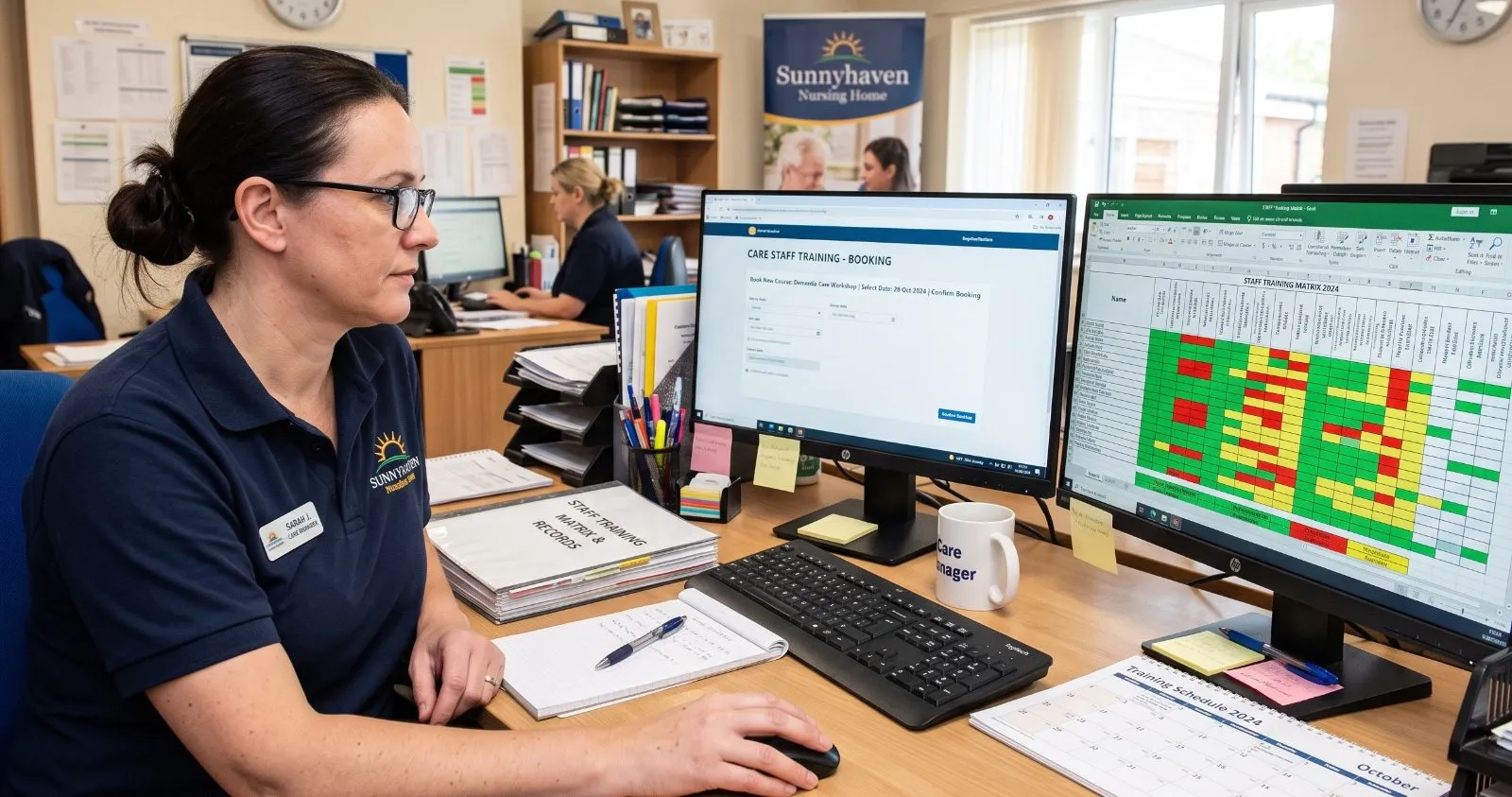
Training lets managers create and assign modules drawn from their own policies, auto-generate questions and answers, lock approved versions, and watch a live compliance grid showing who has completed what. New staff onboarding turns this into structured, auditable flows for each role from day one. Audits provide templated, repeatable checks that capture evidence and surface issues early rather than at inspection.
CareStream then pulls all of this signal together into its CQC Report and supporting gap analysis. By looking at the questions staff are actually asking, including the ones your policy library could not answer, the regulations your policies do and do not cover, your training compliance, and your audit results, it produces a coverage score and an inspection readiness picture mapped to the CQC framework.
In other words, it generates a living CQC readiness report. Your service is not just storing policies, it is continuously demonstrating that those policies are understood, trained, followed and evidenced, turning compliance from a once-a-year scramble into something your whole team lives every day.
The bottom line
A CQC readiness report is your honest answer to the question that matters most: are we ready right now? In a year where inspections are unpredictable and many ratings are out of date, knowing your position is no longer a nice-to-have.
Build readiness into your everyday routine, evidence it clearly across the five key questions, and you will face your next inspection with confidence rather than panic.
CQC Readiness Reports are available on the Professional plan.
Book a demo or start your free trial today.
Sources
- CQC: How we assess care services · cqc.org.uk
- CQC: Evidence categories · cqc.org.uk
- CQC: Fundamental standards · cqc.org.uk
Frequently asked
What does CQC stand for?
Is a CQC readiness report a legal requirement?
How often should a care service complete a CQC readiness report?
How much notice does the CQC give before an inspection?
How long does it take to get a CQC inspection report after a visit?
Written by
 Len BurgessSenior Care Advisor
Len Burgess has worked in the care sector for over 8 years, with hands-on experience across residential, nursing and community settings. Having supported teams through CQC inspections and the day-to-day reality of keeping a service compliant, he writes about regulation, quality and best practice in a way that's grounded in what actually happens on the floor, not just what the guidance says.